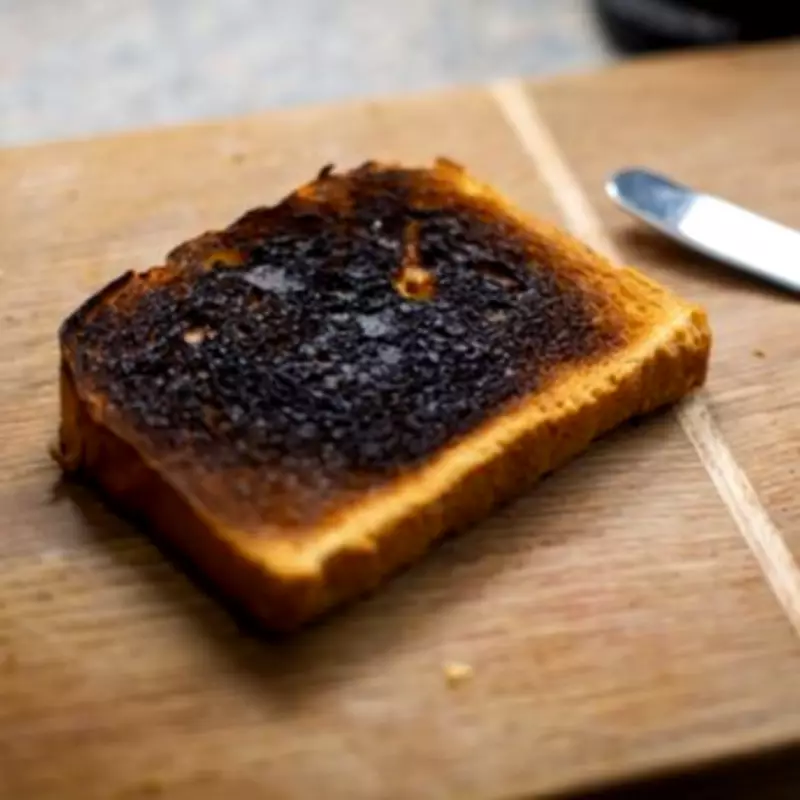
For decades, a pervasive health belief has circulated widely: consuming burnt food, such as toast, can cause cancer. This notion has likely led many to anxiously scrape off charred bits from their breakfast or avoid overcooked vegetables during meals. But is there any scientific truth behind this long-held fear? A scientist provides a detailed explanation, delving into the origins of the scare and the current evidence.
The Origins of the Burnt Food Cancer Scare
The belief gained significant traction in April 2002, when the Swedish National Food Administration and researchers at the University of Stockholm raised alarms about acrylamide levels in certain foods. Acrylamide forms during cooking, particularly in high-starch items like potatoes and bread, through a process known as the Maillard reaction, which gives food a caramelised appearance and flavour favoured by chefs.
In a press release, the Swedish teams stated that fried, oven-baked, and deep-fried potato and cereal products might contain high levels of acrylamide, labelling it a "probable human carcinogen." They even suggested that several hundred annual cancer cases in Sweden could be attributed to acrylamide, implying a global impact from this common cooking byproduct.

Does Acrylamide Actually Cause Cancer?
Health authorities have long studied acrylamide's potential risks. In 1991, the US Department of Health and Human Services' National Toxicology Program classified acrylamide as "reasonably anticipated to be a human carcinogen" based on animal studies. Similarly, the European Food Safety Authority noted in 2015 that acrylamide could potentially increase cancer risk across all age groups.
However, scientists emphasise that decades after the initial scare, conclusive evidence linking dietary acrylamide to cancer in humans remains elusive. Many findings stem from rodent studies, which do not directly translate to human biology due to physiological differences.
The US National Toxicology Program reports that numerous epidemiologic studies have found no consistent evidence associating dietary acrylamide exposure with any type of cancer risk in humans.
Expert Insights on the Carcinogen Classification
Fatima Saleh, an associate professor of medical laboratory sciences at Beirut Arab University in Lebanon, told the BBC that after nearly 30 years of acrylamide being classified as a "probable human carcinogen," evidence of its definite carcinogenicity in humans remains inconsistent. She added that further human studies might eventually provide adequate data to reclassify it.
Neil Iyengar, a medical oncologist at Memorial Sloan Kettering Cancer Center in New York City, told WebMD that while some studies suggest overcooking or burning food creates carcinogens, this is currently a hypothesis rather than a proven fact. He expressed skepticism about the direct harm from consuming burnt food.
It is important to note that acrylamide is recognised as a toxic substance, but the key issue is whether the amounts consumed in food are sufficient to cause harm.
What Exactly Is Acrylamide?
The US National Cancer Institute explains that acrylamide is a chemical used in various industrial processes, including paper production, dye manufacturing, and plastics creation. It is also employed in treating drinking water and wastewater, and found in consumer products like caulking, food packaging, and adhesives.
In foods, acrylamide forms when vegetables containing the amino acid asparagine, such as potatoes, are heated to high temperatures in the presence of certain sugars. Additionally, it is present in tobacco smoke, highlighting its diverse sources beyond the kitchen.
In summary, while the burnt food cancer scare has persisted for years, scientific consensus indicates that the risk from dietary acrylamide is not conclusively proven. Experts advise moderation and further research, but there is no need for panic over occasional burnt toast or roasted vegetables.