From Amish Farm to Health Empire: Lizzie Ens' Journey from Strict Community to Success
Imagine a world without internet, phones, or social media. Now imagine one without toilet paper, showers, or shaving. This was the everyday reality for Lizzie Ens, who grew up in one of the world's most stringent Amish communities. According to Ens, who fled the conservative community at age 19, the absence of what many consider basic necessities wasn't the most difficult aspect. Instead, it was the severe regulations governing nearly every moment of life.
A Life Governed by Strict Rules
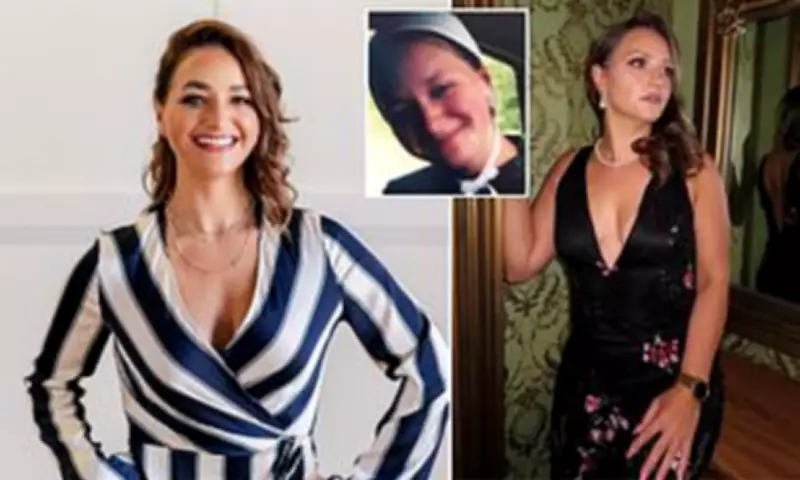
Ens, now 40 and working as a health practitioner while running her own thriving nutrition business, grew up on an 80-acre Swartzentruber Amish farm in Ohio with her parents and 18 siblings. Her days consisted of farming, gardening, sewing, cooking, baking, canning, and cleaning. The community enforced modest "plain" clothing, including head coverings and long-sleeved dresses. Bras were prohibited, replaced by simple undergarments.
"There were a lot of strict rules. Nearly every part of daily life was governed by them - how you dressed, how you wore your hair, how you spoke, what work you did and how you interacted with the outside world," she explained exclusively to the Daily Mail. "The rules weren’t just guidelines - they were expectations, and they were enforced through the community."

Self-expression or personal preference was unheard of. Standing out in any manner was actively discouraged. Choices that most people make without deliberation—such as what to wear, how to live, and which path to follow—were predetermined.
Living Without Modern Conveniences
The community had no electricity, running water, or indoor plumbing. This meant no showers, and instead of toilet paper, they used crumpled newspaper. Transportation was by horse and buggy, completely separating them from the contemporary world.
"There was no television, no music, no phones and we also didn’t have many of the everyday conveniences Americans are used to," Ens said. "Simple things - like toilet paper - that the modern world may take for granted or clear the supermarket shelves for in case of an emergency was not a luxury we had."
Water-related tasks required manual hauling and heating. Cooking and baking were done on wood-burning or kerosene stoves. There were no cars, no freedom to come and go at will, no quick dinners out, and no meal deliveries. Food was grown, canned, or meticulously planned.
The Decision to Leave
From a young age, Ens worked tirelessly on the farm, feeling her role was predetermined. "Life was quiet, slow, and deeply structured. Most days followed the same rhythm, and every role was clearly defined," she continued. "The path was already decided for you: how you dressed, how you lived, what you believed, and ultimately who you were supposed to become."
Especially as a girl, stepping outside her designated role carried social consequences. There was a clear expectation that all women would "get married and have lots of babies," which did not align with Ens' personal aspirations. It was this inability to influence her own future that ultimately motivated her to leave at 19.
"I didn’t leave out of anger or conflict. I simply reached a point where I understood that staying meant giving up the opportunity to decide my own future," she said. "I left because I knew I didn't belong there anymore and I didn't agree with the church and rules. [But] after I left the church shunned me."
Navigating the Modern World
Transitioning into a world she knew nothing about proved immensely challenging. After years in a sheltered community, adjusting to modern society was a profound shock. "I only had $20 when I left, an eighth grade education, no social security number and no idea what I was going to provide for myself," she recalled.
She had to learn how to think independently in a vastly different environment. Understanding money, navigating everyday systems, and encountering technology for the first time were overwhelming. "The most shocking part wasn’t any one object or experience, but the pace of everything. Life moved fast," she added.

Ens quickly discovered the numerous expenses absent in Amish life: cars, purchasing clothes instead of making them, haircuts, phones, internet, television, rent, and food. Thankfully, she secured a job as a dishwasher to make ends meet.
Building a New Life and Career
Now, 21 years later, Ens has forged a successful career as a functional health practitioner. She runs her own business, Undiet You, which "helps people take responsibility for their health by addressing root causes instead of chasing quick fixes." She frequently shares nutritional tips online, amassing over 157,000 followers on Instagram.
Additionally, she has authored a book titled Amish Renegade, chronicling her remarkable journey from leaving the Amish community to starting over with nothing. As a mother of one, Ens maintains contact with her mother and three siblings who also left, but not with those who remained in the community.
"Everything I'm building now, Undiet You, my writing and my platform, is about bridging the gap between where you come from and who you’re becoming," she concluded. "My past gave me the foundation. What I’ve built since is the result of choosing to step beyond it."