
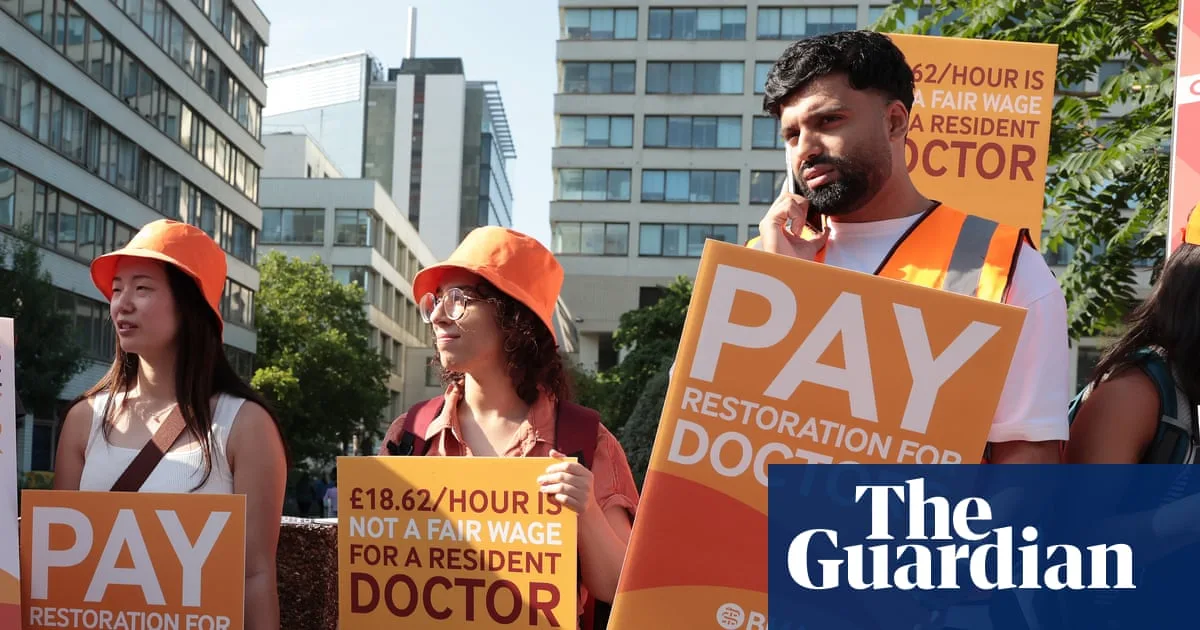
Thousands of resident doctors in England have begun a five-day strike over pay, the 13th walkout since March 2023. The action started at 7am on Friday, with health leaders warning that continued strikes could force the NHS to cut frontline staff and reduce appointments and operations.
The NHS Confederation and NHS Providers said the strikes are piling pressure on already-stretched budgets. The last industrial action in July cost the health service an estimated £300m. Patients face longer waits for care, and many may be unable to work without necessary treatment.
The groups also warned that strikes are hampering progress in reducing waiting lists. Figures released on Thursday showed a slight fall in September after three consecutive monthly rises. During the last resident doctor strike, over 54,000 procedures and appointments were cancelled or rescheduled, though the NHS maintained 93% of planned activity.
NHS Confederation chief executive Matthew Taylor said: “There is no doubt that patients will bear the brunt of this disruption, with tens of thousands of tests, appointments and operations likely to be delayed or cancelled.” He added that with flu already circulating, there is a real risk the strikes will leave the NHS limping into a difficult winter.
Health Secretary Wes Streeting has refused to budge on pay, arguing doctors have received almost a 30% rise over three years. However, the British Medical Association (BMA) says a 26% increase is needed to restore earnings when inflation is considered. The BMA has said it will not agree to ‘derogations’—where doctors are called off picket lines to cover planned work—unless trusts cancel planned activity and incentivise other medics to provide cover.
NHS England urges patients to continue seeking care and attend planned appointments unless told otherwise. Emergency help should be accessed via 999 or A&E as usual, while NHS 111 and GP services remain available.




