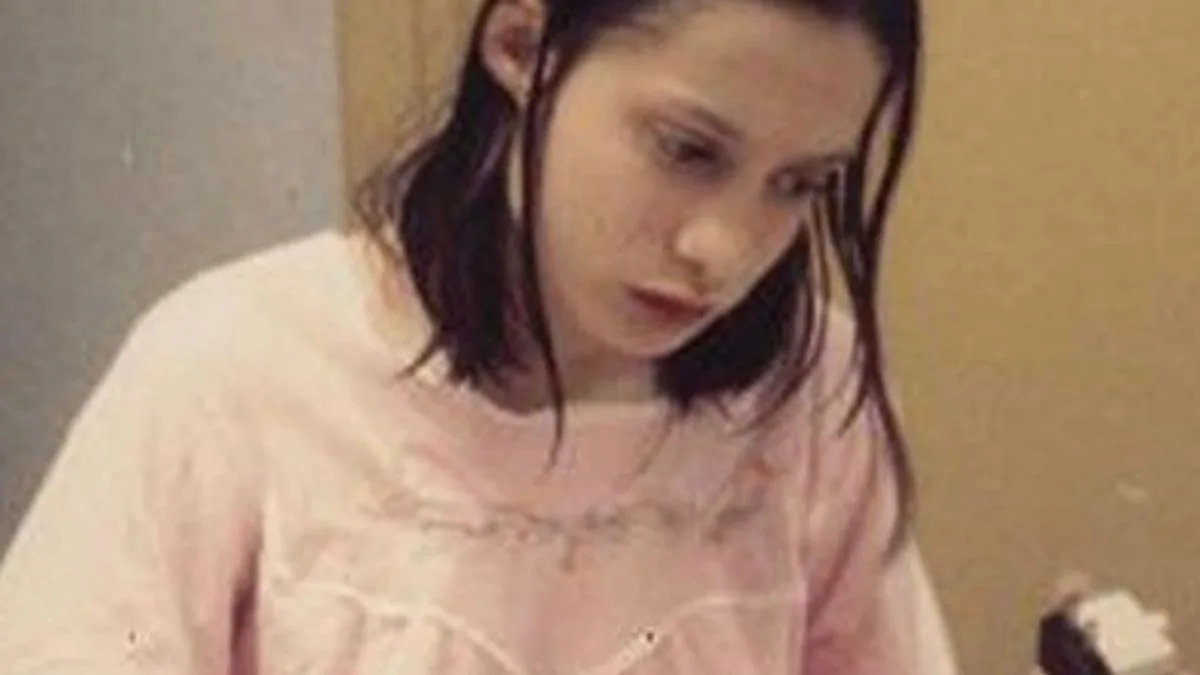
Genie Wiley: The Feral Child's Tragic Story and the Science of Language
The Tragic Story of Feral Child Genie Wiley

For the first thirteen years of her life, a girl known to the world as Genie Wiley existed in a state of profound isolation. Confined to a barren bedroom, she was often strapped into a crude homemade straitjacket and tethered to a child's potty, knowing nothing of the world beyond her walls.

Despite living with her parents and older brother, Genie experienced no love or affection. Her only toys were empty margarine tubs, magazines with the pictures torn out, and empty cotton spools. Her father, Clark Wiley, enforced a regime of utter silence in the household, banning his partially sighted wife Irene from interacting with their daughter.

A Childhood of Unimaginable Deprivation

It is alleged that Clark began his campaign of severe neglect after a paediatrician suggested Genie showed signs of being mentally disabled when she was around 20 months old. He locked her away, placing her in a makeshift cage overnight. Her days were spent harnessed to a potty, able only to move her hands and feet.

Clark fed her a meagre diet of watery milk and cereal, with the occasional boiled egg, leading to chronic malnutrition. Any sound she made was met with him barking like a dog or hitting her, terrifying her into silence. Consequently, by adolescence, she understood only about twenty words, mostly negatives like 'stopit' and 'no'.

Her physical and psychological development was catastrophically stunted. She walked with a strange, stooped shuffle, holding her hands up in what observers called a 'bunny hands' position.

Rescue and a Scientific Firestorm

Genie's hidden world collapsed in November 1970. Her mother, seeking support for her own blindness, accidentally walked into a Los Angeles County welfare office with Genie in tow. Staff, believing the frail teenager was a severely autistic child of six or seven, immediately alerted authorities.

Child services removed Genie and her older brother John from the home. The horrific details soon emerged: a family living in enforced silence, controlled by a father who slept by the door with a shotgun. Clark Wiley died by suicide with a shotgun blast on the day he was due in court, leaving a note that read, 'The world will never understand.'

Genie's case ignited fierce interest in the scientific community. Categorised as a 'feral child', she presented a unique, if ethically fraught, opportunity to test the Critical Period Hypothesis (CPH). This theory suggests there is a crucial window in early human development for acquiring a first language. Genie, having missed this window, was a living experiment.

Linguist Dr Susan Curtiss, who worked closely with Genie, noted she had a captivating presence. After years of intensive therapy at UCLA Children's Hospital, Genie learned some words but could not master grammar, often speaking in phrases like 'Father Hit Arm. Big Wood. Genie Cry.' This lent weight to the CPH, suggesting her isolation had caused irreversible linguistic damage.

A Life of Further Instability and an Uncertain Fate

Genie's post-rescue life became a tragic tug-of-war between researchers and caregivers. After initial progress in a foster home, she lived for four years with researcher Dr David Rigler and his wife. However, in 1975, funding from the National Institute of Mental Health ended, and Genie was returned to her mother.

Irene, unable to cope, placed Genie in a series of foster homes where she allegedly suffered further abuse and rapidly regressed. She lost her ability to speak and became entirely mute. As an adult, the state of California institutionalised her.

Few details have emerged since. Psychiatrist Jay Shurley visited her in her late twenties and described her as 'largely silent, depressed, and chronically institutionalised'. Her current whereabouts and condition are unknown, but if alive, she would be approximately 67 years old, likely remaining a ward of the state.

The story of Genie Wiley remains one of the most disturbing cases of child abuse in modern history. It provided invaluable, if heartbreaking, insights into human development, while also serving as a stark warning about the ethical perils of scientific curiosity when applied to a profoundly vulnerable life.