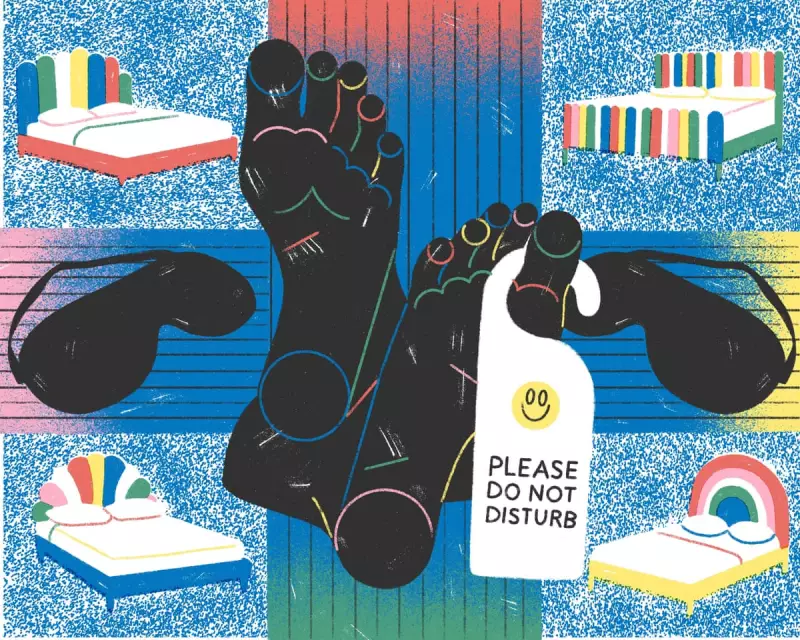
As the new year unfolds, the familiar pressure to be more – more productive, more active, more efficient – begins to mount. But what if the key to a better 2024 wasn't about doing more, but about learning to do less? Experts are urging a radical rethink of our relationship with rest, arguing that in a culture obsessed with the grind, we've forgotten how to recharge properly.
The Unwinnable 'Stress Olympics'
According to Amelia Nagoski, co-author of the book Burnout: The Secret to Unlocking the Stress Cycle, many of us are trapped in a harmful competition. "We all involuntarily participate in the stress Olympics, and are aware that the busiest person wins gold," she states. This societal norm, which glamorises sacrifice and constant effort, frames rest as self-indulgent or lazy.
This mindset is not just exhausting; it's ultimately counterproductive. Dr Saundra Dalton-Smith, a physician and author of Sacred Rest, explains that rest is fundamental to operating at our peak capacity. Pushing through fatigue, a common habit, typically leads to a decline in the quality of our work and wellbeing.

Redefining What Rest Really Means
So, what constitutes true rest? Nagoski offers a simple definition: "Rest is anything that gives you more energy." Crucially, this doesn't always mean complete inactivity. "Sometimes, it's just doing different things," she adds.
Alex Soojung-Kim Pang, author of Rest: Why You Get More Done When You Work Less, supports this view, noting that the most restorative breaks are often active. "The things that deliver the biggest restorative bang for your buck are things like going for a walk, spending time in nature or exercising," he says. While he acknowledges there's a place for passive relaxation on the sofa, active rest often yields greater benefits.
Identifying Your Personal Rest Deficit
One major barrier to proper rest, beyond a culture that devalues it, is personal confusion. Many people simply don't know what kind of rest they need. Dr Dalton-Smith's own experience working in a hospital ICU is telling. Despite getting eight hours of sleep nightly, she felt perpetually drained, eventually realising she was suffering from an emotional rest deficit due to the strain of maintaining composure in traumatic situations.
Drawing on her research, the American Psychological Association outlines seven distinct types of rest:
- Physical rest: Ensuring adequate sleep and taking naps.
- Mental rest: Journaling, meditating, or doing non-taxing tasks like puzzles.
- Emotional rest: Processing feelings with a friend or therapist.
- Social rest: Spending time alone or with people who energise rather than drain you.
- Sensory rest: Taking breaks from screens and spending time outdoors.
- Creative rest: Engaging in hobbies like drawing, reading, or dancing.
- Spiritual rest: Connecting to a meaningful cause or tradition.
Practical Steps and Collective Action
For those with schedule control, Pang recommends combining 90-minute to two-hour blocks of deep work with half-hour breaks for non-work activities. For others, fiercely protecting nights and weekends is key, with studies showing clear boundaries lead to longer, happier careers.
Perhaps the most powerful strategy, however, is to enlist support. Nagoski's own burnout culminated in a stress-induced emergency room visit, where her sister, Emily, provided crucial support and research on recovery. "If you try to stand against it alone, you're going to get washed away really fast," Nagoski says, comparing cultural pressures to a rushing river. "But if you surround yourself with people who care about your wellbeing... you can all stand together, and that's the only way to resist the river."
This year, the most valuable medal might not be for busyness, but for the courage to step off the podium and truly rest.