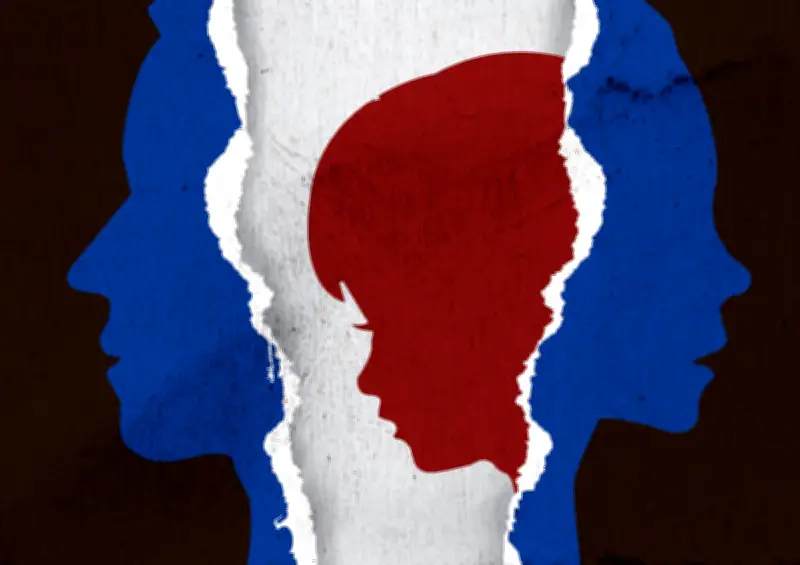
Relationship psychotherapist Nicholas Purcell writes that while physical abuse leaves visible marks, covert dysfunction is absorbed as normal and often goes unrecognised until a spouse, friend, or therapist points it out. In his practice, he sees many adults living out their family inheritance: re-enacting childhoods, becoming the parents they despised, or clinging to survival strategies that are slowly killing them.
The Water We Swim In
Purcell references writer David Foster Wallace's parable of two young fish who don't know what water is. Similarly, a child doesn't know their childhood is unhealthy. Covert dysfunction is absorbed as normal, and most don't question what feels normal until a loss—like a divorce—forces reconsideration.
Oliver's mother was a narcissist and his father avoidant. His father spent 15 years sleeping on a pullout sofa in his study, using Post-it notes to communicate with his wife. Oliver's mother had strong, warped opinions: "Darling, you can't date her, she works in a shop. People like us don't associate with people in service." As a child, Oliver heard that his family was special; he didn't hear the silent second part: "... and therefore alone, and therefore unable to seek help because needing help means you're not special."
Recognising the Pattern
Despite rejecting his mother and idealising his absent father, Oliver had absorbed features of both: he was highly avoidant in relationships and chased sexual conquests with the same desperate energy his mother pursued social status. When his long-term partner finally left, saying "You're exactly like her," Oliver spiralled into depression and sought therapy.
In therapy, Oliver was enraged at the comparison. Purcell challenged him, asking why different people kept making the same connection. After defending himself, Oliver sat in silence for a long time, then started to say "But I…" and couldn't finish. "The air went out of him. Oliver glimpsed himself, finally, and it nearly broke him," Purcell writes.
The Things That Didn't Happen
Purcell notes that dysfunctional actions are easier to see than the things that didn't happen: emotional safety, stability, nurturing. Another client, Kate, survived 25 years in a lonely marriage. The answer lay in her childhood: she spent early years alone in her bedroom, making her own toast at age six, packing her own school lunches, and taking her younger sister to school on public transport by age seven. She learned never to ask for help. For Kate, neglect was normal.
Kate, now a nurse, took a long time to open up in therapy. She understood intellectually the connection between her lonely childhood and lonely marriage but felt deeply uncomfortable being vulnerable. In her last session, she sat with arms wrapped around a cushion, looking at the carpet. When asked what it might mean to leave her marriage, she said, "I'll think about it," but Purcell sensed she wouldn't return. "Some see the water but choose to stay submerged. The alternative—opening yourself up when you've spent a lifetime closed—means feeling everything, all at once. For some people, that doesn't seem survivable."
The Courage to Surface
Purcell reflects on those who never arrive at therapy: "How many people are losing decades—entire lives—in water they can't see?" Oliver continues therapy on Thursdays, learning a new way of being without his mother's narcissism or his father's avoidance. "Sometimes I see his mother's snarl superimposed on his face, then his father's silence dominates, and then there's this other thing: Oliver showing up, catching himself. I don't know who will win. Learning what a healthy relationship feels like takes time, but now, at least, Oliver knows what water is."
Kate stayed in the water. Oliver is trying to surface. Purcell concludes: "Maybe we're all just doing the best we can with the inheritance we got."
In Australia, support is available at Beyond Blue on 1300 22 4636, Lifeline on 13 11 14, and MensLine on 1300 789 978. In the UK, Mind is available on 0300 123 3393 and Childline on 0800 1111. In the US, call or text Mental Health America at 988 or chat 988lifeline.org.
Nicholas Purcell is a relationship psychotherapist based in Adelaide. He is writing Raising Love, on why our theory of love is broken and what an active one looks like.