Senegal's Pioneering Ocean Aquagym Programme Offers Lifeline to Those with Mobility Limitations
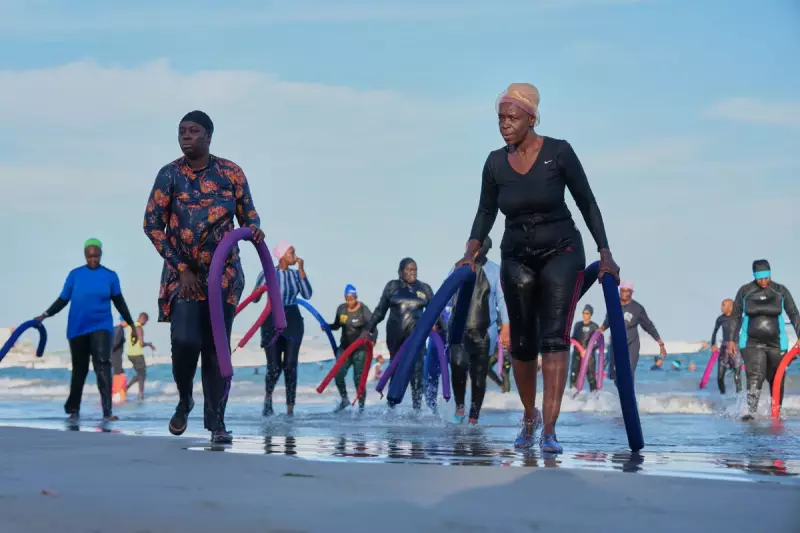
As dawn breaks over Senegal's capital, an extraordinary sight unfolds on Dakar's coastline. Approximately one hundred individuals, clad in swimwear and buoyancy aids, gather at the water's edge, preparing for a unique therapeutic session. This is Senegal's first dedicated aquagym programme, specifically designed for people experiencing reduced mobility due to chronic noncommunicable diseases.
A Morning Ritual of Healing and Hope
In the cool Atlantic waters, participants like 63-year-old Aminata Sall engage in rhythmic movements, supported by foam noodles. On the adjacent beach, others with limited mobility perform gentle torso rotations while partially buried in the sand. This innovative approach combines aquatic exercise with traditional therapeutic techniques, creating a comprehensive rehabilitation experience.
Sall's journey to these sessions began after a devastating diagnosis. Her doctor warned that rheumatoid arthritis could rob her of walking ability within five years. "The shock was enormous," she recalls. "I remained housebound for nearly a year, believing my active life was over." Her transformation began when she discovered the aquagym sessions at Dakar's Ngor beach. "Now I'm walking again," she states simply, a testament to the programme's impact.

Addressing Africa's Growing Healthcare Challenge
As life expectancy increases across Africa, noncommunicable diseases like arthritis, heart conditions, and stroke have become more prevalent. These chronic illnesses often leave older adults with persistent pain and restricted movement. However, prevention, diagnostic services, and rehabilitation programmes have struggled to keep pace on a continent where public health systems traditionally prioritise infectious diseases, maternal care, and paediatric health.
Dr. Seydina Ousmane Ba, director of Dakar's National Orthopedic Prosthetics and Rehabilitation Centre, explains the systemic challenges: "Many patients delay seeking help until their conditions become severe, making treatment more complex and expensive." With most medical care requiring out-of-pocket payments in Senegal, and both public insurance coverage and private plans remaining inaccessible for many, affordable alternatives are desperately needed.
Personal Stories of Transformation
The programme has become particularly vital for individuals like 76-year-old Khadija Wade, who suffers from spinal stenosis. After her husband's passing earlier this year, her condition deteriorated significantly. "I became completely sedentary," she admits. "Some months I wouldn't leave home at all." While overseas treatment was suggested, visa difficulties and prohibitive costs made this impossible for many Senegalese.
Since beginning aquagym sessions on medical recommendation, Wade has experienced remarkable improvement. "I arrived for my first session using a cane," she notes. "Now I can walk independently." Her story reflects the programme's capacity to restore mobility and confidence.
The Unique Advantages of Ocean-Based Therapy
Clément Philit, director of Handicap International in Senegal, highlights the particular challenges facing people with reduced mobility in West Africa. "Accessible public spaces and transport are limited, while specialised healthcare and rehabilitation services remain scarce," he observes.
Dr. Ba emphasises the therapeutic benefits of water-based exercise: "Aquagym provides advantages not always achievable on land. The water supports body weight, reduces pain perception, and facilitates movement, allowing patients to exercise more comfortably and consistently."
From Firefighter to Healing Pioneer
The programme owes its existence to 69-year-old Ndiamé Samb, a former firefighter specialising in underwater operations who later became a lifeguard. As a member of the Lebu people, Dakar peninsula's Indigenous community with deep cultural connections to the ocean, Samb discovered aquagym during training in Paris and recognised its potential.

His sessions are among the few worldwide conducted in natural seawater rather than pools. "Public pools are rare here, but the ocean is freely available," Samb explains. What began with eight to ten participants has grown substantially. "We now sometimes welcome two hundred people per session, with around six hundred regular students," he reports.
Sustainable Model for Community Health
The programme operates on a remarkably accessible financial model. Sessions cost just 300 CFA francs (approximately $0.50), with fees supporting centre operations and equipment purchases. This year, the initiative received a $3,000 municipal subsidy, enhancing its sustainability.
Volunteer coaches lead the sessions, while Samb's brother Alassane, a licensed massage therapist and lifeguard, guides newcomers. The programme's reputation has grown internationally, attracting participants from as far as France and the United States seeking treatment.
As morning sessions conclude, participants like Aminata Sall emerge from the water with renewed vitality. Attending three times weekly, she finds motivation in collective perseverance: "What keeps me returning is witnessing others refusing to surrender to their conditions." In Senegal's coastal waters, a community has discovered that healing often begins with movement, supported by both the ocean and shared determination.