
Disability Campaigners Criticize Salford Transport Corridor Plans
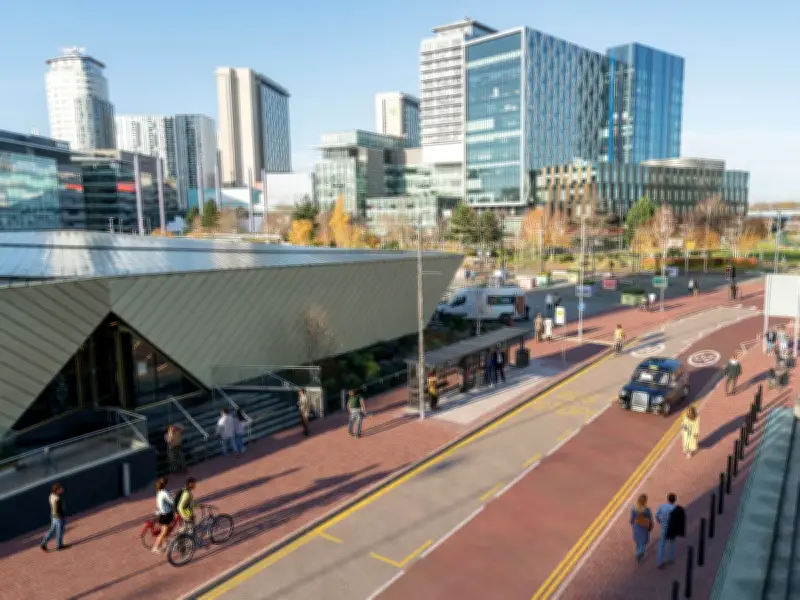
A £23.4 million scheme to create a public transport corridor between Salford Crescent station and MediaCity has been condemned as 'dangerous' and 'not thought out' by disability campaigners. The project, led by Transport for Greater Manchester and Salford Council, aims to reduce travel times on the 50 bus route, improve cyclist safety, and enhance pedestrian accessibility.
During a full council meeting on Wednesday, July 15, Kay Fairhurst, Chair of the Salford Disability Forum, challenged councillors over the decision. She told the Local Democracy Reporting Service: 'The plan seems to favour bikes over pedestrians. There are parts of the route where bicycles, scooters, and e-bikes share space with pedestrians on the pavement, or intersect with pavements at crossings and bus stops.'
Ms Fairhurst, who lost vision in one eye due to Glaucoma and is losing sight in the other, walks with a mobility cane. She expressed particular concern about 'floating bus stops' along the route, where pedestrians must step across bike lanes to access stops—a design already criticized on Oxford Road in Manchester. The Royal National Institute for the Blind has campaigned against floating bus stops, and the Department for Transport advised councils to pause their introduction last year, but Salford's plans still include them.
Council Defends Plans as Accessible and Necessary
Councillor Mike McCusker, Deputy Mayor and cabinet member for Transport and Planning, responded to Ms Fairhurst's concerns, stating the plans are 'within regulation' and include measures to improve accessibility for people with disabilities. He noted: 'We’re the fastest growing city within Greater Manchester. We’ve seen an increase in car usage – though around 44 per cent of people in Salford don’t have access to a car. It’s really important that we encourage active travel and that we have a bus service that people can use to get around.'
The plans were developed in consultation with disability focus groups, according to Councillor McCusker. However, Ms Fairhurst feels decisions have 'already been made' and the concerns of partially-sighted and blind people are not being heard. The project includes segregated cycle lanes, raised bus stop platforms for easier boarding, cyclops pedestrian crossings, and a new bus gate on Langworthy between Montford Street and Kansas Avenue.
Safety Concerns for Visually Impaired Pedestrians
Ms Fairhurst highlighted the danger for partially sighted individuals: 'If you’re partially sighted and have hearing loss like me, it’s hard to get out of the way on time if there’s a cyclist coming at you full pelt. I could easily end up in an accident. I’m worried I won’t feel safe anymore.' The floating bus stop design, where pedestrians cross bike lanes, has been a point of contention nationally, with the RNLI leading campaigns against it.
The Department for Transport's pause on floating bus stops last year has not deterred Salford Council from including them. Critics argue the design prioritizes cyclists over pedestrians, creating hazardous conditions for those with visual impairments. The council maintains that the overall scheme will make public transport more accessible and reduce car dependency in the growing city.




