

A man's life was saved by an unlikely champion – the Administrative Review Tribunal – after a brutal funding cut from the National Disability Insurance Scheme (NDIS). But sweeping changes to the system could prevent others from accessing the same vital protections.
A fight for survival and independence
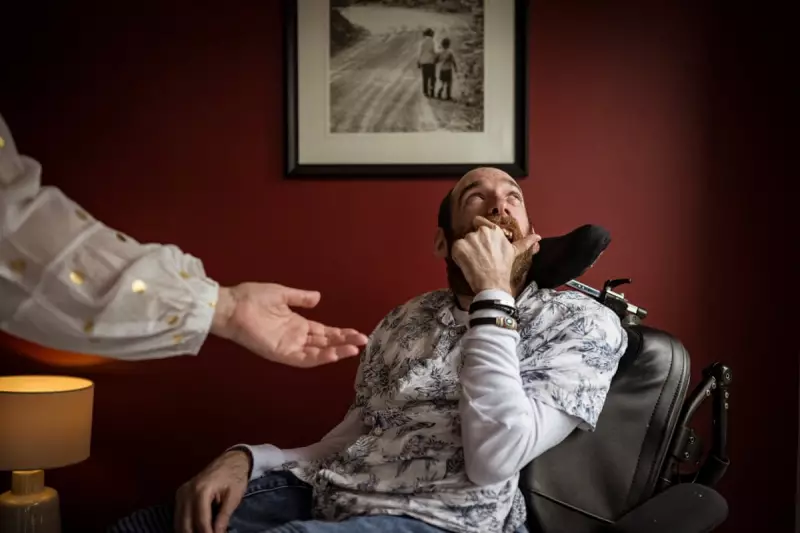
Scott Clough, 47, lives with cerebral palsy, quadriplegia, epilepsy, is blind and non-verbal. Since late 2019, his NDIS funding has allowed him to live with his sister and primary carer, Julienne Verhagen, with round-the-clock support. This arrangement kept him out of a supported independent living facility, where Verhagen says he experienced both wonderful care and periods of serious neglect and abuse.
That independence was thrown into jeopardy in 2023 when Clough received a new NDIS plan. His funding was slashed by roughly 50%, from about $835,000 to $415,000 a year. The cut effectively meant he could no longer afford 1:1 support and would be forced to move into supported accommodation.

"I told him, 'over my dead body'," Verhagen says, convinced such a move would lead to her brother's death. She launched an appeal.
The tribunal as a last resort
After internal NDIS appeals were rejected, Verhagen turned to the Administrative Review Tribunal (ART), the independent body that reviews government decisions. The process took two years and cost roughly $24,000 in legal fees. Finally, in November 2025, they won.
The tribunal overturned the NDIA's decision. Clough's new plan, signed off by the National Disability Insurance Agency (NDIA), reinstated 1:1 support, overnight carers and therapies. It was valued at $1.28 million a year – roughly triple the amount they had been appealing against.
"As flawed as the ART process is… it was the only choice we had, and he would not be alive today without it," Verhagen states.
Clough's case is not isolated. Data shows a sharp rise in NDIS-related cases going to the tribunal. In the year to June 2025, the ART reported 7,935 new NDIS cases, a 95% increase on the previous year. Crucially, in nearly three-quarters of cases (73%) over an eight-month period, the tribunal overturned the NDIA's original decision.
A looming 'catastrophic' change to appeal rights
Now, a major overhaul of the NDIS threatens to strip the tribunal of its power to alter plans. The government's 'New Framework Planning' system, due from mid-2026, will see support plans generated by a computer program, with NDIS staff having no discretion to amend them – a process advocates condemn as "robo-planning".
Under the new rules, the ART will no longer have the authority to change a person's plan or reinstate funding. If a participant appeals, the tribunal will only be able to send the plan back to be recalculated using the same computer-based tool.
Belinda Kochanowska, founder of Intrepidus Law, calls this a "loop-de-loop appeal right" and warns the impact could be "catastrophic". "I cannot see this not causing harm," she says.
Naomi Anderson from Villamanta Disability Rights Legal Service agrees, stressing the tribunal's role as an independent arbiter. "We're about to lose that with new framework plans," she said. She highlights the risk if the computer system fails: "What if you run through this process and somebody… ends up with a plan of a quarter of what they need?"
At a Senate estimates hearing in December, NDIA deputy CEO Matthew Swainson confirmed the ART would lose its power to change total funding amounts, a shift Greens senator Jordon Steele-John called "significant".
The NDIA states that the specific rules for the new planning system are still being designed with the disability sector and states, with public consultation to start in early 2026. A spokesperson said the new framework aims to reduce human error and increase consistency.
For Scott Clough and Julienne Verhagen, the relief of their victory is now mixed with fear for others. Verhagen asks her brother if he's worried for his friends in the disability community. In response, Clough claps his hand against hers, over and over.






