
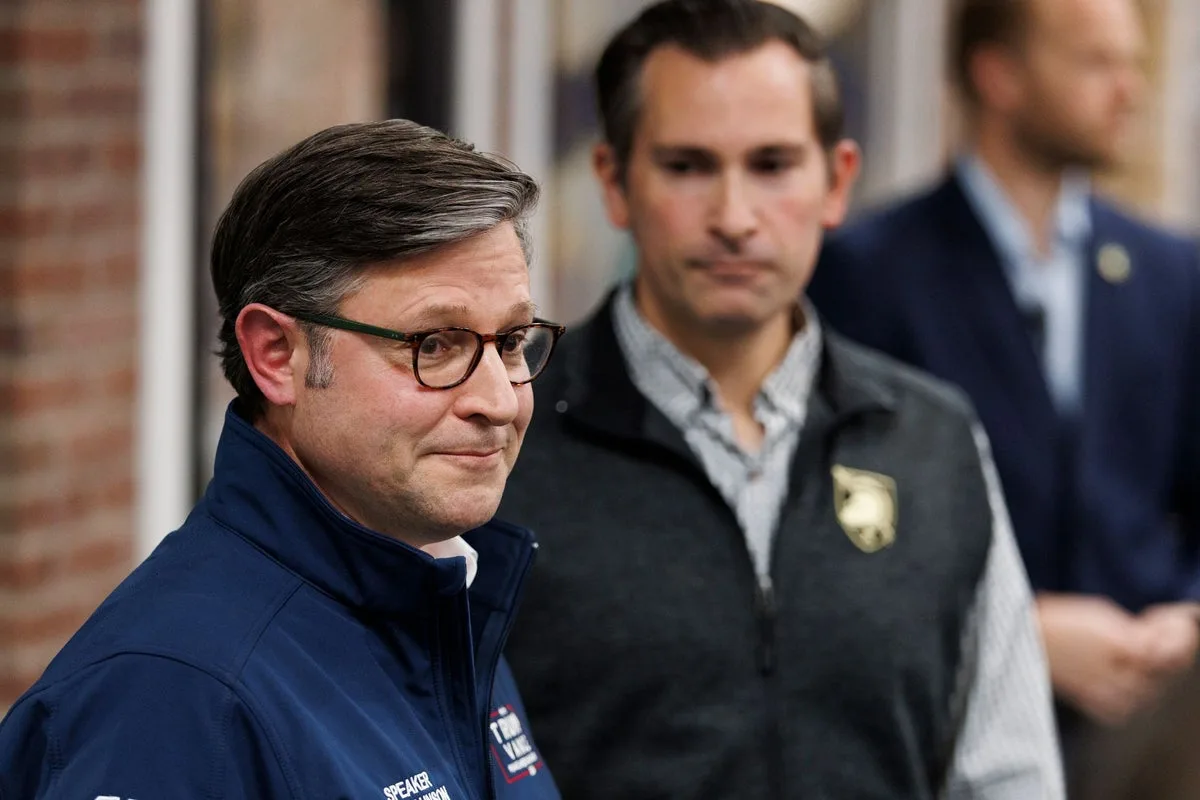
House Speaker Mike Johnson has distanced himself from Donald Trump’s use of a slur against people with disabilities, after the president-elect called Minnesota Governor Tim Walz “seriously r*****ed” on Truth Social over the Thanksgiving holiday. When asked about the remark during his weekly press conference, Johnson said, “Look, that's not the word I would choose.”
The slur, which has long been considered offensive, was used by Trump to criticise Walz over a welfare fraud scandal in Minnesota. Trump later doubled down on the insult, telling reporters, “Absolutely. Sure. You have a problem with it?” Johnson’s comments came after Lisa McClain, chairwoman of the House Republican conference, was seen laughing when the issue was raised.
Johnson defended the sentiment behind Trump’s remarks, saying, “I think everybody understands how absurd and crazy that is, and how Congress has an immediate obligation to look into it.” However, the backlash from other Republicans has been limited. Indiana state legislator Mike Bohacek, whose daughter has Down Syndrome, said he would oppose efforts to redraw Indiana’s congressional map in response to Trump’s language.
Walz criticised Trump’s language on NBC’s Meet the Press, stating, “He's normalized this type of hateful behavior and this type of language.” Senator Bill Cassidy (R-La.) said he was unaware of the comment and declined to comment further. The word was once used as a medical term but has been widely condemned; Presidents George W. Bush and Barack Obama both took steps to remove it from federal language.
This is not the first time Trump has faced criticism for remarks about disability. In 2015, he mocked New York Times reporter Serge Kovaleski, who has a disability, and has called autism a “horror show.” Johnson has previously defended Trump’s controversial rhetoric, including an AI video depicting the former president dumping feces on protesters.




