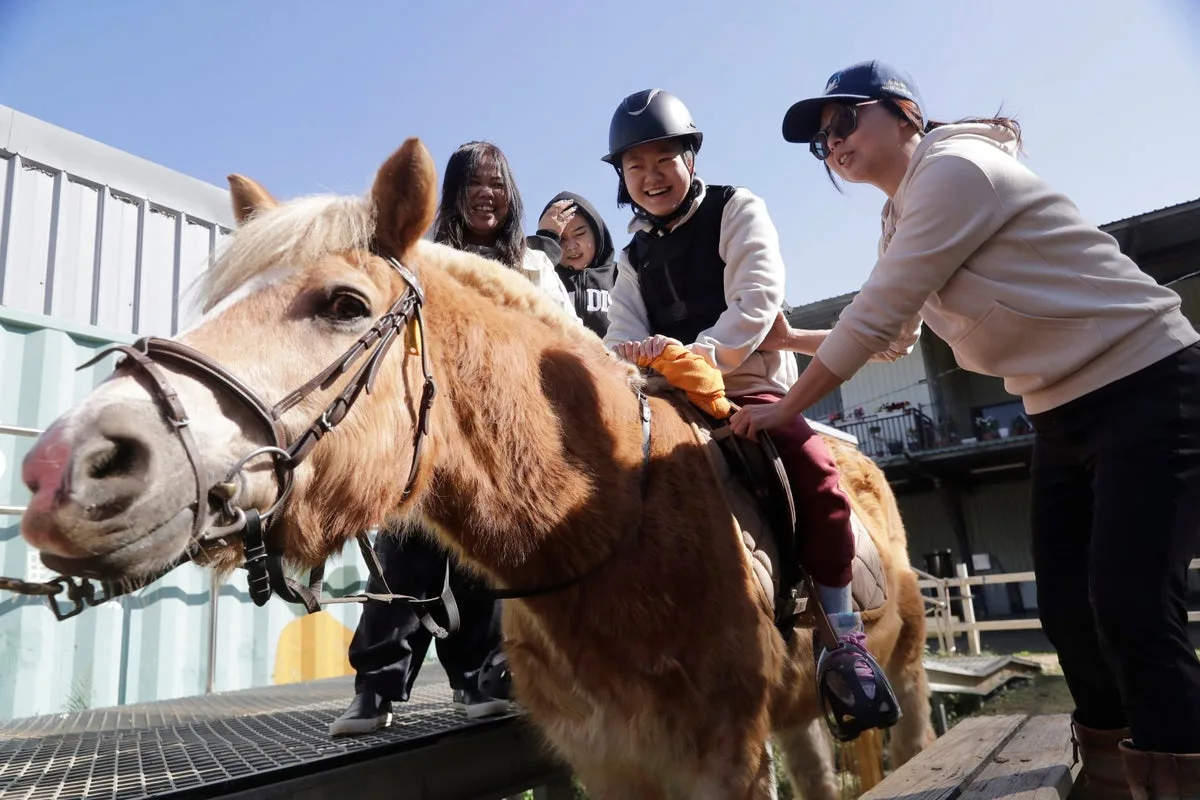
Equine Therapy Brings Joy and Healing to Disabled Children in Taiwan
At the Therapeutic Riding Center of Taiwan, located in the northern city of Taoyuan, children facing various disabilities are discovering remarkable therapeutic benefits and genuine companionship through structured equine-assisted activities. This innovative approach to therapy is transforming lives across the island nation, offering hope and tangible progress where traditional methods sometimes fall short.
Personal Stories of Transformation
Hector Chen vividly recalls the profound moment his daughter, Chen You-ching, first mounted a therapy horse. "The first time she got on a horse, she was happy," he remarked, reflecting on their initial visit to the centre. His daughter, now 18, was diagnosed with cerebral palsy over sixteen years ago, and since that diagnosis, horse therapy has become an integral part of her weekly routine and developmental journey.
Another parent, Abigail Liu, shares similarly powerful experiences with her five-year-old daughter, Ayah, who lives with Angelman Syndrome—a rare genetic disorder causing significant developmental delays. "She started to be less scared about things she doesn't know and is willing to try new things," Liu explained. "All this started after she rode horses here." These testimonials underscore the profound emotional and psychological breakthroughs that equine therapy can facilitate.
The Science and Specialisation Behind the Therapy
The horses at the Therapeutic Riding Center undergo extensive, specialised training to ensure they can safely and effectively work with children who have diverse needs. According to horse therapist Chan Shu-ya, these animals must learn to remain calm amidst unpredictable movements and when surrounded by multiple people. This careful preparation creates a secure environment where children can interact without fear.
Alain Chang, a riding coach at the Fang Hsing-Chung Social Welfare Foundation for Horses in Education and Health, observes that many children form deep, non-verbal connections with the horses. "They feel very at ease, because the horse doesn't show annoyance even if they keep talking to it," he noted. "For them to come here to touch them, to observe them or even to hug them, this is a very special experience." Sometimes, sessions involve simply hugging a horse for extended periods or listening to its steady heartbeat—activities that provide immense comfort and stability.
A Growing Global Movement
Animal-assisted therapy, particularly with horses, is gaining significant momentum worldwide. This therapeutic modality is being successfully implemented with diverse populations, including children with intellectual disabilities and veterans coping with trauma. The approach leverages the unique bond between humans and animals to promote emotional regulation, physical coordination, and social skills.
Chang emphasises the consistency and dedication shown by the young participants. "Many of these students that I meet they look forward to coming to this every week, rain or shine," he said. This weekly commitment highlights not just the enjoyment factor, but the tangible therapeutic value that keeps families returning to the centre.
The programme serves children with a range of conditions including:
- Cerebral palsy
- Autism spectrum disorders
- Attention deficit hyperactivity disorder (ADHD)
- Various rare genetic conditions
Through carefully structured riding sessions and meaningful interaction with these specially trained horses, children are finding new pathways to joy, confidence, and developmental progress. The Therapeutic Riding Center of Taiwan stands as a beacon of innovative care, demonstrating how compassion and specialised animal partnerships can create life-changing therapeutic outcomes for some of society's most vulnerable young people.




