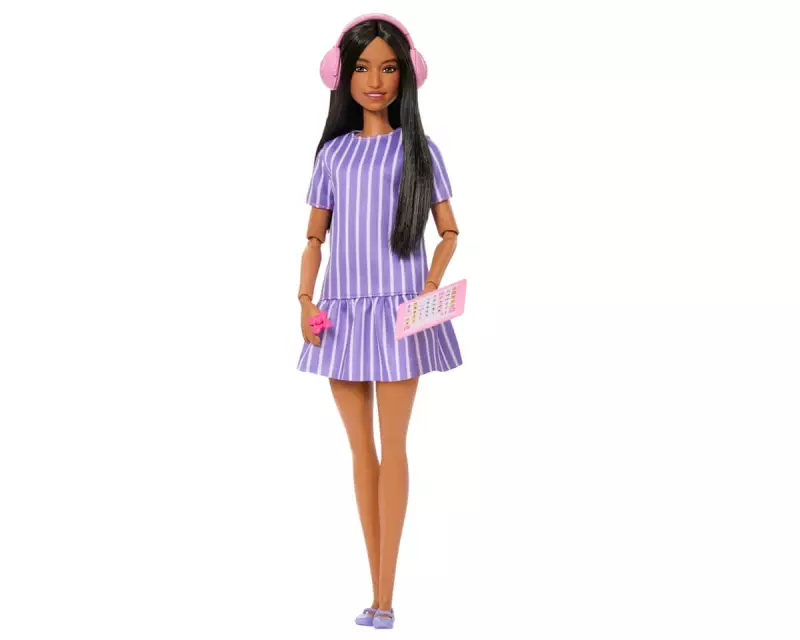
The introduction of the first-ever autistic Barbie doll by toy giant Mattel has ignited a complex conversation about representation, commercialism, and the very nature of play. While hailed by some as a positive step for visibility, the doll has faced significant criticism from autism advocates and academics. At the heart of the debate lies a fundamental question: is this a meaningful step towards inclusion, or a reductive commercial gesture?
A Parent's Perspective: Visibility in the Toy Box
For Dr Erin Beeston, a parent and carer of autistic children from Urmston, Greater Manchester, the doll's launch in January represents a tangible form of recognition. She expresses pleasure that her children now have "more visibility in mainstream culture." In a letter to the Guardian, she notes her kids' interest in the new addition to the Barbie universe, even if her youngest's creative tendencies might see it quickly transformed into a version resembling the now-famous "weird Barbie" from the recent film.
Dr Beeston's personal reaction, however, has been tempered by the strong negative responses from many of her colleagues in academic and activist circles. She acknowledges the validity of their core arguments, stating she "completely understands their reasoning." The critiques are multifaceted, focusing on the inherent difficulty of using visible accessories—like the doll's noise-cancelling headphones and sensory-friendly clothing—to represent a largely non-visible, neurodevelopmental disability.

The Criticisms: Nuance and the Limits of a Doll
The central contention from critics is that a single plastic figure cannot possibly capture the vast spectrum of the autistic experience. Autism encompasses a "breadth, richness and even pain" that defies simple symbolism. Critics question how a doll, with its fixed smile and pose, can convey concepts like autistic burnout, sensory overload, or the myriad ways autism manifests differently in every individual.
There is a concern that such a doll, despite good intentions, may promote a stereotypical or limited view of what it means to be autistic. The reliance on physical props risks simplifying a complex neurological condition into a set of identifiable accessories, potentially overshadowing the internal and often invisible challenges many autistic people face daily.
The Defence: It's Just a Toy for Play
Dr Beeston's defence of the autistic Barbie hinges on a straightforward premise that she feels many critics are missing. "Most critics are not reviewing this as it's intended – a child's toy," she argues. Her point is that the doll's primary audience is children, not adults conducting a nuanced sociological analysis.
She suggests that the emotional depth and complexity critics find lacking—such as showing burnout—is precisely where a child's imagination comes in. "I'd imagine that's down to the kids to convey," she writes, positioning the doll as a starting point for play and storytelling, not a definitive educational model. She observes that some of the strongest opinions are coming from those who would not typically engage with Barbie products anyway. Her concluding sentiment is simple: "To them, I say she's just Barbie."
The debate around Mattel's autistic Barbie underscores a wider tension in representation. While advocates push for authentic and nuanced portrayals, commercial products aimed at children often operate within different constraints. For parents like Dr Beeston, the value lies in the simple act of seeing a reflection of her children's identity on the toy shelf, a small but significant signal that they belong in the mainstream world of play.