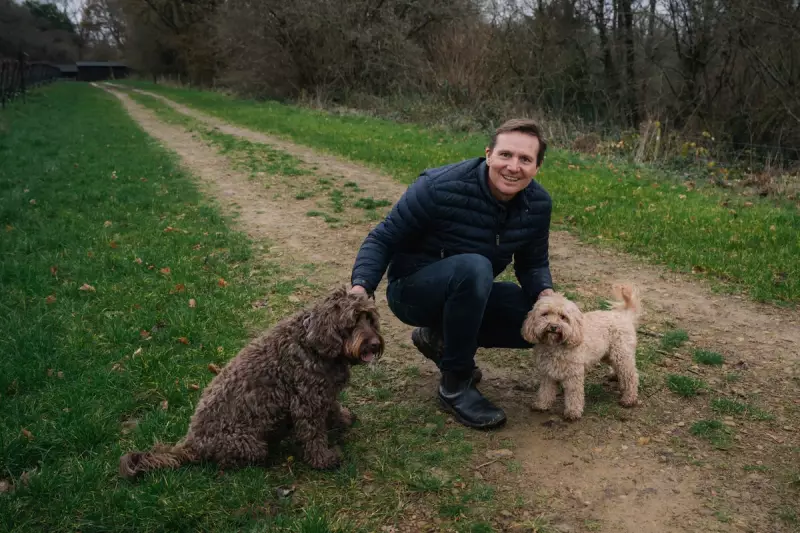
Olympic silver medallist Roger Black has opened up about his recent life-saving heart surgery, revealing he competed at the highest level of athletics for 14 years while managing a congenital heart condition. The former 400m runner, now 59, tells Lisa Salmon about his diagnosis at age 11, his successful career despite the condition, and the walking regimen that has become central to his recovery.
Running with a Silent Condition
As one of Britain's most accomplished 400m athletes, Roger Black never allowed his congenital aortic valve condition to define his career. While he didn't keep the diagnosis secret, he consciously avoided making it a focal point. "I never wanted it to be an excuse," Black admits. "I didn't make it a big deal. All I saw was that I was a very fast runner and I wasn't as out of breath as everyone else. I could only go on what I felt and what I saw, and I felt fine throughout my career."
This determined mindset enabled Black to achieve remarkable success despite his underlying health condition. During his 14-year international career, he secured an Olympic silver medal in the 1996 Atlanta Games and collected a total of 15 major championship medals, including European, Commonwealth, and World Championship gold medals. He retired from competitive sport in 1998 at age 32, transitioning to television presenting and motivational speaking.

The Unexpected Surgical Intervention
Black always understood that his heart condition might eventually require medical intervention, but he anticipated this would occur much later in life. Regular annual heart tests in late 2024 revealed concerning developments that necessitated immediate action. "I always knew the day might come where they said unfortunately, things have changed and you can't carry on," he reveals.
The tests showed his aorta had begun to swell dangerously, creating a potentially life-threatening situation. "When your aorta gets too big, it can burst. And if your aorta bursts, you're done," Black explains with sobering clarity. Despite experiencing no obvious symptoms of valve disease such as breathlessness or fatigue, the internal changes demanded urgent surgical intervention.
"I was shocked, because I felt fine, but I knew one day this was going to happen," Black reflects. "I just thought I'd be in my 70s, not in my 50s." The required procedure involved both valve replacement and aortic reconstruction, representing a significant surgical undertaking.
A Seven-Hour Operation and Recovery Journey
Black underwent a successful seven-hour operation approximately one year ago, emerging with what he describes as "a big scar neck to tummy button." The surgery proved more complex than initially anticipated, with the surgeon revealing to Black's wife that the situation was "a lot worse than they thought." Despite this, the procedure achieved its objectives, marking the beginning of what Black calls "the long road to recovery."
"I realise now how serious it was," Black acknowledges in retrospect. "And genuinely, without being too dramatic, I'm incredibly lucky, because if I hadn't had my tests, who knows?" His experience underscores the critical importance of regular cardiac monitoring for individuals with known heart conditions, even in the absence of noticeable symptoms.
Walking as Ultimate Medicine
For Black, recovery has centered not around running but around walking, which he describes as "the ultimate medicine." "We're born to move," he declares, "but when you've had heart surgery, your whole recovery bases around walking, and you never take walking for granted ever again."
His rehabilitation began modestly with a few steps around the hospital ward, gradually progressing as his strength returned. "And then you realise that your body recovers the more you walk, and the more you move," he observes. "And so it's got to be a good thing."

Now, a year post-surgery, Black maintains a consistent walking routine with his two dogs, Howie and Daisy, in the Surrey hills near his home. He takes two daily walks lasting 45-60 minutes each, setting himself small, achievable targets rather than monitoring step counts. "I've measured my recovery by listening to my body," he explains, describing how he would challenge himself to reach specific landmarks like trees, benches, or the church at the top of a hill before gradually extending his distances.
With characteristic humour, Black notes that his dogs have particularly benefited from his recovery regimen. "For them, me having heart surgery was fantastic because I have to walk – although I would anyway," he jokes. "And of course, I'm at home all the time as well. So they've had a great year."
Advocating for Heart Health Through Walking
Black's personal experience has transformed him into an advocate for walking as a fundamental component of heart health. He now supports the British Heart Foundation's Walk for Hearts campaign, which encourages participants to walk 28, 50, or 100 miles during February's Heart Month. The initiative aims to raise funds for cardiovascular research while promoting physical activity that benefits participants' own heart health.
"People can do it however they want," Black emphasizes. "I'm out twice a day walking because it's still part of my recovery, but you can do it indoors, on a treadmill, you can just monitor how many steps you take."
He has become what he describes as "evangelical" about walking, recognizing its transformative power in his own recovery. "It's more to get the message across of how important walking is, and choosing to walk rather than not," he explains. "I was asked the other day what's one of my favourite walks, and I thought, funnily enough, it's the choice to walk rather than get the tube. It's about choices like that – the more we move, the better it is. I can be evangelical now about walking – it's been amazing for me."
The British Heart Foundation's Walk for Hearts campaign registration remains open until February 14, offering individuals across the nation an opportunity to support vital cardiovascular research while embracing the simple, powerful act of walking that has proven so instrumental in Roger Black's remarkable recovery journey.