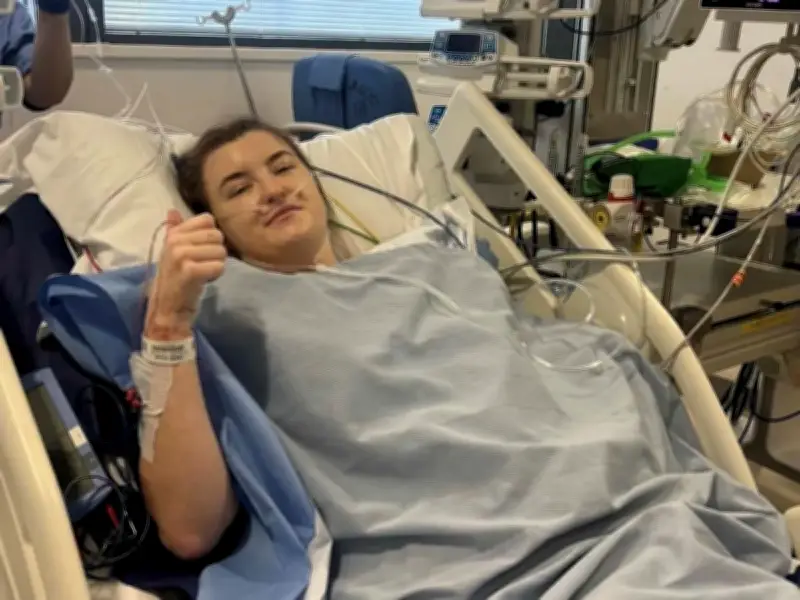
Ashleigh Craig, a 25-year-old student nurse from Blackwood, underwent open heart surgery in October 2025 after being diagnosed with an atrial septal defect (ASD), a congenital heart condition. Despite always being fit and active, she had noticed her heart rate was unusually high and she struggled to keep up with activities she once found easy.
Diagnosis came as a 'complete shock'
Ashleigh, then 22, felt something "didn't feel right" during her regular exercise class and decided to get medical checks. After tests and check-ups, doctors diagnosed her with ASD, a hole in the wall between the two upper chambers of the heart, known as the atrial septum. Doctors told her that some ASDs are very small and may never cause problems, but in her case the ASD was larger and needed surgery.
The diagnosis came as a "complete shock," she said. Looking back, the symptoms had gradually affected her life more than she initially realised. "I tried to do a 5K run the summer before and I just couldn't do it," she said. "I was really struggling."
Initially, medics considered whether her condition could be repaired using a less invasive procedure, but further investigations revealed she needed open-heart surgery.
Recovery and a new outlook
In October 2025, aged 25, Ashleigh underwent open surgical closure of her ASD at the Bristol Heart Institute. "I went into hospital and had the operation the next morning," she said. "I was in hospital for six days in total and I honestly couldn't fault the care I received. It was amazing."
Ashleigh warned people not to delay checking with doctors if they feel anything isn't quite right. "If you think something is a little bit off, go and get checked and advocate for yourself. Push for answers. If I'd ignored what was happening, things could have been very different," she said.
The diagnosis and surgery meant Ashleigh had to put her nursing studies on hold. She took a year out from the University of South Wales while she recovered to rebuild her physical strength and confidence. Now in the final year of her nursing degree, she said the experience has given her more empathy. "It is so much different being on the other side," she said. "I was fit and healthy growing up and had no problems at all, so it gives you a lot more empathy and makes you realise how lucky you are to be the nurse and not the patient."
Family impact and the Cardiff Half
After Ashleigh's diagnosis, and subsequent genetic testing, her sister Abi, 24, was found to have bicuspid aortic valve, another congenital heart condition, and she is now also being monitored by specialists. Throughout her recovery, Ashleigh said she got vital support and information from the British Heart Foundation and reassurance from other people who had gone through similar experiences.
Only one month after returning home from hospital, Ashleigh said she "surprised even herself" by signing up for the 2026 Cardiff Half Marathon with Abi. Both sisters consulted with their cardiology teams "every step of the way." In October, they completed the Cardiff Half, raising £1,000 for BHF Cymru in the process.
Rhodri Thomas, head of BHF Cymru, congratulated the sisters and warned people with a heart condition to always check with their doctors before taking part in a sporting event. "It is great to see people with heart conditions go on to achieve great things," Rhodri said. "If anyone with a heart condition is considering taking on a sporting event, they should always check in with their medical team first. For Ashleigh to achieve this just 12 months after open heart surgery is an outstanding showcase of resilience and determination."