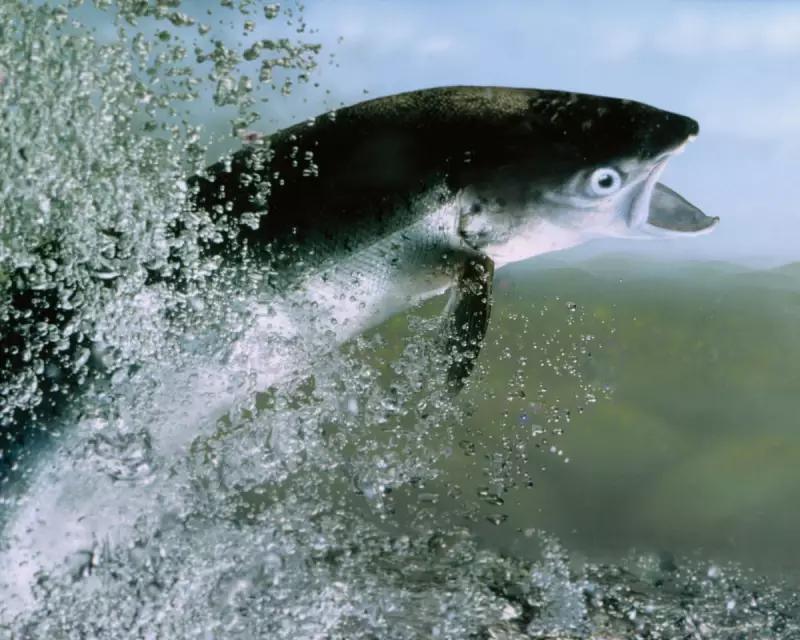
In a development hailed as a "significant environmental turnaround," young Atlantic salmon have been discovered in three rivers in north-west England for the first time in nearly a decade. This sighting offers a rare glimmer of hope for a species that was declared critically endangered in Britain in 2023.
A Journey from the Arctic to the Mersey
The juvenile fish have been spotted in the River Mersey and its tributaries, the Bollin and the Goyt. This confirms that salmon have successfully completed their epic migration from feeding grounds in the Arctic Circle to spawn in the freshwater gravel beds of these English waterways, a journey not documented here since 2015.
A spokesperson for the Environment Agency told the BBC they were "very excited to find the fish successfully spawning, considering the species’ critically endangered status." The agency has announced plans to undertake a new salmon distribution study in early 2026, using advanced eDNA sampling techniques to map the full extent of this recovery.

Threats and the Path to Recovery
The survival of Atlantic salmon in British waters has been under severe threat for decades. Populations have suffered a 30-50% decline since 2006, driven by a combination of climate change, pollution, and invasive non-native species. Their plight was exacerbated during the Industrial Revolution, and despite a partial recovery, they returned to critically endangered status two years ago.
Mark Sewell, a wastewater catchment manager at United Utilities, highlighted the progress made: "Significant stretches of river were biologically dead in the 1980s but today they support thriving ecosystems... Those species are recovering thanks to a significant environmental turnaround."
Man-Made Obstacles Remain
While salmon can now navigate up the Mersey to spawn in the Bollin in Cheshire and the Goyt in Derbyshire and Stockport, physical blockages in other rivers continue to hinder their recovery. Migration is prevented up the River Tame by weirs and up the River Irwell by the Mode Wheel locks at Salford Quays.
Mike Duddy of the Salford Friendly Anglers Society emphasised the need for action: "If we wanted to do something for our future generations, now is the time to build a fish pass because there are huge numbers of people that would love to see salmon returning to the Roch and Irk, as well as the rivers in Bolton."
This discovery in the Mersey catchment represents a crucial, hard-won victory for conservationists. It demonstrates that with sustained efforts to improve water quality and habitat, even species on the brink can begin a tentative journey back. The focus now shifts to removing remaining barriers to ensure these iconic fish can reclaim their historic rivers across the region.