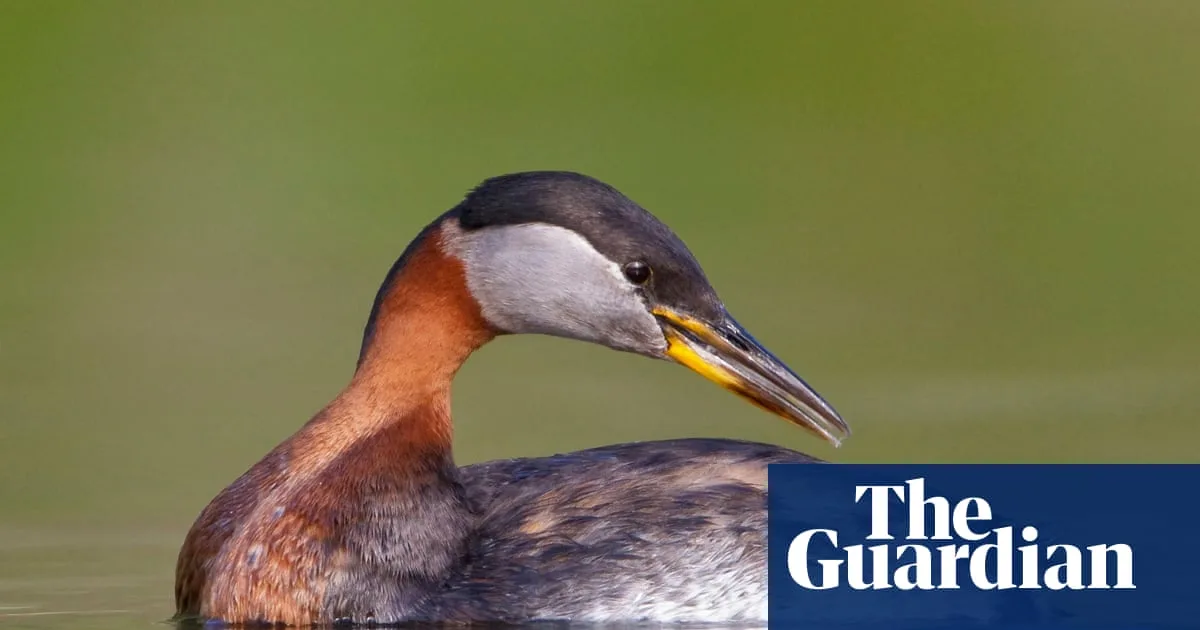
After weeks of heavy rain, Cheddar reservoir in Somerset is finally full again – of water, and of birds. Thousands of coots, hundreds of gulls and ducks, and dozens of great crested grebes crowd the surface, some already moulting into their smart breeding plumage, crests and all.
Among the throng are some less familiar visitors: a flock of scaup, the males bulkier than the nearby tufted ducks, with pale grey backs that catch the light. Flocks of goosanders dive frequently for food, the colourful males looking like a cormorant in extravagant drag.
As a birdwatcher circled the reservoir’s perimeter, they were on the lookout for a very special bird. The red-necked grebe – the scarcest member of its family in Britain – is easily overlooked, superficially resembling a smaller, darker great crested grebe. Several false alarms occurred before the red-necked grebe surfaced just offshore, showing off its dark face and neck and a yellow base to the bill, to reveal its true identity.

Later that day, a friend sent photos suggesting the bird might belong to the American race, which could one day be split into a species separate from its European cousin. Either way, the observer was content simply to watch this attractive and unexpected visitor so close to home.