
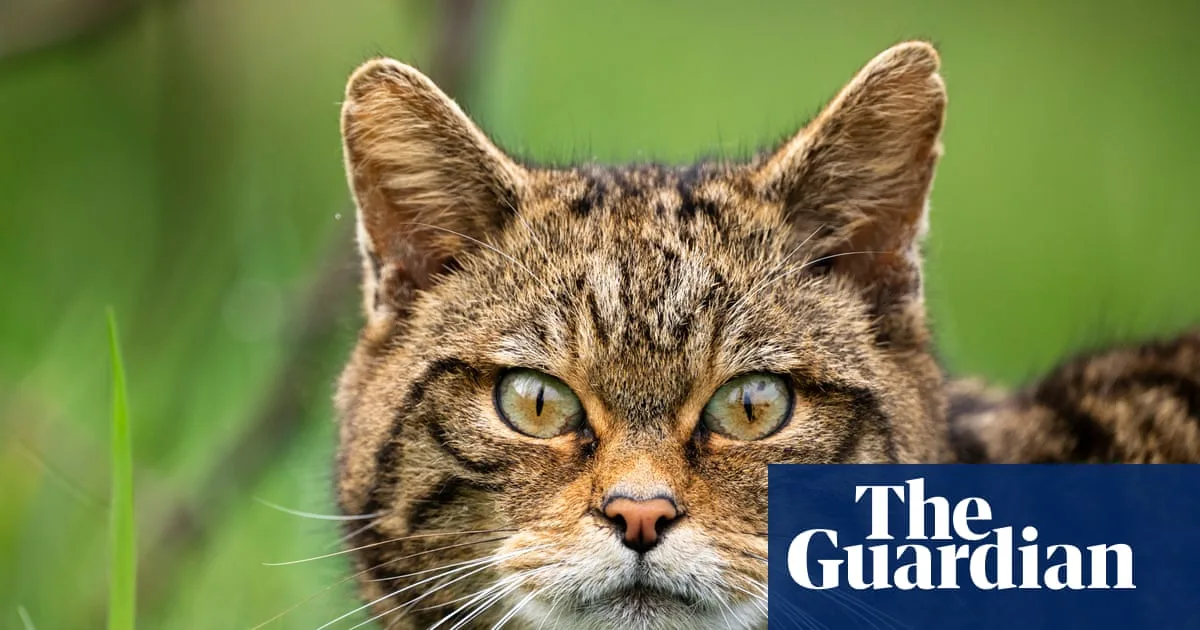
A two-year study has concluded that European wildcats could feasibly be reintroduced to south-west England, more than a century after they disappeared from the region. The research, led by Devon Wildlife Trust, identified an area of woodland in mid-Devon as suitable habitat for a controlled release of the animals.
The study found that the area offers the right conditions, with woodland providing cover and den sites, while low-intensity grasslands and scrubland create good hunting terrain. It envisages the release of between 40 and 50 wildcats, although not before 2027. The report states that wildcats pose no threat to humans, farm livestock or pets, and their diet consists mainly of small mammals such as voles, rats, wood mice and rabbits.
A potential obstacle is interbreeding with feral and domestic cats, which has threatened wildcat populations in Scotland. The study recommends cooperation with local communities and cat welfare organisations to support a neutering programme for feral and domestic cats.
The South West Wildcat Project, a partnership including Forestry England and the Derek Gow Consultancy, carried out the investigation. European wildcats, historically known as “woodcats”, were once widespread in south-west England but vanished due to persecution and habitat loss. The last in the region are thought to have survived on Exmoor until the mid-19th century.
Public attitudes were largely positive, with surveys showing 71% of 1,000 people liked the idea of wildcat return, and 83% of 1,425 respondents expressing positivity. The UK’s only remaining wildcats live in the Scottish Highlands, where they are classed as at risk of extinction, with as few as 115 individuals left in the wild.
Cath Jeffs, project lead at Devon Wildlife Trust, said: “It’s exciting that this report suggests wildcats could be part of the region’s nature once again. A lot of work remains to be done before the first wildcats could be released. Honest and open dialogue with stakeholders will be key.” The next step would involve selecting cats from the captive breeding programme, with their offspring potentially released into the wild.




