
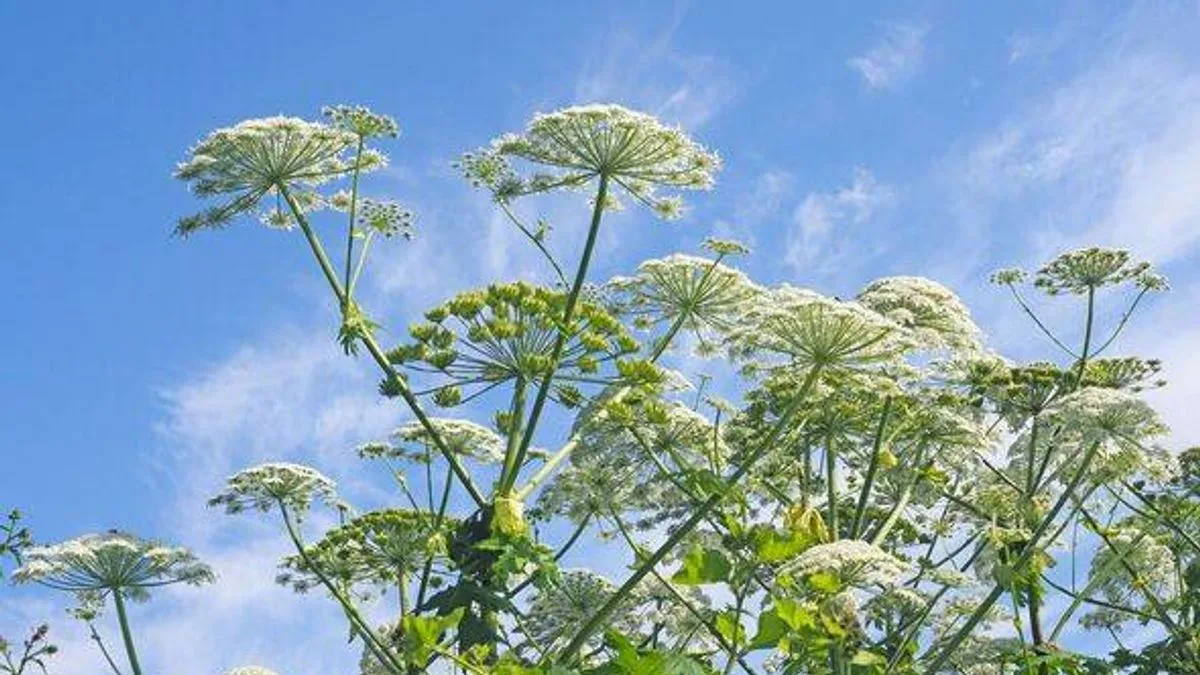
Plant specialists are warning the public about the dangers of Giant Hogweed, a highly invasive species that can cause severe burns, recurring skin reactions, and even blindness in humans and pets. The plant, scientifically known as Heracleum mantegazzianum, is commonly found along river paths and woodland walks across the UK.
Jennifer Holmes from Environment Controls has issued a stark alert, urging extreme caution around the plant. She explained that its toxic sap contains furocoumarin, which makes skin extremely sensitive to sunlight. Contact can lead to large blisters forming within 24 hours, which may recur upon sun exposure for years. The sap is particularly dangerous if it gets into the eyes, potentially causing blurred vision, sight loss, or permanent blindness.
Giant Hogweed is listed under The Invasive Alien Species (Enforcement and Permitting) Order 2019, making it an offence to plant or allow it to spread into the wild. Landowners are legally responsible for controlling its growth, and failure to do so can result in fines or other penalties. Experts advise against attempting removal and recommend consulting professionals.
Daniel Docking from the Property Care Association emphasised the need for public awareness, noting that the plant's distribution and frequency are increasing. He highlighted that every year, injuries are reported from people coming into contact with the plant, which causes a skin reaction aggravated by sunlight. The plant can be mistaken for non-toxic Cow Parsley or highly toxic Hemlock, so identification should be done from a safe distance.
Key characteristics include its height—Giant Hogweed can grow over 10 feet tall—and its distinctive flower heads, which emerge in June. The PCA advises against getting too close to the plant when trying to identify it, as symptoms may not appear for up to two days, leading to prolonged sun exposure and worsened damage.




