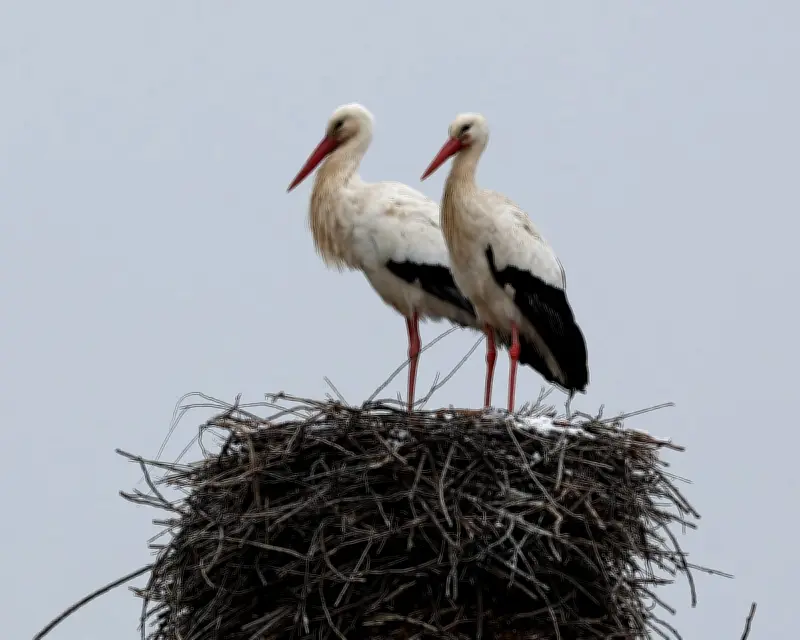
White storks in Europe are increasingly turning to landfills for food, a habit that boosts their body mass and energy stores but also exposes them to contaminants and DNA damage, according to new research presented at the Society for Experimental Biology conference in Florence.
Landfill Foraging Provides Short-Term Benefits
Researchers studying white stork populations in Poland found that birds feeding from landfills tend to have greater body mass and higher energy stores than those relying on natural prey. Anustup Bandyopadhyay, a PhD student at the University of Veterinary Medicine Vienna involved in the study, explained that storks can spend less time foraging and potentially channel that time and energy into other activities such as breeding. He noted that Polish partners observed storks using landfills mostly in the middle of the breeding season, when food demands of nestlings are at their peak.
Landfills offer a readily available mix of human food waste, meat scraps, insects, rodents and earthworms, allowing storks to conserve energy that would otherwise be spent searching across fields and wetlands. However, these sites also contain plastics, wires, glass and heavy metals, raising questions about whether this "junk food" diet is ultimately helpful or harmful.
Hidden Health Risks Detected in Chicks
The research also uncovered evidence of DNA damage linked to landfill diets, appearing much earlier than expected—in chicks only about a week old. This suggests that contaminants from landfill food can have immediate physiological effects on young birds. Prof Aldina Franco, an ecologist at the University of East Anglia (UEA) not involved in the research, described landfill food as "junk food" for birds—rotting, poor quality, but highly energetic. She noted that while a few storks may die from eating contaminated items, the majority benefit from the extra food source.
The findings point to a complicated trade-off: landfill food may help the once-endangered species grow and save energy, boosting population numbers, but it may also be altering their bodies in ways that are only beginning to be understood.
Shifts in Migration Patterns
The convenience and reliability of landfill foraging are influencing migration patterns. Bandyopadhyay highlighted that white storks on the Iberian peninsula have shifted from being wholly migratory to partially migratory or even sedentary, largely due to favourable weather conditions and the availability of landfill food subsidies. This behavioural change mirrors trends seen in western European populations.
Once known for long-distance migrations between Europe and Africa, some stork populations have altered their behaviour as discarded food has become easier to find than natural prey. The researchers used Polish populations—where most birds still rely mainly on natural prey—to compare individual storks using different foraging strategies.
EU Waste Policy Could Impact Storks
The issue is becoming more urgent as changes to EU waste management policies reduce open landfill access across Europe. This could affect the numbers, movements and breeding success of storks that depend on these sites. Prof Franco warned that if storks are completely prevented from accessing organic waste, populations might decline. She pointed out that white stork populations were declining until the 1980s, disappeared from several European countries, and have been reintroduced in Sweden and recently in the UK.
Franco added that while people are happy to provide food in gardens via bird feeders, landfill sites contain waste that humans no longer use. She questioned whether some species should be allowed to benefit from these resources. The research underscores the need for careful consideration of how waste management policies affect wildlife.