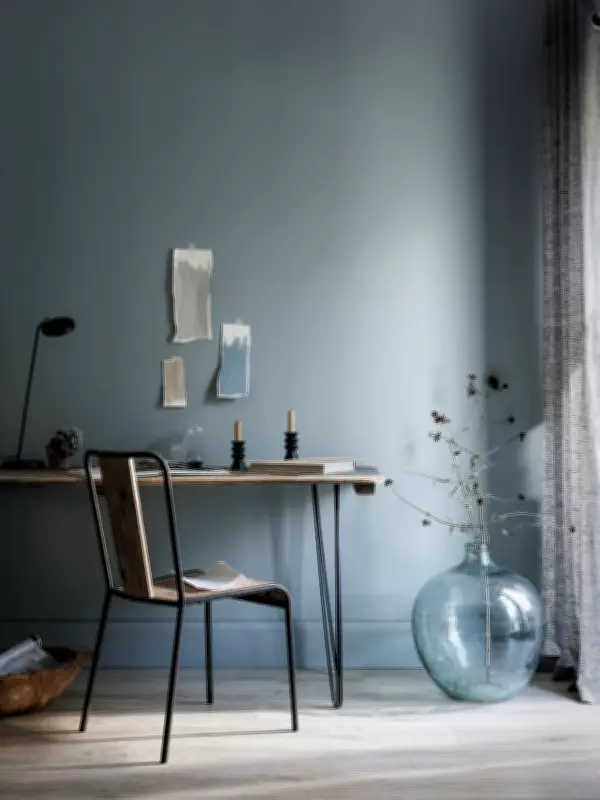
Sensory home design, which started as a way to make spaces more neurodiversity-friendly, treats all senses as important, not only sight and touch. In a world where visual display via platforms like Pinterest and Instagram is often privileged over the experience of inhabiting a space, it offers a step away from perfection and trends.
“It’s less about the look and more about how a space makes you feel,” says Michelle Ogundehin, chief judge of Interior Design Masters and author of books on the subject. “A way of designing that asks how a space breathes, how it ages, how it affects our wellbeing.”
The Impact of Home Design on Wellbeing
“You never really think about how your home’s design could be actively failing you and your wellbeing,” says Pippa Jameson, founder of The Sensory Home. “You think about food, exercise, sleep technology, but not design.” Harsh lighting, echoey acoustics, uncomfortable furniture, and overwhelming fragrances may seem small, but collectively they can create a triggering environment. “When I explain it, so many people say ‘Oh my God, of course that’s what’s causing me all this anxiety!’” says Jameson.
Franky Rousell, founder of Jolie Studio, a multi-sensory-focused interior design practice, puts her work with neuroscientists at the core of her process. “Our approach allows people to think about how they want to feel in a space, what’s true to them, and how to let the science inform their decision-making process,” she says. “It can end up being an amazing process, but also the results look so much more bespoke than anything designed by trawling other people’s homes on the internet.”
Smell: Layering Fragrance for Mood
“There is an opportunity in your home to use fragrance across many layers to change your mood,” says Rousell. Diffusers, both traditional reed and Bluetooth-enabled electronic versions with timers and adjustable frequencies, can be used. The trusty candle is also a lovely way to diffuse fragrance. Identify base, middle, and top notes to play with; for example, a woody base note in every room with complementary middle and top notes. Herb fragrances in the kitchen subtly stimulate appetite. Use oil-based, hypoallergenic fragrance to avoid synthetics. “I saw someone who was burdened by headaches and assumed it was stress-related, but actually we discovered it was the air freshener she was using at home,” says Jameson.
“The silent layer here is fabric fragrance,” says Rousell. “Your detergent or fabric softener carries quite a lot of potency and some people are averse to those scents, so choose one that aligns with how you want to feel.” Good ventilation is also key to removing wrong smells; Jameson stresses the importance of a quiet extractor fan in the kitchen.
Sound: Managing Acoustics for Calm
“Sound can influence our heart rate, our breathing rate, our hormone production and our cortisol levels,” says Rousell. “Our ears never switch off, so at night you want to allow your ears a constant, whether total silence or white noise.” Removing negative sound is crucial: during renovation, add sound-absorbing panels, double glazing, insulated floors, and Quiet Mark appliances. Not all sound-proofing is costly; mature hedges and bushes create a sound barrier, and acoustic curtains can muffle street noise. Soft finishes like wood and lime plaster help. “And if you have noisy neighbours on the other side, a bookshelf full of books is a surprisingly good noise absorber,” says Jameson. Adding positive sound like birdsong or classical music can also reduce cortisol.
Sight: Reducing Clutter and Choosing Colours
“Clutter is a huge trigger. Modern homes do not build in enough storage and so we end up with huge amounts of clutter,” says Jameson. This is not about uncompromising minimalism but curating treasures. “On a visual processing level, clutter is stressful, so having an ability to stow away gives us a more relaxed environment,” says Rousell. Colour choice is also crucial. Jameson created a paint for wellness collection with Graham and Brown with five moods: rest, nook, gather, focus, and create. All colours are low saturation with a grey undertone. “We talk about the effect, say, green is going to have in calming your central nervous system because it’s the most common colour in nature, or how blue can help your cognitive function,” says Jameson. However, Rousell notes that the best colour depends on background, economic upbringing, and climate. “People always ask me, ‘what is the best colour for sleep?’, but that depends not just on sensory input but also your lived experience,” she says. Research suggests orange encourages creativity, pastel tones are calming for bedrooms, and deep dark green gives a cocooning sensation.
Touch: Ergonomic Furniture and Materials
Uncomfortable chairs cut dinner parties short, the wrong sofa causes misery, and mattresses and pillows are a more important investment than bedframes. “Furniture that you sit or lie on should support your body so that you can focus on the things you are supposed to be doing,” says Jameson. Materials affect behaviour unconsciously. “When you touch something your receptors say ‘this feels nice’ or ‘that’s scratchy’. Too much discomfort and you feel overstimulated,” says Jameson. For example, a glass table makes a loud chinking sound when you put down a glass, while some materials dampen those effects. “Whether it’s the material underfoot or the kitchen counter, subconsciously this changes how we feel,” says Rousell. Both experts stress that sensory design is not prescriptive. “If you’ve got all the underlying elements in place—acoustics, lighting, ergonomic furniture—then you bring in your personality,” says Jameson. Rousell adds: “The whole purpose is to feel effortless, doing the heavy lifting via subtle cues to encourage positive behaviour.”