In a remarkable scientific endeavour that echoes the fictional premise of Jurassic Park, researchers have successfully used blood-sucking mosquitoes as a tool to catalogue local wildlife. A team from the University of Florida has spent eight months analysing the DNA found in mosquito blood meals, creating a detailed snapshot of the biodiversity within a protected conservation area.
From Science Fiction to Scientific Method
The concept will be familiar to film fans. In the 1993 blockbuster Jurassic Park, dinosaurs were resurrected using DNA extracted from mosquitoes preserved in amber. While the Florida team, led by entomologist Dr. Lawrence Reeves, had no intention of reviving extinct creatures, they employed a strikingly similar principle for conservation. Their goal was to non-invasively identify all the vertebrate animals living in and around the university's DeLuca Preserve, an 80-mile stretch of protected land south of Orlando.
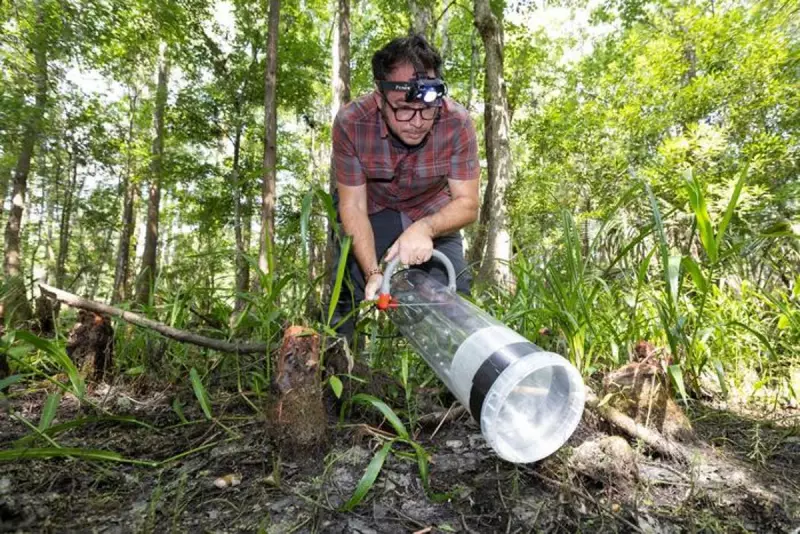
The process hinged on capturing female mosquitoes, which are the only ones that bite, as they require blood protein for reproduction. Using vacuum traps, the scientists collected more than 2,000 blood meals from 21 different mosquito species over the eight-month study period. The blood, stored in the insects' abdomens, provided a genetic treasure trove.

A Comprehensive Wildlife Census
The subsequent DNA analysis revealed an astonishingly broad cross-section of local fauna. From the DNA present, the team identified 86 different animal species. The list was extensive and eclectic, encompassing creatures from tiny frogs to large mammals like deer and cows.
The mosquitoes fed indiscriminately, with their meals tracing back to a wide variety of animals including:
- Bald eagles
- Coyotes and otters
- Rattlesnakes and alligators
- Toads and tortoises
Dr. Reeves noted the method captured data on animals with "very diverse life histories," including arboreal, migratory, amphibious, native, and even invasive species. This proved the technique's power as a comprehensive monitoring tool.
The Notable Absence and Its Significance
Interestingly, one of Florida's most iconic and endangered predators was missing from the genetic lineup. The team did not detect the Florida panther in any of the thousands of mosquito blood samples. This absence, however, is telling. With an estimated wild population of just 120 to 230 adult panthers confined to areas south of Lake Okeechobee, their scarcity means encounters with mosquitoes are statistically rare.
This lack of detection underscores the panther's precarious status while simultaneously validating the method's sensitivity; if even a handful of mosquitoes had fed on a panther, the DNA would likely have been found. The research, therefore, offers a novel, passive way to monitor the presence—or alarming absence—of critically endangered species within an ecosystem.
Published in December 2025, this pioneering study moves a cinematic concept into the realm of practical science. It provides conservationists with a powerful, non-intrusive new technique for conducting wildlife surveys and tracking biodiversity, proving that sometimes the most persistent pests can be transformed into invaluable scientific allies.