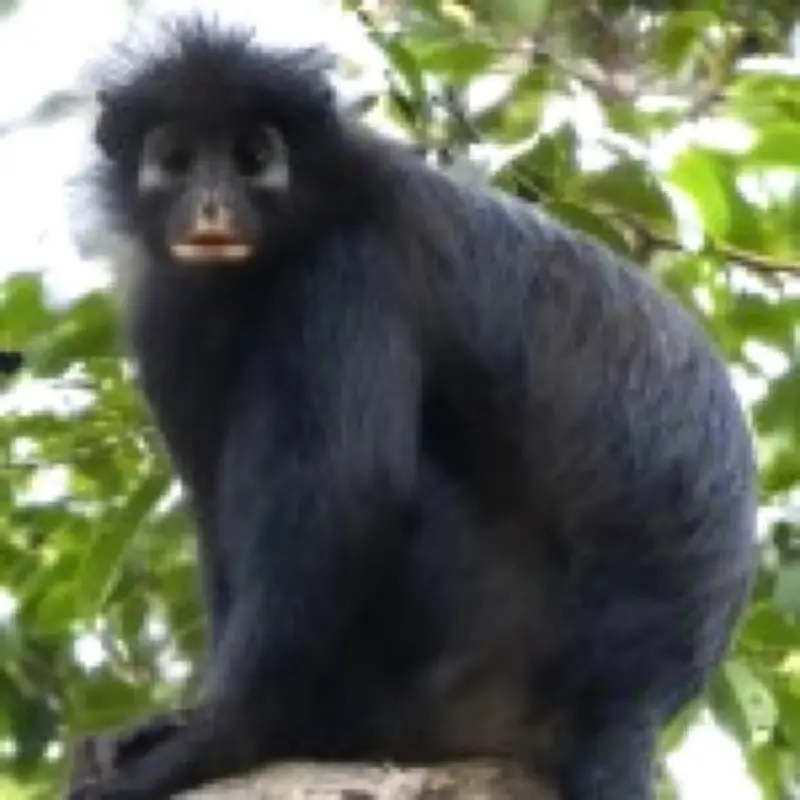
Scientists have discovered a new species of monkey with striking orange lips deep in the rainforests of the Democratic Republic of Congo. Named Colobus congoensis, the primate is already feared to be endangered due to its limited range, habitat loss, and hunting pressure.
Distinctive Features and Local Name
The monkey, known locally as 'Likweli', is largely black with glossy fur, cape-like shoulders, a long sweeping tail, and a vivid orange-cream patch around the mouth and nose, giving it a 'striking, mask-like' appearance, according to study co-author Junior Amboko, a PhD student at Florida Atlantic University (FAU).
Fifth New Monkey Species in 75 Years
This is only the fifth new monkey species identified in Africa in the last 75 years. Despite decades of scientific exploration, the species had remained undocumented until 2008, when researchers captured a partially obscured photograph. A decade later, a clearer image was obtained, sparking further investigation.
Genetic Confirmation
Genetic, anatomical, and acoustic analyses have confirmed that C. congoensis represents a distinct evolutionary lineage that diverged from its closest known relative four to five million years ago. The discovery was made by an international team led by FAU and the Lukuru Wildlife Research Foundation in the DRC.
Research and Sightings
Between 2018 and 2022, researchers recorded 114 sightings across an estimated range of 1,700 square kilometers. Junior Amboko said: 'This discovery is both exciting and deeply personal, highlighting the extraordinary biodiversity of my homeland and how much remains undocumented. I was fortunate to be part of this discovery from the very beginning.'
Endangered Status Proposed
Due to its extremely limited range, small population size, growing hunting pressure, and ongoing habitat loss, scientists are proposing C. congoensis be classified as 'endangered' on the IUCN Red List. Study first author Dr John Hart of the Lukuru Wildlife Research Foundation added: 'We continue to be reminded that the Congo Basin remains one of the world's last great frontiers for mammal discovery. Even in regions that have been scientifically explored, entirely new species are still coming to light.'