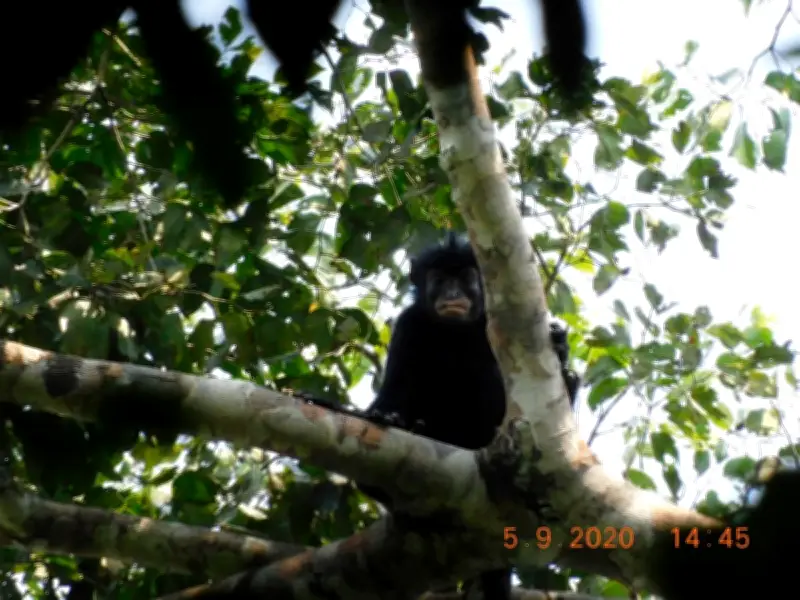
A bizarre new monkey species with massive orange lips, a pout, and a strong odour has been discovered in the remote jungles of DR Congo after a nearly 20-year search. The Likweli monkey was officially confirmed as a new species following an eight-year investigation that saw scientists painstakingly track the elusive animal.
Discovery and Appearance
The odd-looking primate was finally found tucked away in a remote part of DR Congo, after an unconfirmed photo in 2008 prompted desperate efforts to confirm its existence. The Likweli boasts a patch of long black hairs on the forehead and sides of the face and impressive orange, almost duck-like pout, which scientists believe may be used to create a striking visual display when it roars.
The animal's backside also drew interest from biologists, who noted its striking white perianal patch. One hunter described the creature as emitting a strong odour. Despite not being known to biologists, the Likweli has long been on the radar of the local Mituku people, who refer to the species as kasaba nkoni, meaning the branch shaker.
Behaviour and Communication
The shy primate's communication clearly fascinated biologists tracking the creature, who spent days recording its range of burps, snorts, and roars used to chat with other Likwelis in the thick jungle. According to the report, every larger cry was accompanied by a shorter burp-like sound, which scientists describe as a snort vocalisation.
The creature has been described as quiet and cryptic with a localized distribution by experts, who have labelled the rare new monkey as an endangered species.
Significance of the Discovery
Junior Amboko, a PhD student who played a key role in the search, told BBC News that it had been an amazing feeling to finally confirm they were tracking a brand new species. He explained: As part of our search, we interviewed people in 52 villages close to where the animals live. And only people in eight villages had ever seen them. You often hear them, but don't see them, he added.
The Likweli becomes just the fifth new primate discovered on the African continent in nearly a century and is being heralded as a massive breakthrough in tracking the dense Congolese jungle.