Wild Rhino Strolls Through Nepali Village Highlight Growing Crisis
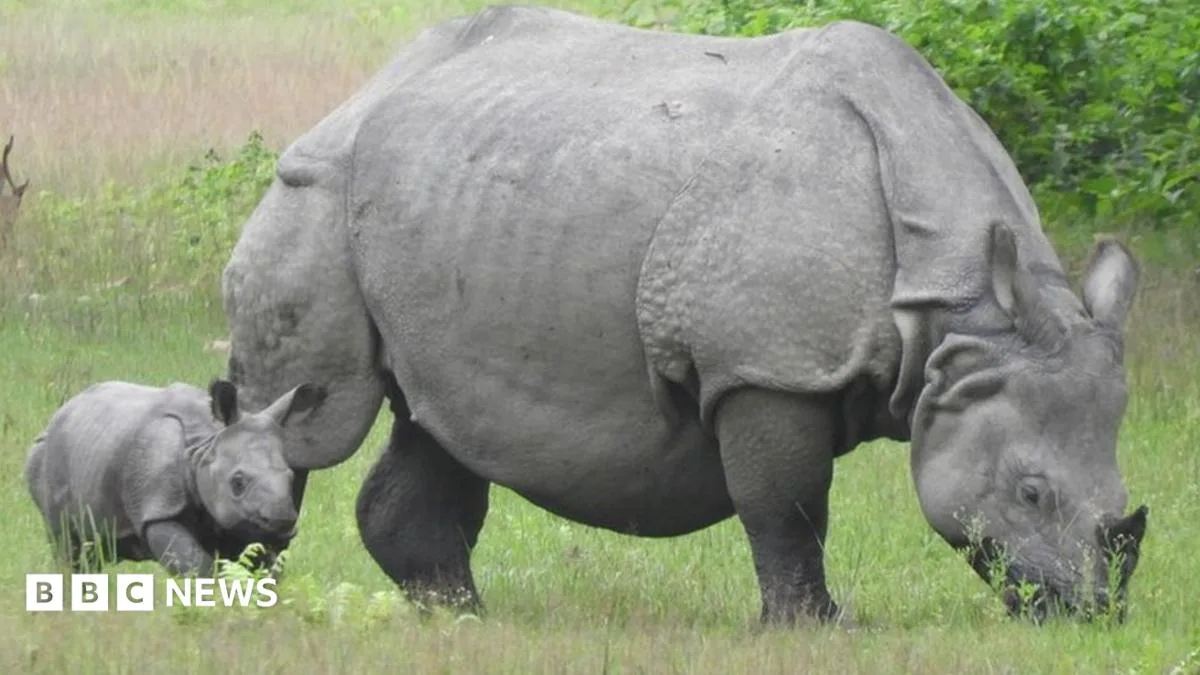
In a remarkable yet increasingly common scene, a wild Indian rhinoceros recently ambled down the main street of Sauraha, Nepal, as tourists and locals watched in a mixture of awe and apprehension. The massive creature, illuminated by vehicle headlights and camera flashes, eventually wandered into a hotel parking lot before being gently guided away with strobe torchlight by the hotel manager. This peaceful encounter, however, masks a growing national crisis as Nepal experiences escalating human-wildlife conflict.
Conservation Success Creates New Challenges
Nepal has become a victim of its own conservation achievements. From a perilous low of approximately 100 rhinos in the early 1970s, effective anti-poaching measures and community engagement have boosted populations to nearly 700 today, primarily in and around Chitwan National Park. Similar recoveries have been documented for tigers and gharials, species once teetering on the brink of extinction. This remarkable rebound, while ecologically significant, has dramatically increased dangerous interactions between humans and megafauna.
The statistics are sobering: eleven people lost their lives in megafauna encounters in 2024 alone, with eight fatalities directly attributed to rhinoceros attacks. Most incidents occur not in deep wilderness but in community forests and buffer zones where human activity intersects with animal territories.
Personal Tragedy Drives Educational Response
Doma Paudel, Nepal's first female trail guide and founder of the Wildlife Victim Fund, understands this conflict intimately. In 2004, her mother was killed by a rhino while gathering firewood. This personal tragedy fuels her mission to promote safer coexistence. "Wildlife populations are increasing and the number of human-wildlife conflict incidents is also rising," Paudel explains. "This leads to growing anger, fear and concerns about livelihoods."
Paudel recently conducted a seven-day immersive workshop for 21 emerging environmentalists, focusing on developing community education strategies. Participants use roleplay to simulate encounters with animals like rhinos and tigers, preparing them to teach villagers, particularly women and schoolchildren, how to respond safely. Women face disproportionate risk as traditional Nepali society assigns them the bulk of forest-based tasks like collecting firewood, herbs, and animal fodder.
Community Stories Highlight the Human Cost
In the Madi valley, surrounded by forests and Chitwan National Park, farmer Balkrishna Bhattarai notes rhinos now frequently visit his fields, sometimes passing right by his home. Three weeks before speaking, his 22-year-old son Ashok was killed by a rhino while trying to protect their mustard seed crop from being eaten.
Nearby in Pandavnagar village, Juna Bote recounts the loss of her husband Bhanu, who was dragged into the jungle by a tiger while fishing with a group. Only his blood-stained clothing was recovered, leaving Juna to raise their five children alone. "I'm afraid now to enter the forest," she admits, "but what choice do I have?"
Balancing Protection and Coexistence
Despite the tragedies, there is hope. Community watchtowers, known as machans, are used during rice-growing seasons to monitor for rhinos. Educational outreach is expanding, with Paudel's initiative visiting villages to speak primarily with women and children. The goal is not to eliminate wildlife but to create strategies for shared spaces.
"Space is to share with other animals," Paudel asserts. "If we love nature, nature will love us back." As Nepal continues to navigate the complex intersection of conservation success and human safety, these community-based education programs represent a critical path forward in reducing conflict while preserving the remarkable wildlife recovery that defines the nation's environmental legacy.