
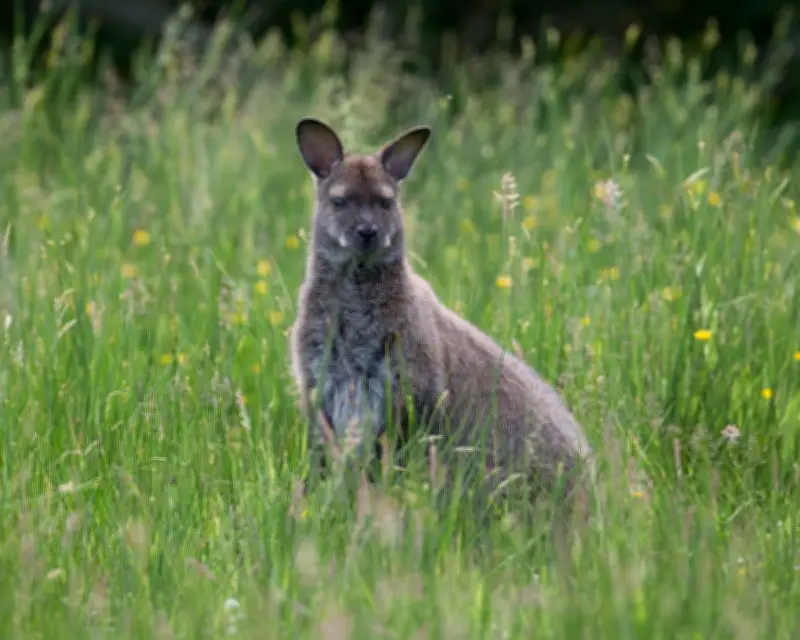
Walking through Ballaugh Curraghs, a marshland in the north of the Isle of Man, I am engaging in a popular local activity: spotting red-necked wallabies. Creeping through the willow stands, I soon spot a grey shape with beady eyes and pricked ears watching me, unafraid. Another appears, and I search for the ultimate sighting—a joey poking out from a pouch—but without success. Such a sight is rare even here.
Transformation of the Landscape
These marsupials have transformed this area beyond recognition. They arrived in the 1960s after a few escaped from a nearby wildlife park. Even by 2006, their impact was minimal enough that the curraghs were designated a wetland site of international importance. Today, however, that status would be hard to maintain, as many key species have been eaten or disturbed by the approximately 800 wallabies that now dominate.
Mixed Feelings Among Residents
To many Manx residents, wallabies are lovable creatures. Pictures of them appear in social media posts and are featured in journals worldwide. However, their popularity is waning as people learn about the downsides of their numbers. Cute wallabies are vectors of toxoplasmosis, a parasite that can cause spontaneous abortion in women. Liver fluke has also been found in postmortems of animals hit by cars. A string of accidents caused by drivers swerving to avoid wallabies has been reported, and the fear of one hopping in front of a high-speed TT rider is a nightmare for race organizers.
Environmental Damage
Their effect on the natural environment is also a concern. The part of the curraghs I walked through is dense willow, but the understorey of rare plants, including royal fern and common wintergreen, was absent—nibbled down to the soil. I should have seen vegetation below a metre, such as ivy, angelica, and meadowsweet, but saw none. Nearby, a huge field that once hosted a winter roost of more than 100 hen harriers was recently found to have hundreds of wallabies grazing nightly, while the birds have disappeared. Nor are the wallabies themselves thriving despite their growing population, suffering from inbreeding and poor diet.
Management Efforts
What can be done? The Manx Wildlife Trust is developing a management policy that balances animal welfare, economic concerns, and local ecosystems. But one thing is certain: the island's wallabies are likely here to stay.




