I got lost at National Trust Formby and didn't see a single red squirrel. The red squirrel population at this renowned reserve reached a 17-year low in 2025, according to data from The Wildlife Trust for Lancashire, Manchester & North Merseyside.
An Absent Resident
The Formby red squirrel reserve is a haven of wildlife amidst relentless urban sprawl. Through the rustling branches of towering pines, birds chirrup in their nests while others busy about the forest floor, picking at pinecones and twigs. Yet amid all this animal activity, one important resident remains conspicuously absent. I have never seen a red squirrel at the red squirrel reserve, perhaps reflecting the recent drop in numbers.
The large stretch of woodland separating the luxury houses north of Formby from the sandy coast is one of the last red squirrel strongholds in England. Numbers have massively declined since the mid-20th century, and the population is now predominantly found in the forests of Scotland and Ireland. The species is classified as 'endangered' and is one of 21 animals considered at risk of extinction in Britain. In England, only a few small isolated pockets remain, including in Formby.
Population Decline
Now these precious few could also be struggling, as population numbers have hit a 17-year low. In the Trust's most recent red squirrel monitoring report, published in autumn 2025, observations were carried out on 14 routes throughout the reserve woodlands, with red squirrels being noted on 12 of them. The total number of red squirrels spotted in the area has fallen by 77% since the first survey was undertaken in 2002. This marks the second largest drop in population size since records began.
More worryingly, 15 grey squirrels were seen within the reserve. These North American invaders pose a catastrophic threat to native red squirrels as they out-compete them for food. They also risk spreading the deadly squirrel pox virus, which hit the area in 2019, resulting in a population decline of more than 50% compared to the previous year. Thankfully, no cases of squirrel pox were reported to the Trust last year, despite the increase in greys, which is believed to be due to 2025 being a 'mast year' for several tree species in the area, meaning they produce a larger crop of seeds or nuts.
Conservation Efforts
The report reads: 'Whilst the percentage of red squirrel is lower than in 2002 when the monitoring first began, we are looking at the population density and believe that this number is a more natural density compared to 2002. This is because the amount of supplementary feeding has been reduced and red squirrels are now dispersing into new areas.' The highest number of red squirrels were seen on the National Trust Victoria Road and Caravan Parks routes, with five sightings on each route marking an increase in the number seen in autumn 2024. The Trust also reported an increase in red squirrel breeding success last year due to the large tree crop and milder weather.
Conservation work is ongoing in the area to preserve the squirrels' habitat. This autumn and winter, the National Trust will be thinning mature pine trees to create light and space before the bird nesting season starts. Each tree will be checked for active squirrel nests to ensure that no wildlife is disturbed. The Trust will also remove clusters of invasive grey poplar trees and plant around 2,500 sapling trees and shrubs, including the Scots pine, one of the red squirrel's favoured nesting spots.
A Personal Search
Signs peppered throughout the woodland provide tips on squirrel-spotting, including visiting at quieter times when fewer people are on the trails. I began my walk in the morning, with no specific destination in mind as I wandered along the winding paths. Sadly, I was not lucky enough to see one of the elusive red squirrels, only a couple of crows, sparrows, robins, and a handsome jay flapping about in the bushes. As I moved into the afternoon, groups of people came shrieking and bawling through the nature reserve, screaming at errant dogs and children, and I knew my chances had well and truly disappeared.
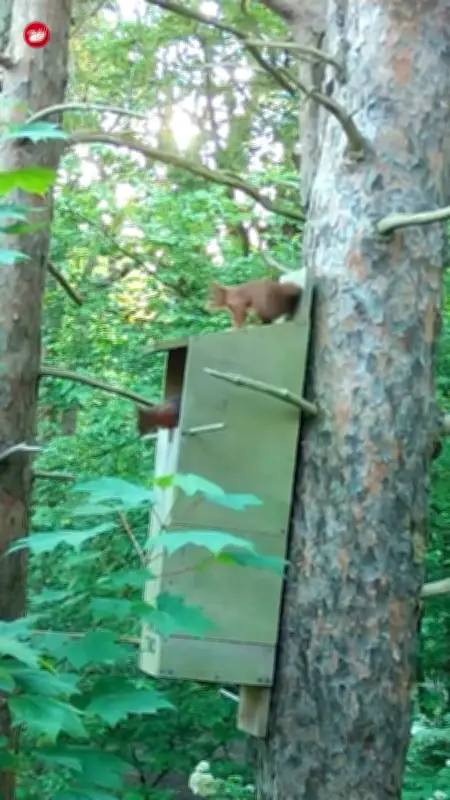
That red squirrels do still live in the woodland, though, cannot be denied. Just two weeks ago, National Trust Formby captured trail cam footage of a pair of red squirrels setting up home inside an owl nest box, possibly preparing for a litter.