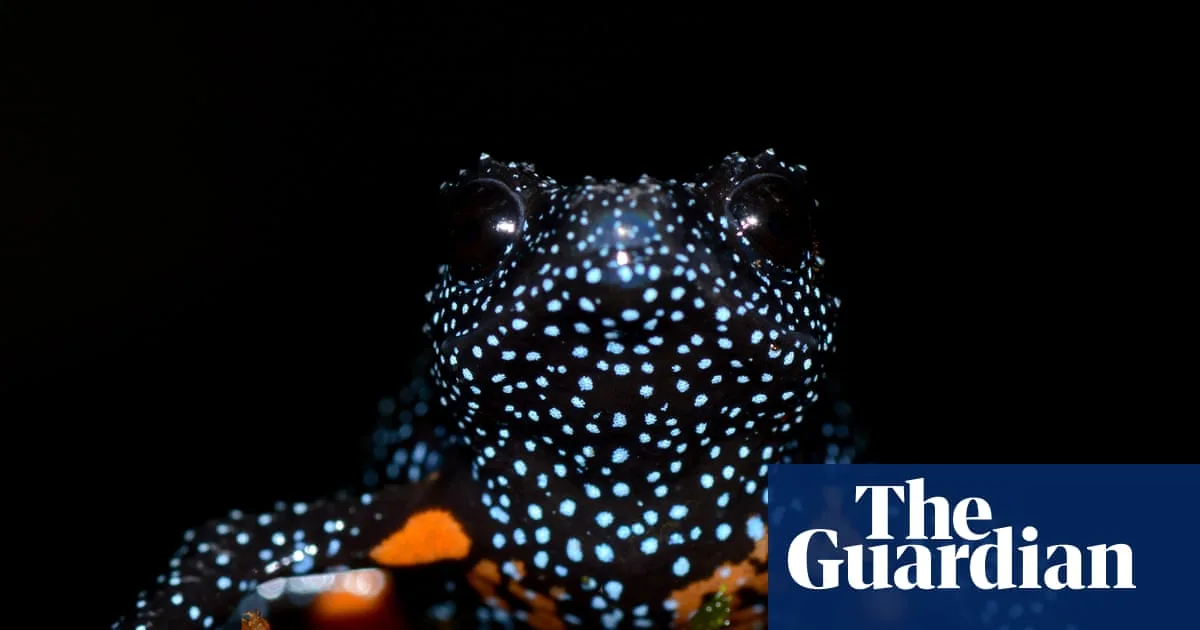
An endangered species of frog known as the galaxy frog (Melanobatrachus indicus) has disappeared from its habitat in the Western Ghats rainforest in Kerala, India, after photographers reportedly destroyed the area in pursuit of photographs. The frogs, each the size of a fingertip, are the only species in their family and are found only under logs in this lush region.
Rajkumar K P, a Zoological Society of London fellow and researcher, discovered seven of these ‘magical’ frogs in early 2020 but was unable to visit the site during the Covid-19 pandemic. When he returned later, the log that had been their home was broken and misplaced, and the vegetation was trampled. The frogs were nowhere to be found.
Initially suspecting brown mongooses, Rajkumar later learned from his trackers that photographers had been visiting the site. The trackers reported that the photographers turned over logs to find the frogs, captured them, and propped them up for photos without wearing gloves. One tracker said that two small galaxy frogs died after being handled for too long. Rajkumar concluded that the frogs’ microhabitat had been destroyed.
Despite repeated searches, no more galaxy frogs were found. Rajkumar expressed helplessness, noting that even forest department efforts to prevent such groups are undermined by photographers using connections with high-ranking officials to gain access. He described the frogs as jet black with star-like spots resembling galaxies when illuminated.
Dr Benjamin Tapley, ZSL’s curator of reptiles and amphibians, called the galaxy frog an ‘ancient’ and ‘irreplaceable’ branch on the tree of life. He urged ethical behaviour to ensure the species can continue to thrive for millions more years.