EU Downgrades Wolf Protection Status as Populations Surge Across Europe
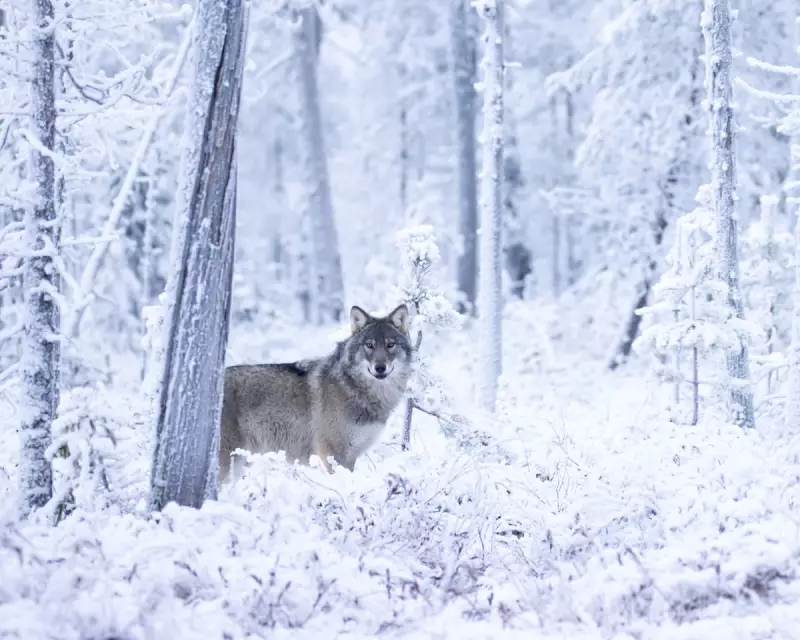
The European Union has officially downgraded the conservation status of wolves, moving them from strictly protected to a lower classification. This significant policy shift comes after wolf numbers across the continent have experienced dramatic growth, nearly doubling over the past decade. Official figures indicate the European wolf population increased from approximately 11,193 individuals in 2012 to around 20,300 by 2023.
Record Reindeer Deaths Spark Crisis on Finnish-Russian Border
In Finland, this ecological shift has manifested in devastating consequences for traditional reindeer herders. The Reindeer Herders' Association of Finland reported a record 2,124 reindeer killed by wolves in 2025 alone, with many experts believing this represents only a fraction of the actual predation total. Herders across the border region are discovering skeletal remains of their animals, often chewed clean to the bone, throughout the wilderness areas where reindeer traditionally roam.
Juha Kujala, a 54-year-old herder whose family has practiced reindeer husbandry for generations, describes the situation as catastrophic. "The last year has been the worst ever for wolf attacks in this area," Kujala explains from his farm near Kuusamo. "The reindeer are an easy catch for them. You can see the signs that it is wolves: they go for the throat and the legs. When you've seen enough dead ones, you can tell."

Suspected Russian Connection Amid Ukraine War Fallout
Many Finnish herders suspect the unprecedented predation levels stem from wolves crossing the 830-mile Finnish-Russian border. They theorize that Russian wolf populations have exploded due to hunters being deployed to the Ukrainian frontlines, reducing traditional population controls and forcing predators to seek new territory in Finland.
"My home is 38km from the Russian border," Kujala notes. "When it snows, you can see the tracks coming from their side." This suspicion is bolstered by historical precedent: during the Second World War, Russia's wolf population doubled after millions of men were sent to fight, with another spike occurring during the collapse of the Soviet Union.
Scientific Caution Versus Herder Experience
While herders point confidently toward Russian wolves as the primary culprits, scientific authorities urge caution. Ilpo Kojola, a wolf specialist with Finland's Natural Resources Institute, acknowledges the possibility of a connection but emphasizes the lack of definitive evidence.
"The wolf is a species that can increase rapidly," Kojola states. "They are usually pretty limited by hunting in Russia so that's why it is possible that the war in Ukraine has had some role in the change. But it's impossible to be conclusive because, of course, there could be some other reason that we do not have solid evidence for."
Genetic research adds another layer of complexity to the investigation. Mia Valtonen, a senior scientist responsible for genetic testing of wolves shot for population control, reveals that most wolves killed in Finland in recent years appear to be non-native. However, without a complete genetic record of Finland's wolf population, certainty remains elusive.
"We cannot say for sure that most of these wolves come from Russia," Valtonen clarifies. "It's likely, but we cannot say it for sure."
Policy Responses and Traditional Livelihoods Under Threat
The EU's decision to downgrade wolf protection follows increasing pressure from member states where wolves are responsible for an estimated 65,500 livestock deaths annually. This has prompted several countries to implement more aggressive culling programs.
Finland has responded to the crisis by lifting its complete ban on wolf hunting at the start of 2026, instead implementing a quota system designed to limit population growth while maintaining ecological balance. For traditional herders like Kujala, such measures cannot come soon enough.
"We do not hate the wolves but we need balance," Kujala emphasizes. "The reindeer spend most of their time out in nature. Around my farm, there is a big 50km section for them to roam in. It's impossible to protect them all the time. We need them healthy and strong. This is our life, it's our job, it's how we live. It's been like this for hundreds of years."

The situation highlights the complex intersection of wildlife conservation, international politics, and traditional livelihoods. As wolves continue to thrive across Europe, and as geopolitical tensions reshape border dynamics, Finnish reindeer herders find themselves caught between ancient traditions and modern ecological realities.