
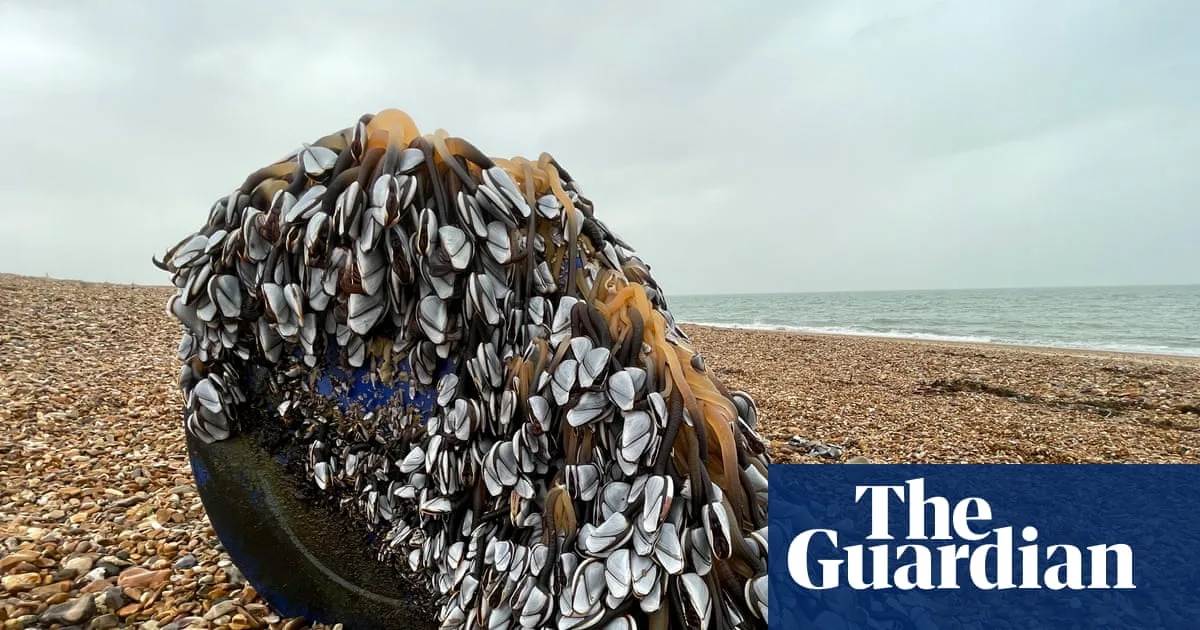
A mysterious blue drum washed up on Hayling Island beach in Hampshire, carrying a living cargo of common goose barnacles (Lepas anatifera). The barrel lay among storm-tossed debris, surrounded by cuttlebones, wrack, and single-use plastics, but the dense aggregation of barnacles spilling over its sides immediately caught the eye.
These pelagic crustaceans, which attach as larvae to floating objects such as driftwood, buoys, ship hulls, and even turtles, are most abundant in tropical and subtropical waters. While their geographical range extends as far north as Britain's south-west coast, they remain a rarity in Hampshire. The journey of this particular group, dictated by currents and wind, remains unknown.
Seen up close, each barnacle ends in a capitulum—a pale, heart-shaped shell composed of five faintly striated calcareous plates edged with orange tissue. The shell hinges open like a bird's bill to allow delicate, feathered cirri to unfurl for feeding. A long, flexible stalk called a peduncle supports the 'head', elegantly arched like a goose's neck, explaining the historical belief that barnacle geese hatched from these creatures.
Most barnacles will not survive a stranding. While a few still fluttered their cirri, as if sweeping for plankton in the briny air, most had already closed their shells to conserve moisture. By the afternoon, they hung limply on darkening peduncles. Although they can survive several days out of water, with the waves subdued and good Samaritans unable to shift the heavy barrel back into the sea, their fate seemed sealed.




