
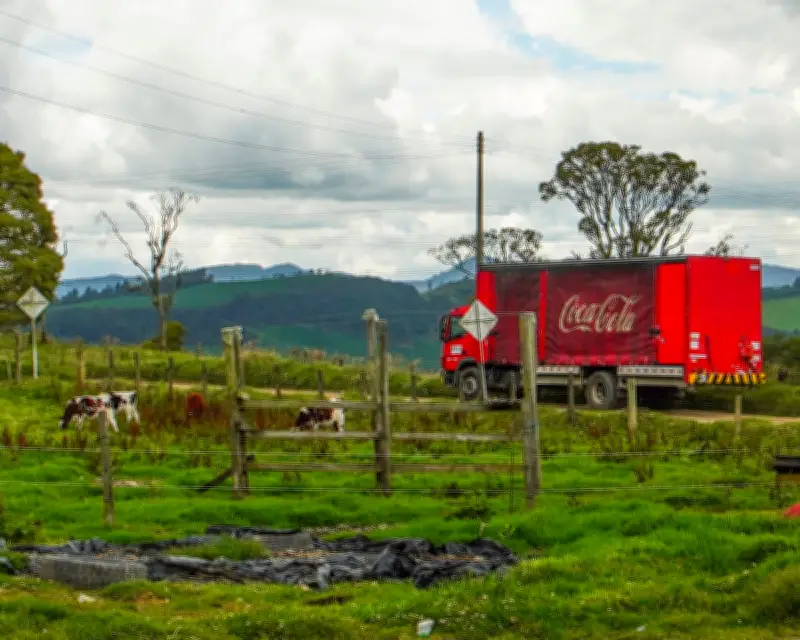
During a severe drought in La Calera, Colombia, residents faced water rationing for up to 15 days per month while Coca-Cola Femsa, the world's largest Coca-Cola bottler, continued to pump water for its bottling plant. The town, located near Bogotá, is home to the Chingaza reservoir, which supplies about 70% of the capital's drinking water.
Community Awakening
As the drought stretched from April 2024 to April last year, residents began questioning water management. Local councillor and water rights campaigner Javier Cifuentes noted that people started reflecting on why they had no water when it had always been available. Attention turned to Indega, a subsidiary of Coca-Cola Femsa, which was still bottling water under the Agua Manantial brand. The plant's continued extraction during the drought sparked outrage.
"They asked us – the people – to ration water but not the companies," said local resident Alexander Hernández. After a campaign marked by intimidation and death threats, activists secured a rare victory: in April this year, local authorities slashed Indega's water concession to its lowest level since the 1980s.
The Battle Begins
La Calera is one of 11 municipalities in the Chingaza national park, historically abundant in water. However, a severe El Niño event depleted the reservoir system to just 15% capacity, the lowest ever recorded. Research suggests global heating has intensified such patterns. The community discovered that Indega paid only 120 pesos per cubic metre for water, while households paid between 697 and 3,720 pesos, depending on income.
"This is a multinational company that has been extracting resources for 40 years practically without paying for them," said Hernández. Outrage turned to action as residents opposed the renewal of Indega's concession, which was set to expire in December 2024. With help from legal non-profit Cajar, local leaders became parties to the renewal process.
Community Leaders Step Up
Herminia Cristancho, head of the female-led Association of Hamlets in La Calera, has witnessed decades of corporate water extraction. "They stay until they wipe out everything, then they leave and find a new victim in another country," she said. Under Colombian law, she accessed hundreds of documents and petitioned for a public meeting. With Cajar's help, they drafted a letter opposing the renewal, arguing that Indega's use of seven springs depleted the San Lorenzo basin.
Indega commissioned a study claiming the springs were replenished by rainwater and independent of the basin, but authorities dismissed it as technically flawed. Community leaders used social media and political pressure to bring the issue to national attention. Cifuentes, a leader of the local Muisca Indigenous people, stated, "The Muisca people have always protected the water in this territory, and it is thanks to them that there is still water left."
Opposition and Threats
Not everyone opposed the concession. Some rural residents valued the employment and infrastructure investment from the plant. Cristancho and Cifuentes accused Indega of a charm offensive after the challenge, including painting the local school and installing water filters. The discord led to personal attacks and death threats. Cifuentes recalled a hooded man threatening him with a pistol, saying, "You don't know who you're messing with." He received government protection but was followed by masked men on motorbikes.
Social media posts accused the activists of corruption, and pamphlets called Cifuentes a "fake Indigenous drug addict." Cristancho faced silent calls and abusive texts, and at a town hall meeting, vuvuzelas were used to drown out her speech. Despite the fear, they continued with mural paintings, marches, and workshops.
Victory and Challenges Ahead
In April this year, the CAR renewed the concession but cut Indega's water extraction from 3.23 to 1.9 litres per second, reduced the number of springs from seven to four, halved the concession length to five years, and allowed temporary suspension during severe drought. This was a milestone for Colombia, where land defenders rarely win. "For the first time, we succeeded in getting the country to open a debate on water use," said Cristancho.
However, concerns remain about monitoring Indega's water use. Cifuentes, still under protection, called the case a "first step" in protecting water resources. "We will keep fighting until not a single millilitre of water in the Chingaza is exploited by a multinational corporation," he said. "This is what I was born for."




