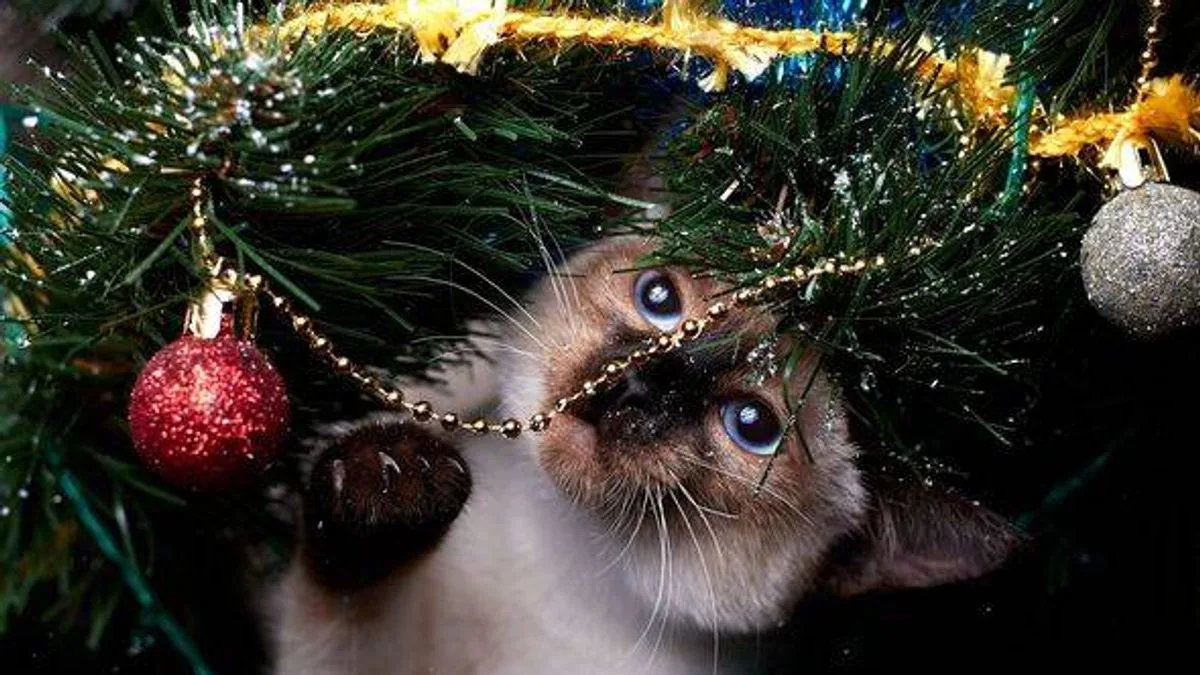
As households across the UK prepare to decorate for the festive season, animal charity Blue Cross has issued a warning to cat owners about potential hazards lurking in Christmas trees and decorations. The charity notes that both real and artificial trees can pose dangers to inquisitive felines, who are naturally drawn to bright and sparkly objects.
For those opting for a real tree, Blue Cross advises choosing a non-drop variety, as oils produced by some trees are mildly toxic to cats and can irritate their mouth and stomach. The charity also cautions against using fertilisers or plant food on potted trees, as many of these are toxic and may seep into watering trays. Additionally, there is a risk that cats may use the soil in potted trees as a litter tray, while sharp pine needles can cause internal damage if swallowed.
When it comes to decorating, Blue Cross warns that tinsel can be particularly dangerous, looking “just like cat toys” and potentially causing blockages in the stomach or intestines if eaten, which in some cases can be fatal. Glass ornaments also pose a risk, as they may break and cause injury. The charity recommends fastening decorations securely and placing them higher up the branches to reduce the temptation for a mischievous paw.
To prevent accidents, Christmas trees should be positioned on a sturdy base so they cannot topple over if a cat decides to climb. Lights should be switched off when no one is present to supervise, as cats may gnaw on cables. By taking these precautions, owners can help ensure their feline companions enjoy a safe and happy Christmas.