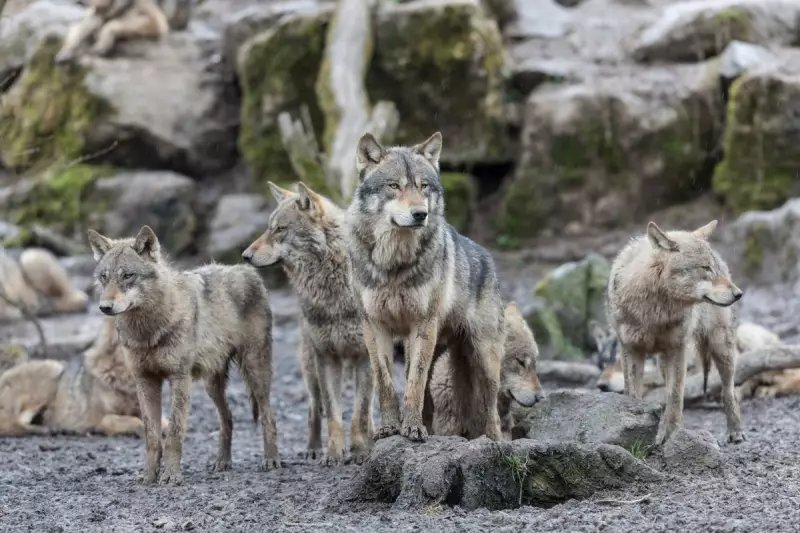
Archaeologists have uncovered compelling new evidence that humans developed caring relationships with wolves thousands of years before the full emergence of domesticated dogs. The discovery centres on ancient wolf remains found in a remote Swedish cave.
A Discovery in the Depths of Stora Förvar Cave
The pivotal find was made on the island of Stora Karlsö, off Sweden's coast, within the historic Stora Förvar cave. This site is well-known to researchers as a hub of activity for Stone Age and Bronze Age communities, primarily seal hunters and fishers. The wolf bones, dating from 3,000 to 5,000 years ago, were likely transported to the island by people, potentially by boat, as the island has no native land mammals.
Evidence of Compassion and Coexistence
Advanced DNA analysis confirmed the remains belonged to wolves, not dogs, making the subsequent findings even more significant. Crucially, one of the wolves showed signs of a healed limb injury. Researchers argue that such an injury would have been impossible for the animal to survive in the wild without assistance, pointing directly to human intervention and care.

This suggests a level of interaction far more complex than simple hunter-prey dynamics. The wolves were not merely tolerated; they were apparently nurtured and supported by human communities.
Rethinking the Path to Domestication
The study, highlighted by journalist Vishwam Sankaran, fundamentally challenges the linear narrative of wolf domestication leading directly to modern dogs. It indicates that human-wolf relationships in prehistory were far more varied and experimental than previously documented.
These interactions on Stora Karlsö appear to represent an early, and perhaps ultimately separate, branch of domestication—a fascinating trial in cohabitation that did not result in the canine companions we know today but reveals a profound early capacity for cross-species bonds.
The findings open a new window into the social dynamics of our ancestors, showing that compassion and intentional care for other species have deep roots in the human story, stretching back into the mists of the Stone Age.