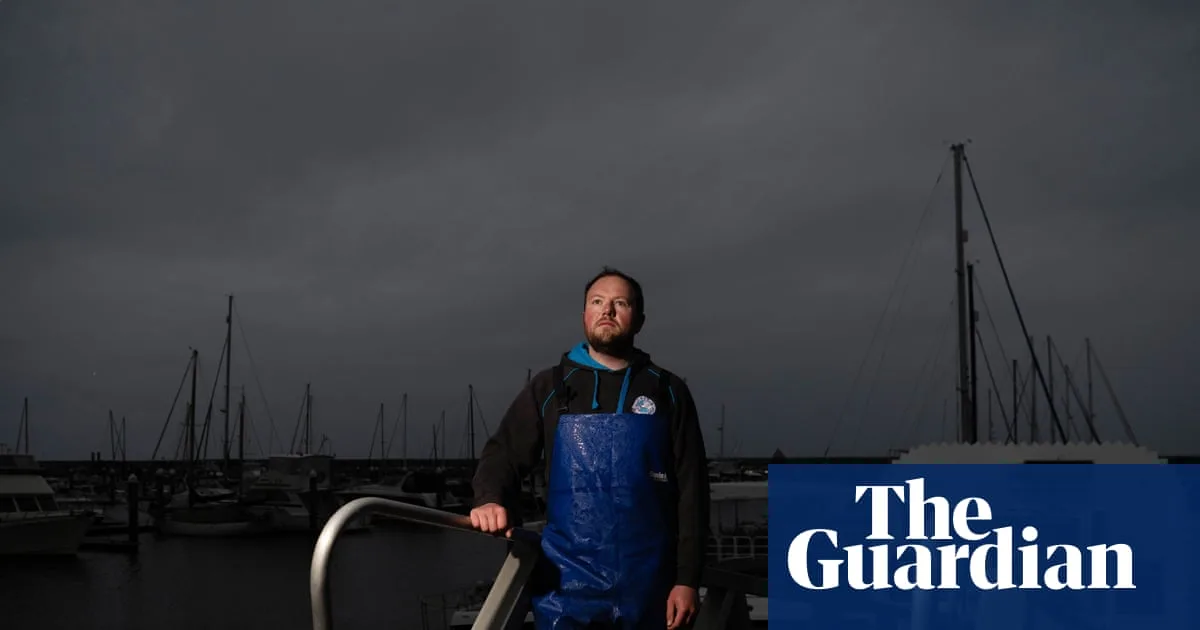
For fishing communities along South Australia's coast, a toxic algal bloom that has killed thousands of marine animals is taking an emotional and financial toll. Nathan Eatts, a third-generation squid fisher from the Fleurieu peninsula, has not caught a squid since 18 April, over three months ago. 'Everyone just sort of says go fish for something else, but it's not that simple,' he says, noting that 95% of his catch is calamari under a quota system.
The bloom, which has affected areas including Kangaroo Island and the St Vincent and Spencer gulfs, has left fishers like Eatts struggling. 'Last time I fished, I caught four whiting. That doesn't pay any bills,' he says. Despite the devastation, Eatts remains hopeful that squid may have moved to deeper waters. 'We're watching it get worse all the time. It's heartbreaking,' he adds.
This week, under pressure from community advocates and politicians, the federal and state governments announced a £28m assistance package and a parliamentary inquiry into the crisis. However, the federal government has stopped short of declaring it a natural disaster, which would unlock more resources. South Australian Premier Peter Malinauskas has urged politicians not to get caught up in technicalities, while Greens senator Sarah Hanson-Young called on the government to 'declare this the emergency it is'.
Kyri Toumazos, executive officer at Seafood Industry South Australia, says the impact is extreme in some regions. Wild catch and aquaculture businesses on Kangaroo Island have been affected since the start, and some in Port Lincoln are limiting harvests. 'The biggest concern is the longer the algal bloom persists, the greater the chance of long-term impact for our fisheries,' he says. Work to understand the economic costs could take up to a year.
Peter Treloar, chair of Oysters South Australia, reports that harvest zones in Gulf St Vincent and at American River on Kangaroo Island have been closed for two and a half months. 'Oyster growers have not been able to sell any product and have had effectively no cashflow,' he says. While the pledged assistance is welcome in the short term, the industry expects long-term support will be needed as the bloom's duration remains unknown.