Tragic Collision Claims Lives of Endangered Giants
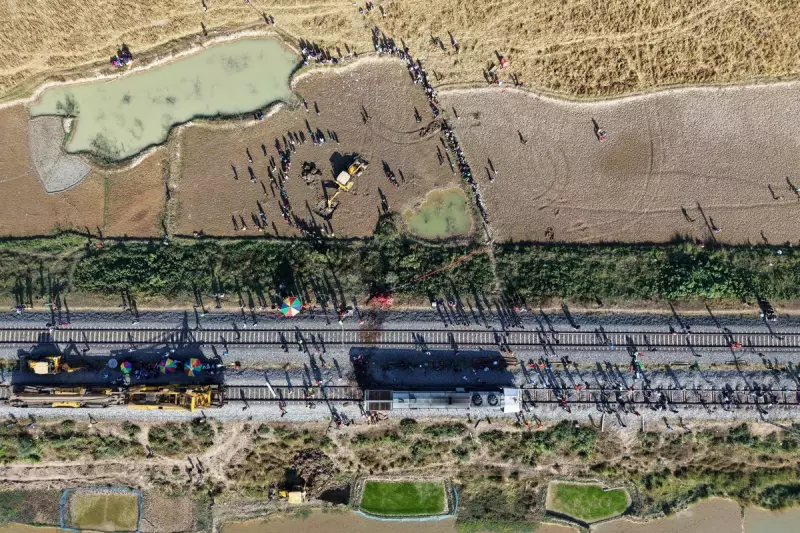
A devastating accident in northeast India has resulted in the deaths of seven wild Asiatic elephants. The incident occurred in the early hours of Saturday, 20 December 2025, when a high-speed passenger train struck a herd crossing railway tracks in the state of Assam.
Local authorities confirmed that a calf was also injured in the collision. The train involved was the Rajdhani Express, travelling from Sairang in Mizoram state to New Delhi with approximately 650 passengers on board.
Emergency Brakes Fail to Prevent Disaster
According to Indian Railways spokesman Kapinjal Kishore Sharma, the driver spotted the large herd of around 100 elephants and immediately applied the emergency brakes. Despite this swift action, the train's momentum could not be halted in time to avoid hitting several of the animals.

The impact was severe enough to cause five train coaches and the engine to derail. Remarkably, officials reported no human casualties among the passengers or crew.
Veterinarians conducted autopsies on the deceased elephants, with arrangements made for their burial later the same day. The accident site is a forested area located roughly 125 kilometres southeast of Guwahati, Assam's capital.
A Recurring Problem in Elephant Habitat
This tragic event highlights an ongoing conflict between infrastructure and wildlife in the region. While railway tracks in Assam are frequently used by elephants, Indian Railways stated that this particular location was not a designated elephant corridor.
Assam is home to an estimated 7,000 wild Asiatic elephants, representing one of the highest concentrations of the species in India. Sadly, collisions with trains are not uncommon. Since 2020, records indicate that at least a dozen elephants have been killed by speeding trains across the state.
Wildlife experts note that elephants often stray into areas of human activity during this season, as rice fields are ready for harvesting, potentially bringing them into closer contact with railways and other dangers.
Aftermath and Continued Journey
Following the derailment, railway staff worked to manage the situation. The coaches that remained on the tracks were delinked from the wreckage, allowing the main part of the Rajdhani Express to resume its journey to New Delhi.
Approximately 200 passengers who were in the five derailed coaches were safely transferred to Guwahati via a separate train service. The incident underscores the critical need for continued efforts in wildlife conservation and the development of safer transit solutions through ecologically sensitive areas.