Houseplants offer far more than simple decoration; they provide a vital connection to the natural world, purify indoor air, and introduce an element of serene beauty to any living space. For those seeking enduring visual interest, succulents with their distinctive and often whimsical foliage present a perfect, low-maintenance choice.
Five Standout Succulents for Your Home
Unlike flowering plants that bloom briefly, these succulents captivate with their unique leaf shapes all year round. Cultivating them successfully hinges on understanding a few key principles: they require a well-draining potting mix, typically one formulated for cacti and succulents, and containers with adequate drainage holes. Most crucially, the soil must be allowed to dry out completely between waterings to prevent root rot and ensure plant health.
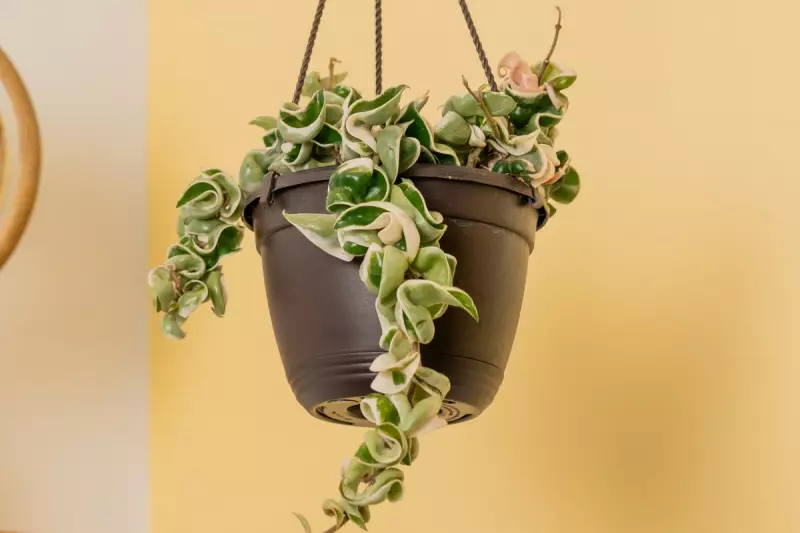
Krinkle Kurl (Hoya carnosa)
One particularly striking variety is the Krinkle Kurl. This vining plant features thick, waxy leaves that are tightly packed and beautifully cupped. It is a slow grower that needs a minimum of four hours of direct sunlight daily, so positioning it near a south-facing window is ideal. During spring and summer, feed it with an all-purpose houseplant fertiliser diluted to half-strength every two months. In time, it may produce small pink flowers, but the plant's main attraction remains its fascinating, twisted foliage.

Burro's Tail (Sedum morganianum)
Named for its appearance, the Burro's Tail succulent boasts long, trailing stems densely covered in silvery-blue, teardrop-shaped leaves. For the best display, place this long-living plant near a bright, south-facing window and consider hanging it or placing it on a tall stand. Its stems can eventually reach an impressive four feet in length. It requires fertiliser just once each in spring and summer.
Sweetheart Plant (Hoya kerii)
If cuteness is the criteria, the Sweetheart Plant would undoubtedly win first prize. Often sold as a single, rooted heart-shaped leaf for Valentine's Day, it can also be grown as a full vining plant. Either form requires bright, indirect light, making a north-facing window or a spot slightly away from a south- or west-facing one perfect. Use a balanced fertiliser at half-strength every two to four weeks during the growing season.
String of Dolphins (Curio peregrinus)
True to its name, the String of Dolphins features small, curved leaves that remarkably resemble leaping dolphins, complete with a pointed 'fin'. This easy-care plant thrives in a south-facing window. Water it thoroughly only when the soil is dry—approximately once a month in autumn and winter, and every week or two in spring and summer. Apply a half-strength balanced liquid fertiliser once a year in spring. Important note: String of Dolphins is considered toxic to dogs and cats.
String of Pearls (Curio rowleyanus)
A close cousin to the String of Dolphins, the String of Pearls displays cascading vines adorned with spherical, pea-like leaves. Recently reclassified into the Curio genus, it may still be found labelled under its old name, Senecio rowleyanus. Its care is straightforward: provide bright, indirect light, water only when the soil is dry, and feed monthly with a half-strength balanced fertiliser in spring and summer. This plant is also toxic to pets.
Gardening expert Jessica Damiano, who writes weekly columns for the Associated Press and publishes the award-winning Weekly Dirt Newsletter, highlights these varieties as exceptional choices for adding long-lasting, sculptural interest to the home. With the right care, these unique succulents can become a captivating and enduring focal point in any room.