Mumbai's recently constructed coastal highway has become a flashpoint for controversy, with campaigners and residents decrying it as infrastructure designed exclusively for the city's elite. While the eight-lane motorway offers dramatic time savings for car owners, approximately 64% of Mumbai's 22.5 million metropolitan residents rely on severely overcrowded buses and trains, with daily fatalities on the rail network highlighting the desperate state of public transport.
A Highway for the Wealthy in a City of Stark Contrasts
Mumbai, India's commercial capital, is notorious for its graphic inequality, hosting 90 of the nation's billionaires alongside more than six million slum dwellers. The coastal road, built on land reclaimed from the Arabian Sea at tremendous taxpayer expense, is being branded as the latest symbol of this profound economic gulf. Environmental activist Avlokita Shah states unequivocally that "the road is exclusively for the elite," arguing that the billions spent should have been directed towards improving public transport for the majority.
Engineering Marvel Versus Public Neglect
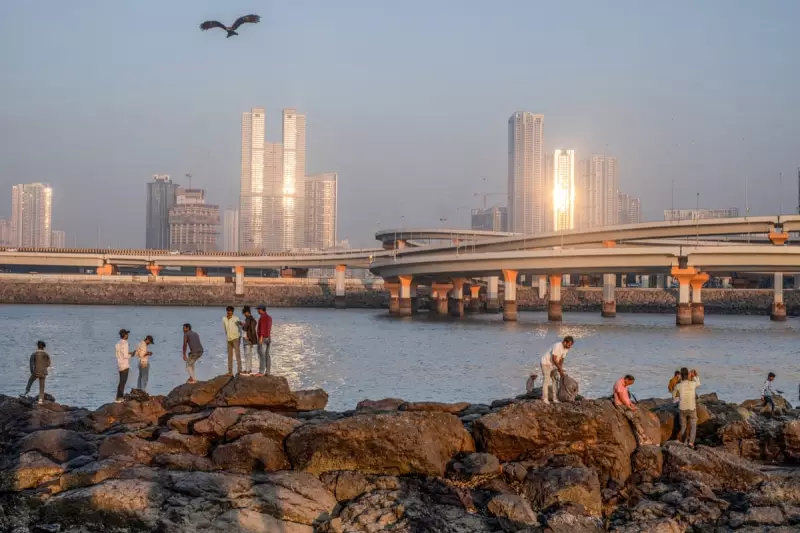
The coastal highway represents an extraordinary feat of engineering, featuring undersea tunnels and sections built on stilts across the sea. It connects north and south Mumbai, reducing a 45-minute journey to just 10 minutes for drivers. Investment banker Vivek Tiwari praises the infrastructure, calling it "glorious" and suggesting it may spur economic growth. However, this perspective is starkly contrasted by the daily reality for millions like Praveen Shastri, a shoeshiner whose exhausting commute on packed trains remains unchanged. "It's not for people like me," he remarks, embodying the widespread sentiment of exclusion.

Environmental and Social Costs Mount
Critics highlight severe environmental repercussions, including the destruction of vital mangrove forests that protect Mumbai from monsoon flooding and coastal erosion. The Bombay High Court's December ruling permitting the removal of 45,000 mangrove trees for the road's second phase has intensified concerns. Furthermore, the project has devastated traditional fishing communities like the Koli people. Deepak Namaposhe, a fisherman from Khar Danda, describes how fishing grounds have been lost, earnings halved, and costs doubled, fearing complete loss of sea access. "By what right can they take land where my father, grandfather and great-grandfather lived and fished?" he demands.
An Outdated Solution Exacerbating Urban Problems
Nikhil Anand, an environmental anthropologist at Pennsylvania University, condemns the motorway as "a 20th-century response to a 21st-century problem." He argues that urban highways are a discredited solution that induce greater car demand, worsen carbon emissions, and neglect public transport infrastructure. This approach primarily benefits private car owners—a minority in Mumbai—while imposing costs on the broader population and the environment.
The Loss of Public Access and Community Space
Beyond transport inequality, the coastal road has severed easy public access to Mumbai's shoreline, a cherished free space for all social classes. Previously, labourers, office workers, and families could easily reach the beach at various points for respite. Now, an eight-lane barrier stands in their way, with only a few inconvenient subways provided. Shopkeeper Anil Gaitonde laments, "The road has distanced people from the ocean and the ocean is Mumbai's most beautiful asset." Meanwhile, the reclaimed land fuels a property boom, with developers constructing luxury apartments for the wealthy, further transforming the city's character and skyline.
The Mumbai coastal road project stands as a contentious emblem of prioritising elite convenience over equitable urban development, raising fundamental questions about who truly benefits from major public infrastructure investments in one of the world's most economically divided cities.