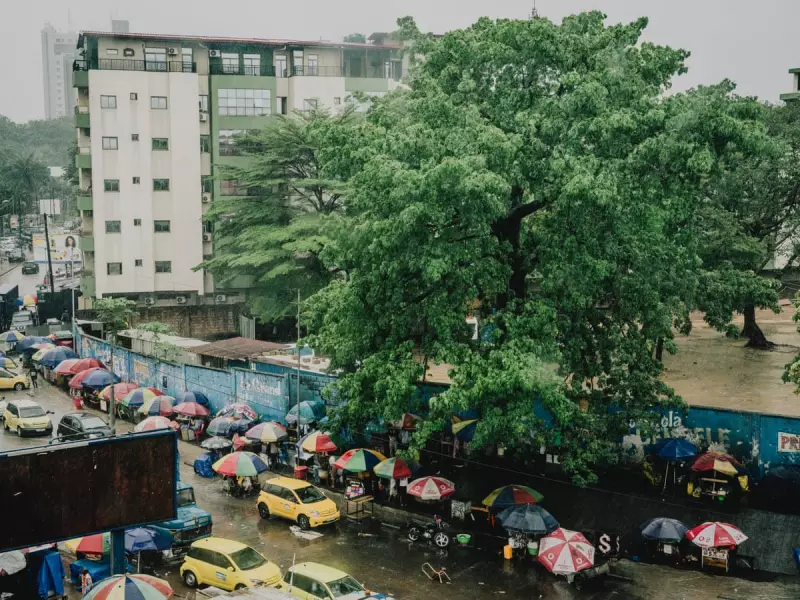
In the bustling historic centre of Kinshasa, a solitary, century-old baobab tree stands as a living monument to a greener past. This last remaining giant in the Gombe commune is now at the centre of a fierce battle between developers and environmentalists who see it as the "soul of the city".
A Living Link to History Under Threat
The majestic tree, believed to be over 100 years old, sits on land owned by the Democratic Republic of the Congo's state transport company, Onatra, next to the main ferry port. For years, a vibrant fabric market thrived in its shade. However, the site is now sealed off, with early signs of construction visible. Activists and local officials allege Onatra has sold the plot to a private developer, putting the baobab's future in grave danger.
Jean Mangalibi, a 60-year-old gardener and activist, remembers a different Kinshasa. "The older inhabitants of Kinshasa can remember when trees shaded its main avenues," he says, lamenting the city's frenzied, unplanned expansion. "We're destroying the city." Mangalibi's nursery, nestled among grey tower blocks, has been ransacked multiple times due to his campaigning, underscoring the risks involved.

The threat became starkly real in August when diggers arrived. Mangalibi and fellow campaigners from the group Autour du Baobab (Around the Baobab) rushed to the site, successfully halting the work. "They were ready to cut it down," confirms Sifa Kitenge, a 70-year-old fabric trader. The reprieve is temporary, however, as construction plans have not been abandoned.
More Than Just a Tree: Symbolism in a Sprawling Megacity
Kinshasa, with an estimated population of 17.8 million, is one of the world's fastest-growing megacities. Its breakneck growth, coupled with non-existent urban planning, has created severe pollution and regular, deadly flooding. This relentless expansion has come at the cost of its urban forest.
The loss of the baobab would sever a profound cultural and historical link. Across Africa, these trees hold immense practical and symbolic value, providing food and serving as traditional gathering spots. Local tradition holds that explorer Sir Henry Morton Stanley negotiated for land under a baobab here in the 1870s, marking the founding of the colonial settlement.
"It's a continuation of history," says Mangalibi, noting this specific tree was planted to commemorate the building of the ferry port. Such commemorative plantings were once common but have vanished as the city concreted over.
An Uphill Battle for Urban Greenery
The fight for the baobab is emblematic of a wider environmental crisis in Kinshasa. In 2010, city authorities felled hundreds of trees lining the Boulevard du 30 Juin, promising replacements that never came. Geographer Francis Lelo Nzusi from the University of Kinshasa points to a lethal combination of poor planning and the desperate need for fuel charcoal, upon which millions rely due to limited electricity access.
Despite the challenges, the activists have found an ally in Malicka Mukubu, head of the DRC's National Tourism Office. "From an ancestral point of view, you don't cut down baobabs," she states, affirming the tree represents the strength of Congolese culture. Yet, she admits most public officials remain indifferent.
For Mangalibi and his group, saving this last baobab is just the beginning. They plan to tackle broader environmental issues in a city where green space is vanishing under demographic pressure—the population grows by roughly 730,000 people annually. Their mission is clear: to defend a living piece of heritage against the relentless tide of development, ensuring the soul of Kinshasa is not entirely paved over.