
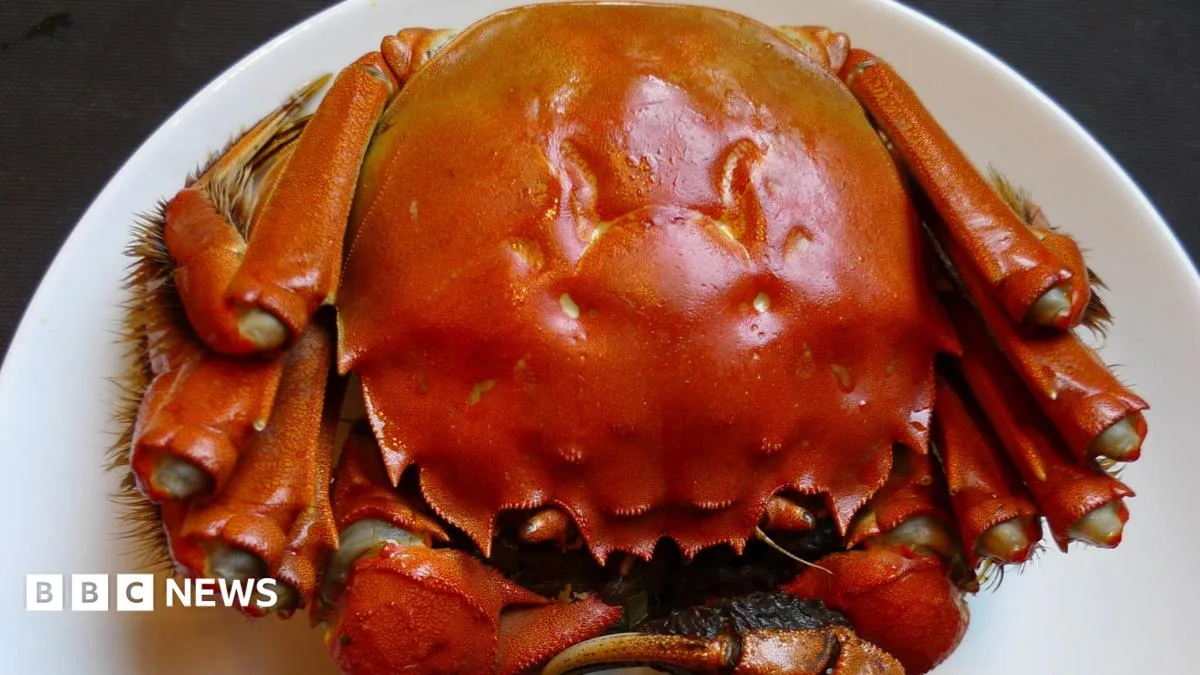
Hairy crabs are the great autumn delicacy of eastern China, an obsession for those who can afford them. Female crabs ripen in the ninth lunar month, males in the tenth, and from then until year's end they are nearly inescapable. A pair of crabs on a plate, legs spiky with yellow hair, steam rising—eating them is a wild, messy business.
You must pull off legs and claws, prise open shells, and scrape, pick, suck, and crunch to extract every morsel. The pale leg flesh is delectable, but the real treasures are the golden semen of males and bright orange roe of females. For those who find whole crabs a hassle, restaurants offer dishes like legs stir-fried with asparagus or shell-meat on tofu.
The 17th-century playwright Li Yu wrote that his heart lusted after them, and there was not a day in his life when he had not thought of them. In Shanghai, I found myself taking an advanced course in crab-eating, as everyone offered advice. One friend's mother suggested leaving two legs attached as handles; another showed how to make claws look like a butterfly or turn the stomach inside out to reveal a monk-like appendage.
Medical advice abounds: crab flesh is perilously cold in Chinese medicine, so it must be balanced with vinegar, ginger, or Shaoxing wine. Never eat it with persimmon, a toxic combination. Avoid the lungs, stomach, and especially the heart—a grey flap smaller than a SIM card. For women, moderation is key. After weeks of excessive crab-eating, I grew paranoid about stomach-ache, but survived in robust health.




