Why Fewer, Better-Used Lights Can Transform Your Home
Interior lighting experts are championing a shift away from the default approach of installing multiple ceiling spots and downlights. Instead, they advocate for a more thoughtful strategy using fewer, well-placed lights to dramatically enhance how your home looks, feels, and functions, all while reducing energy use.
The Problem with Modern Default Lighting
In contemporary homes, multi-spot ceilings, downlights, and LED panels have become the standard, often installed with the primary goal of achieving maximum brightness. However, lighting is far more than just illumination. Many interior design professionals now argue it should be considered a fundamental decorating tool, on par with wallpaper and paint.
"Lighting is very often the last thing people think about," says Luke Thomas, design director at John Cullen Lighting. "But a poor lighting scheme can make a £100,000 piece of artwork look like it came from Ikea. Conversely, good lighting can make an Ikea kitchen look truly premium."

How to Improve Your Home Lighting: The Layered Approach
To enhance your existing setup, experts advise returning to the basics. Lighting typically falls into three key categories: ambient (general, often overhead lighting), task (bright, focused light for activities), and accent lighting (for highlighting features or artwork).
Using a combination of all three—a technique designers call 'layering your lighting'—creates a space that is both functional and atmospheric.
"Ambient lighting provides overall illumination, task lighting focuses on specific activities like reading or cooking, and accent lighting highlights architectural features or artwork," explains Chris Bawden, founder of Simple Lighting. "By layering light strategically, you avoid over-illumination, which unnecessarily drives up energy consumption."
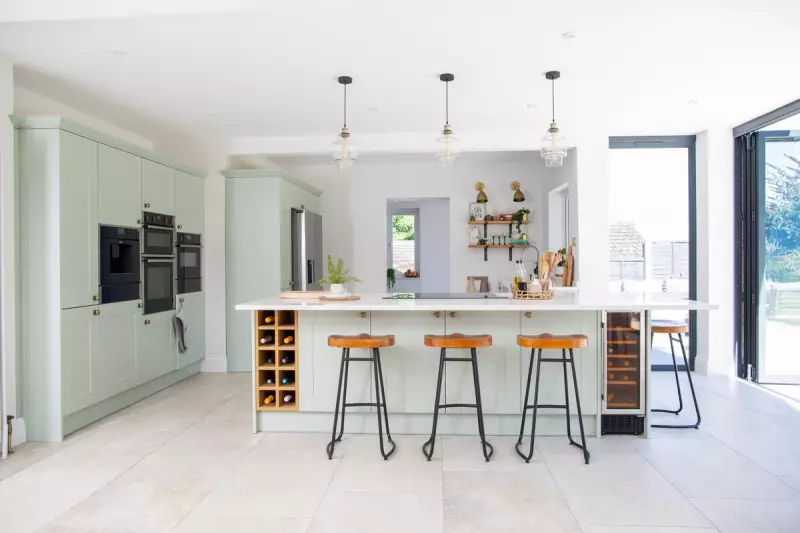
The core principle is to aim for fewer lights and use them more intelligently. Focus on the specific activities in each room. Often, investing in strategic task lighting—such as a single, well-placed table lamp next to an armchair, a pendant over a dining table, or under-cabinet LEDs in the kitchen—provides all the illumination you need.
The Benefits of Strategic, Softer Lighting
Flexibility is crucial, especially in open-plan living spaces where usage changes throughout the day. Fewer, better-placed lights also enhance your decor. Texture, colour, and materials appear richer and more nuanced in gentler light.
Softer, lower light levels also aid relaxation, promote better sleep, and are far more flattering. Placement is key: positioning lights near pale walls, mirrors, or other reflective surfaces helps bounce light around the room, maximising its effect.
This isn't about keeping rooms dim at all times; brighter light is still essential for tasks like cleaning or working. This is where dimmer switches become invaluable.
"Dimmers are a simple yet powerful tool," says Bawden. "They allow you to adjust light levels according to need, further reducing your energy use. Motion sensors can also be used in hallways, bathrooms or outdoor areas to ensure lights are only on when required."
Energy Savings and Practical Habits
There's a clear practical benefit: fewer fittings mean lower energy bills. For households seeking cost-effective solutions, turning lights off when leaving a room remains important. While the Energy Saving Trust estimates savings of up to £8 a year per UK household from this habit, it's a simple practice that accumulates over time.
It's also a myth that turning a light back on uses more electricity than leaving it running. With all bulbs, modern and older, there is no meaningful energy penalty or added wear from switching them on and off.
Choosing the Most Efficient Lighting: The LED Advantage
To further reduce your energy bill, upgrading old incandescent bulbs to LED (light-emitting diode) lighting is highly effective. LEDs convert a far higher proportion of electricity into light rather than heat, making them significantly more efficient.

A typical LED bulb uses around 75-90 per cent less energy than an old-fashioned incandescent bulb and lasts 15-25 times longer. When shopping for LEDs, remember brightness is measured in lumens—the higher the number, the brighter the bulb.
Replacing any remaining halogen spotlights with LED bulbs could save around £45 a year in the UK, while reducing CO₂ emissions by 35kg, according to the Energy Saving Trust.
Avoiding Common Lighting Mistakes
Poor home lighting is rarely due to a lack of light; it's more often caused by inadequate planning or choosing the wrong type. Thomas notes a common error is leaving lighting decisions solely to an electrician, who typically thinks in purely functional terms.
A lighting designer, by contrast, can 'decorate' a space with light, enhancing its character and preventing costly long-term mistakes. One frequent error is relying on a single overhead ceiling fixture, which can create glare, flatten a room's appearance, and cast shadows.
"When there’s too much brightness and it’s too uniform, the effect becomes washed out," he says. "You lose hierarchy, depth, and texture across the space, and it becomes difficult to accentuate certain finishes, particularly textured surfaces."
Experts recommend turning all lights off, then adding them back one by one, stopping as soon as the room feels right. Practical tips include lining heavy lampshades with reflective lining and using diffuser discs to soften glare from pendant lights.
The Importance of Colour Temperature
Another common mistake is choosing the wrong colour temperature, measured on the Kelvin (K) scale. This significantly affects a room's mood. Higher Kelvin ratings produce a whiter, cooler light, while lower values create a warmer, more atmospheric glow.
LEDs with lower Kelvin ratings (around 2700K to 3000K) are perfect for creating a cosy, inviting atmosphere in living rooms, bedrooms, and dining areas. Higher-colour-temperature bulbs (above 4000K) are better suited for task-focused areas like kitchens or home offices.
By adopting these expert strategies for fewer, better-used lights, homeowners can achieve a more beautiful, functional, and energy-efficient living environment.