Ancient Building Material Makes Modern Eco-Comeback in Wiltshire
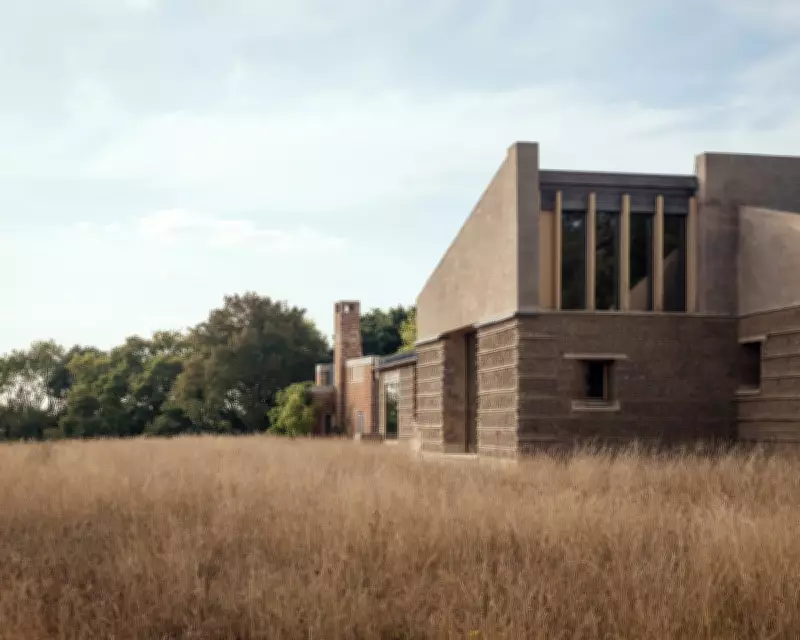
Nestled within the picturesque Cranborne Chase area of Wiltshire, the Rammed Earth House stands as a testament to architectural innovation rooted in ancient tradition. This distinctive homestead, constructed using unstabilised rammed earth sourced directly from its own grounds, represents a growing movement within the UK construction sector towards more sustainable building practices.
Rediscovering Neolithic Techniques for Contemporary Challenges
The construction method employed at this Wiltshire property involves compacting earth to create solid walls, a technique dating back to the Neolithic period. What makes this approach particularly significant today is its potential to address the construction industry's substantial environmental impact. With the sector responsible for over a third of global carbon emissions, architects are increasingly exploring bio-based materials like earth and bamboo to create more circular construction processes.
Emaad Damda, lead architect at Tuckey Design Studio which worked on the Rammed Earth House, emphasises the material's growing relevance: "Climate change makes it even more important that rammed earth is framed as a mainstream material. The fact that our temperatures are rising means that rammed earth offers thermal mass, temperature regulation and moisture control."

The Practicalities and Challenges of Earth Construction
The Wiltshire project benefited significantly from its location on a former brickworks site, allowing for the recycled use of demolished outbuildings and the property's clay-rich soil. This exemplifies the convenience of in-situ construction that rammed earth advocates champion. However, the approach presents practical challenges in the British context.
As Antonio Moll, tutor of environmental and technical studies at the Architectural Association, explains: "The enemy of rammed earth is water and low temperatures." In Britain's frequently damp and cold climate, unstabilised rammed earth faces erosion risks over time, potentially leaving gaps in exterior walls.
This has led some architects to explore stabilised versions incorporating materials like lime or cement, though this approach risks compromising the low-carbon benefits that make earth construction appealing initially. The material's variable composition depending on local soil types also creates challenges with building regulations and insurance.
Innovative Approaches to Scaling Earth Construction
Facing these challenges, architects are developing innovative solutions. Moll's studio is working on Orchard House in Dartford, using prefabricated rammed earth blocks manufactured in Spain and transported to the site. While this involves transportation emissions, Moll maintains the overall carbon benefits still outweigh conventional brick construction.
Roger Boltshauser, a Swiss architect promoting rammed earth construction across Europe, envisions a future of localised factories producing prefabricated blocks within a 300km radius of building sites. His practice has repurposed former cement and brick factories for block production, seeing standardisation as key to overcoming regulatory hurdles.
"The ingenuity of unstabilised rammed earth is that buildings become part of a circular construction process," Boltshauser explains. "Materials are gathered from a local area and used to create something new, but can be returned to the ground in the case of demolition."
From Rural Experiment to Urban Integration
Contrary to assumptions that earth construction belongs exclusively to rural settings, architects are successfully integrating rammed earth into urban landscapes. Boltshauser's studio completed their first rammed earth buildings in Zurich, demonstrating the material's urban potential.
Matthias Peterseim, an architect at the studio, notes: "It all started in rural areas because they're a way to experiment a little bit, but our first rammed earth buildings were actually in Zurich." These urban projects often combine earth with materials like glass and timber to blend with city surroundings while avoiding cement.

Beyond Sustainability: The Sensory Benefits
The appeal of rammed earth extends beyond environmental considerations to encompass aesthetic and sensory qualities. Jonathan Tuckey, founder of Tuckey Design Studio, describes the unique atmosphere created: "The atmosphere within the Rammed Earth House is so different to that of a conventional building, acoustically in terms of the softness of sound and light, the filtering of air."
He adds: "It has so many benefits. It more than just does a good thing for the environment in terms of its responsibility. It produces incredibly beautiful spaces to live in, to work in, and to be in."
As global urban populations continue to expand dramatically - with the OECD projecting Africa's urban population will double to 1.4 billion by 2050 - and housing pressures intensify worldwide, the construction industry's search for sustainable solutions becomes increasingly urgent. The revival of rammed earth construction, blending ancient wisdom with modern innovation, offers one promising pathway toward addressing both housing needs and climate responsibilities simultaneously.