
Ten years after the murder of MP Jo Cox by a rightwing extremist, her sister Kim Leadbeater, now an MP herself, has issued a stark warning. In an interview, she stated that political hatred in Britain is worse now than at the time of her sister's killing, but emphasised that 'those voices who are sowing the division are in the minority.' She called on the majority to 'drown them out and tell the good stories of this country.'
However, the challenge is amplified when one of those loud voices belongs to Elon Musk, the world's richest man, who owns X (formerly Twitter), reinstated far-right agitator Tommy Robinson, and amplifies a transnational far-right movement to his 240 million followers.
The New Era of Far-Right Organising
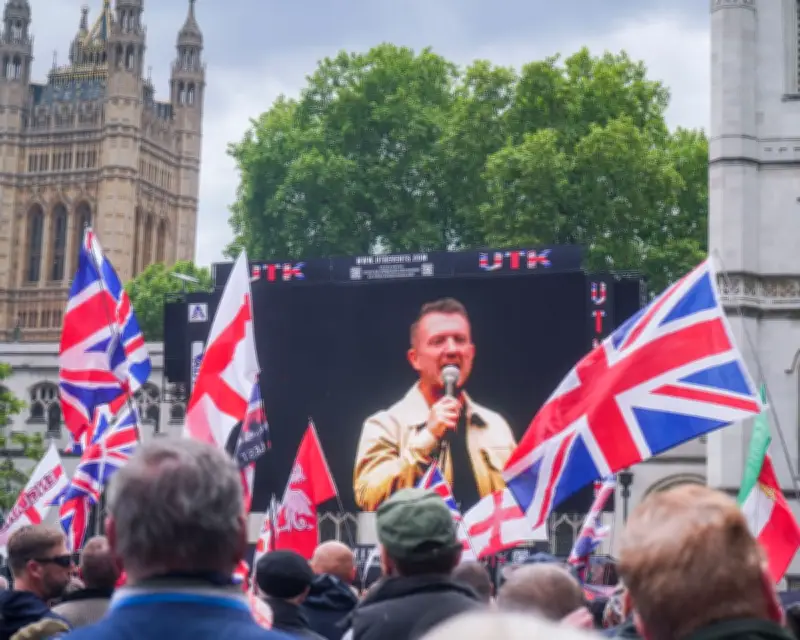
Racist disorder in Belfast, Glasgow, Southampton, and elsewhere follows a familiar pattern, according to political correspondent Ben Quinn. 'Trigger events,' often tragedies, are seized upon by the far right, attached to narratives about immigration, and used to call for offline protests. In Belfast, this resulted in ethnic minority families being burned out of their homes.
The mechanics have changed significantly in just two years. After the Southport killings in summer 2024, far-right activists planned on Telegram, used X to amplify plans, and Facebook for astroturfing. Now, planning is done openly on X, amplified by Musk himself, who shares details of demonstrations across Britain and Northern Ireland.
The Role of Elon Musk
Musk's impact on X users' feeds is immense. Guardian analysis found he has posted almost daily about alleged threats to the white race. He has also endorsed and promoted politicians like Rupert Lowe, who called for 'millions' of deportations after a stabbing in Belfast.
AI-generated images, videos, and songs are also used to inflame local anger, such as memes after the police released bodycam footage of an arrest, and fakery of 'migrant gangs' assaulting white women. TikTok is emerging as a platform where such content crosses over to a wider, less politically engaged audience.
Piggybacking on Local Events
Ben Quinn notes that the far right is more effective offline when they 'piggyback on an authentic local event,' like protests against the Bell Hotel in Epping after an asylum seeker sexually assaulted a girl. Those protests grew due to buy-in from local people, Reform councillors, and extreme far-right characters.
Normalisation of Hate Speech
Online activity has consequences for language. Phrases like 're-migration,' advocating mass expulsion of non-white residents, are now used routinely by Tommy Robinson and may enter mainstream conservative discourse. Hate speech is becoming normalised on X, with the platform refusing to bar posts using racial slurs, as reported by the thinktank British Future.
Regulation and Collective Action
After the Belfast riots, Prime Minister Keir Starmer vowed to crack down on platforms fuelling division. Ministers plan to amend the Online Safety Act to require faster removal of inflammatory content, but this won't take effect until mid-July. The government has left official reprimand of X to Ofcom, whose recently departed chair argued that the voice of 'the white majority' has not been heard properly.
Dr Avaes Mohammad of British Future argues there is merit in reporting offensive posts and informing Ofcom. Media consultant Pat Younge called on Starmer to regulate social media platforms as broadcasters, stating, 'This isn't free speech, it's an abuse of power.' He also called on trade unions and civic society to take a stand.




