Everyday household appliances you rely on could be silently filling your home with trillions of harmful pollutants, according to a stark new scientific warning. Researchers have discovered that popular devices release clouds of dangerous ultrafine particles (UFPs) laced with heavy metals, posing a significant risk to respiratory health.
The Hidden Danger in Your Kitchen and Bathroom
A team from Pusan National University in South Korea conducted a detailed assessment of three common electric appliances: air fryers, pop-up toasters, and hairdryers. They measured the quantity of UFPs emitted and analysed the chemical composition of the particles.
The results were alarming. The pop-up toaster was identified as the worst offender, releasing up to a staggering 1.73 trillion UFPs per minute. These particles are minuscule, with a diameter of less than 100 nanometres, allowing them to penetrate deep into the human body and settle in the lungs.

The air fryer was the next biggest polluter. When operated at 200°C, it emitted approximately 135 billion UFPs every minute. Hairdryers performed relatively better but some models still released around 100 billion particles per minute.
Heavy Metals and Heightened Health Risks
The study found that the dangerous emissions contained traces of copper, iron, aluminium, silver, and titanium. The researchers believe these heavy metals are shed directly from the appliances' heating coils and brushed motors during use.
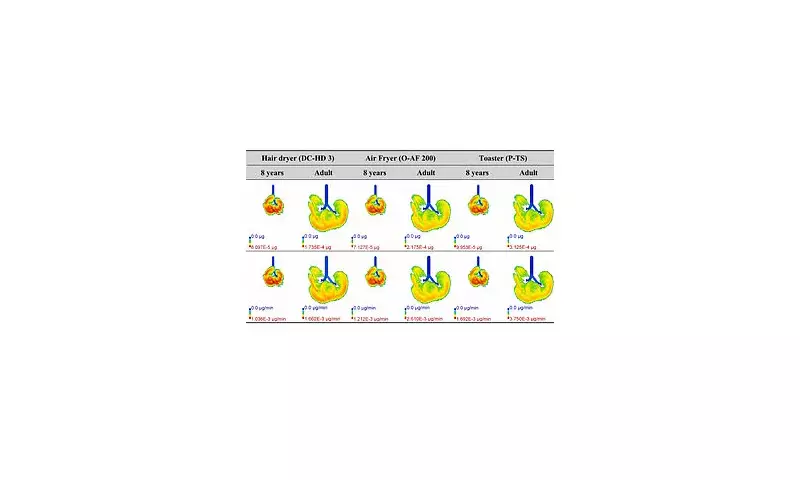
"These associated heavy metals increase the risk of cytotoxicity and inflammation when the particles enter the human body," the scientists stated. The UFPs were found to deposit predominantly in the alveolar region of the lungs—the critical area where oxygen exchange occurs.
Previous research has linked exposure to ultrafine particles to a range of serious health conditions, including:
- Asthma and respiratory issues
- Heart disease and high blood pressure
- Diabetes
- Certain cancers
- Dementia
Worryingly, the simulation model used in the study showed that young children face a higher health risk than adults, likely due to their smaller airways which are more susceptible to damage.
A Call for Safer Appliance Design and Cleaner Air
Lead author Professor Changhyuk Kim emphasised the urgent need for action. "Our study emphasises the need for emission-aware electric appliance design and age-specific indoor air quality guidelines," he said.
"In the long term, reducing UFP emissions from everyday devices will contribute to healthier indoor environments and lower chronic exposure risks, particularly for young children."
The research, published in the Journal of Hazardous Materials, concludes that understanding these pollution sources is vital for developing preventive measures. "Understanding the source of the pollutants helps to develop preventive measures and policies for keeping healthy indoor air quality," Professor Kim concluded.
This warning follows other recent studies highlighting indoor air quality threats. Earlier this year, research from Purdue University indicated that common household products like air fresheners and cleaning sprays can create significant indoor pollution plumes.