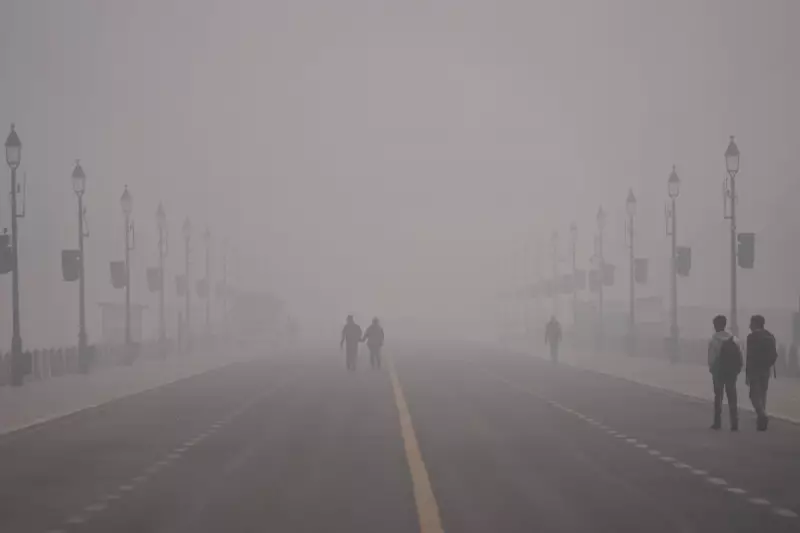
Each winter, a familiar and hazardous emergency descends upon India's capital. A dense, toxic smog blankets Delhi, slashing visibility, shutting schools, disrupting flights, and filling hospitals with patients suffering respiratory distress. Despite recurring emergency measures—from construction bans to vehicle restrictions—the crisis returns with chilling predictability, highlighting a failure to find lasting solutions.
The Scale of the Crisis and a Stark Comparison
Delhi's plight, while severe, is not isolated. Cities across northern India's Indo-Gangetic plain, from Lucknow to Varanasi, face similar winter spikes. Internationally, metropolises like Tehran and Lahore also grapple with seasonal smog. Yet, Delhi stands out for the sheer severity, persistence, and scale of its pollution, with minimal improvement despite years of alerts.
In recent weeks, many parts of Delhi recorded an Air Quality Index (AQI) well over 400, a level classified as "severe." Long-term data confirms a grim reality: no major Indian city currently meets safe air quality standards year-round. The crisis gained global attention in December 2025 when Singapore, the UK, and Canada issued travel advisories for northern India, and it even delayed footballer Lionel Messi's arrival in the capital.

This context made a suggestion from the Chinese Embassy in Delhi particularly pointed. Spokesperson Yu Jing took to social media platform X to recommend Beijing's measures, stating "cleaner air doesn't happen overnight – but it is achievable." She outlined a multi-step plan involving strict vehicle emissions controls, phasing out old cars, restricting car growth, and massive investment in public and electric transport.
Why Delhi's Pollution is So Stubborn
Experts point to a perfect storm of geography and meteorology that makes Delhi's winter air so persistently toxic. The city is caught in a "meteorological trap." As explained by Mahesh Palawat of Skymet Weather, cold north-westerly winds and dropping temperatures cause a thick temperature inversion layer. This acts as a lid, trapping cooler, polluted air near the ground beneath warmer air above, preventing dispersion.
The Himalayan mountain ranges to the north compound this by blocking airflow, forcing pollution to linger over the entire northern Indian plain. This geographical reality means Delhi's air often remains hazardous even when farm fire incidents decrease or short-term restrictions are imposed.
Systemic Solutions vs. Seasonal Quick-Fixes
India's response has largely been one of crisis management: temporary bans on fireworks, construction, and vehicles, alongside measures like anti-smog guns. Urban planner Dikshu C Kukreja argues this approach is flawed. "Air quality cannot be fixed through emergency measures alone," he says, highlighting that Delhi's urban sprawl and long commutes create a constant emission source, regardless of short-term bans.
Here lies the crucial difference with Beijing's strategy. After its own era of temporary fixes, China launched a comprehensive, nationwide clean-air action plan in 2013. It simultaneously targeted transport, industry, fuel use, and enforced regional coordination across the Beijing-Tianjin-Hebei area. Authorities tightened emission standards, expanded public transit massively, pushed electrification, and relocated heavy industry.
The result was dramatic. Data from the Centre for Research on Energy and Clean Air shows Beijing's average PM2.5 levels fell by roughly two-thirds since 2013. While still polluted by WHO standards, its air is vastly cleaner than a decade ago.
Experts caution against simplistic comparisons, noting Beijing's campaign was driven by a centralised, one-party system capable of sweeping enforcement—a stark contrast to India's fragmented democratic governance. However, they identify key transferable lessons:

- Treat air quality as a systems problem, not an annual emergency. Beijing's plan addressed root causes across sectors.
- Integrate mobility and air-quality planning. Efficient public transport and reduced commute distances cut emissions at scale.
- Enforce consistent controls on major contributors like construction dust. Indian regulations exist but compliance is patchy.
- Commit to long-term, sustained action. Meaningful gains in Beijing emerged only after years of consistent policy enforcement.
Kukreja emphasises that the starting point must be political will and a systemic approach. For Delhi, and India at large, escaping the annual smog cycle will require moving beyond seasonal quick-fixes to embrace the kind of coordinated, long-term planning that delivered results in China, albeit within a vastly different political framework.