
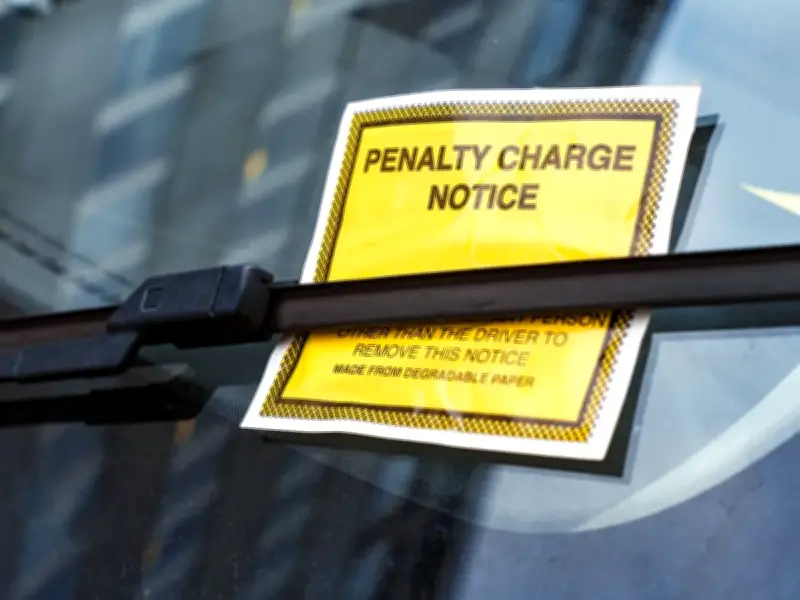
Drivers in Wales face a dramatically higher fine from today for an offence that many drivers are likely unaware they are committing. The penalty has risen from £20 to a maximum of £150.
It applies from today to drivers in Wales who are found to have left their vehicle engine running unnecessarily, commonly referred to as "idling". The Welsh Government states it is taking "action to improve air quality and reduce emissions and noise levels" and that "this is essential to protect human health and wellbeing, support the economy, and safeguard biodiversity, and the natural environment".
It adds that "air pollution remains a serious risk to health and the environment" and that "stationary idling is one such source of air pollution". The Government also notes that reducing unnecessary idling is "particularly important... around schools, hospitals and other areas with vulnerable populations".
What the law says
Rule 123 of the Highway Code advises drivers to switch off their engine when their vehicle is stationary on a public road, and leaving a vehicle's engine running while stationary is already an offence in certain circumstances, which could result in a criminal conviction or a Fixed Penalty Notice (FPN). However, according to a Welsh Government survey, only a third of people are aware that it constitutes an offence, reports the Express.
Local authorities across Wales and in other parts of the UK already hold the power to issue £20 fines to drivers for "engine idling" — typically enforced near schools and healthcare facilities. However, as of today, this penalty has been substantially increased in Wales, with fines now ranging between £75 and £150. Local authorities have been left to determine where within that range they will set their fines.
What is unnecessary idling?
Stationary idling occurs when a vehicle fitted with an internal combustion engine (ICE) is not in motion but its engine continues to run. The Welsh Government states that every minute a car engine is left idling, it generates enough exhaust to fill up to 150 balloons with harmful pollutants, including cyanide, nitrogen oxides and fine particulate matter. It also notes that idling for 30 seconds produces nearly twice as much pollution as switching off then restarting an engine.
Rule 123 of the Highway Code states that drivers, when their vehicle is stationary on a public road and likely to remain so for more than a couple of minutes, should apply the parking brake and switch off the engine. Under section 42 of the Road Traffic Act 1988, a driver in an idling vehicle can be issued with a fine.
However, this only applies to petrol, diesel and hybrid vehicles (including taxis), as these produce exhaust emissions while stationary. Electric vehicles do not have an ICE and therefore produce no exhaust emissions when not in motion.
When will I be fined for stationary idling?
A clear procedure has been established for local authorities regarding when fines should be issued. Should an enforcement officer believe a driver is committing an idling offence, they must first ask the driver to turn off their engine.
If the driver does so, or simply pulls away, no offence has been committed and a fine cannot be issued. However, should the driver refuse to comply, a penalty can then be handed out.
There is no fixed definition for how long a vehicle must remain stationary with its engine running before an offence is deemed to have occurred, though the Highway Code advises that where a vehicle is stationary and likely to remain so for more than a couple of minutes, drivers should switch off their engines.
When you can leave the engine running without risking a fine
There are circumstances where stationary idling is not an offence and you cannot be fined for it:
- When stationary due to traffic conditions (for example at traffic lights, in queues or at level crossings)
- When powering essential equipment (for example, on-board systems in emergency vehicles or refrigeration units on lorries and vans)
- To diagnose or repair a vehicle fault
- When the vehicle is on private land — stationary idling is only an offence on a public highway, so cannot be issued on private property, including, for example, supermarket, hospital and fast-food restaurant car parks.
Why is the fine for idling increasing?
The Welsh Government describes air pollution as "one of the most significant environmental public health challenges of our time" and has "profound and far-reaching impacts on health and wellbeing". It adds: "It contributes to premature death and reduces quality of life with effects linked to low birth weight, childhood asthma, heart disease, stroke, dementia, and mental health conditions."
These impacts are not felt equally. Older people, disabled people, young children, and those with existing health conditions are especially vulnerable and are often disproportionately affected. Tackling stationary idling can reduce avoidable emissions at the point of exposure and help protect the most vulnerable and affected groups and communities - particularly around schools, care homes, and other areas where people are most at risk.
It says 80% of people agree that stationary idling is "unacceptable".




