MAHA Movement Forges Unlikely Alliance with Republican EPA on Environmental Rules
MAHA Movement Allies with Republican EPA on Environmental Rules

MAHA Movement Forges Unlikely Alliance with Republican EPA on Environmental Rules

The Make America Healthy Again (MAHA) movement, which has already significantly reshaped American health policy, is now extending its influence into the realm of environmental regulation. In a surprising political development, activists seeking to hold corporations accountable for health harms have found a tentative ally in a Republican-led Environmental Protection Agency (EPA) that has historically championed deregulation and big business interests.

A Fragile Collaboration Emerges

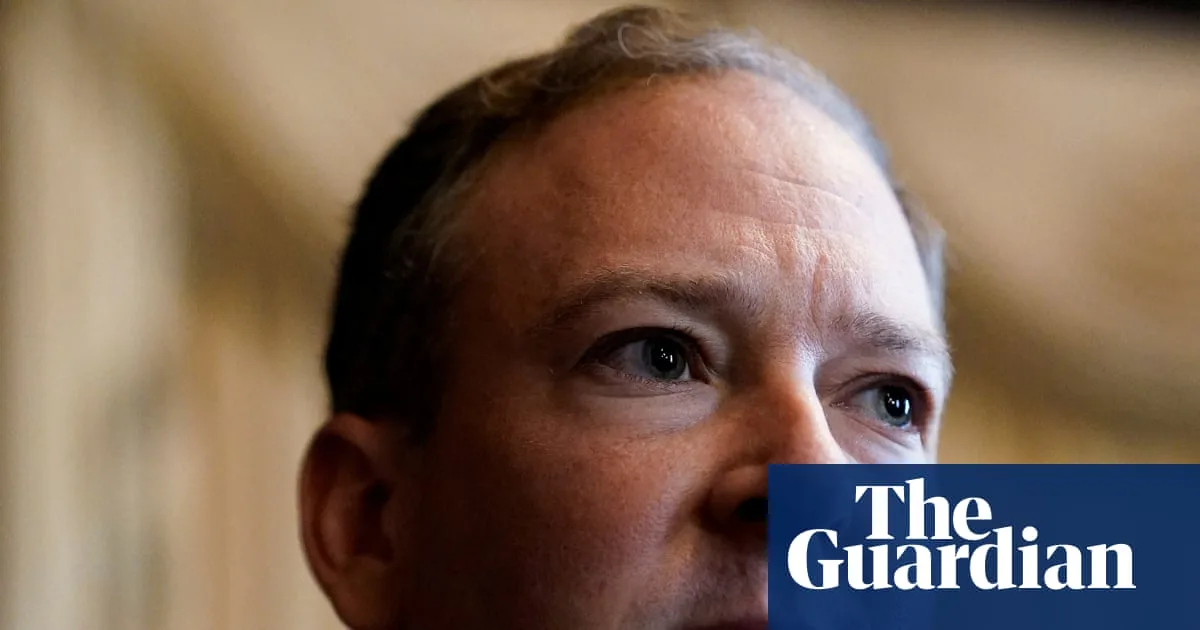
On New Year's Eve, EPA Administrator Lee Zeldin, known for rolling back numerous environmental protections, announced new restrictions on five chemicals commonly found in building materials, plastics, and adhesives. He notably hailed this move as a "MAHA win," signalling a shift in the agency's traditional stance. This announcement represents one of several indicators of a fragile but growing collaboration between the Republican administration and the health-focused coalition.

The unlikely partnership stems from MAHA's successful influence on public health policy, largely propelled by its champion, Health Secretary Robert F. Kennedy Jr. His tenure has seen pared-back vaccine recommendations and shifts in government positions on issues like seed oils and fluoride. Building on this momentum, the movement now sees potential in the EPA's promise to release a dedicated "MAHA agenda" in the coming months.

Political Stakes and Vocal Advocacy

The strength of President Donald Trump's coalition is at stake, with November's midterm elections threatening Republican control of Congress. After a politically diverse group of MAHA supporters helped return Trump to the White House, disappointing this vocal voting bloc could have significant electoral consequences. Activist Courtney Swan, who focuses on nutritional issues and has engaged with EPA officials, warned, "This is becoming an issue that if the EPA does not start getting their stuff together, then they could lose the midterms over this."

Christopher Bosso, a professor of environmental policy at Northeastern University, observed that Zeldin initially did not take MAHA seriously, "but now he has to, because they've been really calling for his scalp."

From Petition to Partnership

Last year, prominent activist Kelly Ryerson, known online as "Glyphosate Girl," was so frustrated with the EPA's weakening of chemical protections that she helped draft a petition to have Zeldin fired. The final straw was the agency's approval of two new pesticides containing so-called "forever chemicals." However, the dynamic shifted at a MAHA Christmas party in Washington, where Ryerson spoke directly with Zeldin. This led to an hour-long meeting at EPA headquarters and subsequent discussions with his deputies.

"The level of engagement with people concerned with their health is absolutely revolutionary," Ryerson stated, praising the "unprecedented" access. Her petition was later updated to note a "collaborative effort to advance the MAHA agenda." Rashmi Joglekar of UC San Francisco noted that such access for an activist group is atypical, highlighting MAHA's growing power.

The movement's influence extends beyond the EPA. MAHA has successfully steered federal and state lawmakers away from enacting liability shields for pesticide manufacturers, with such protections being removed from a Congressional funding bill after lobbying.

Industry Influence and Potential Conflicts

Despite ongoing dialogue, the Republican emphasis on deregulation creates potential for conflict. Lori Ann Burd of The Center for Biological Diversity pointed to the administration's strong alliance with industry, citing the EPA's proposal to allow broader use of the weed killer Dicamba. Notably, the agency hired a lobbyist for the soybean association, Kyle Kunkler, to a senior pesticide oversight role shortly before the announcement.

EPA Press Secretary Brigit Hirsch denied Kunkler's involvement in the decision, asserting that pesticide rulings are "driven by statutory standards and scientific evidence." However, environmentalists highlight a pattern of hiring former industry leaders, such as Nancy Beck and Lynn Dekleva from the American Chemistry Council, now in key chemical safety roles.

Alexandra Muñoz, a molecular toxicologist who attended the meeting with Zeldin, sensed industry influence, noting, "In terms of the tone, there was a lot of receptivity. However, in terms of what was said, it felt like we were interacting with a lot of industry talking points."

Awaiting the MAHA Agenda

Hirsch confirmed the forthcoming MAHA agenda will address issues including lead pipes, forever chemicals, plastic pollution, food quality, and Superfund cleanups. Ryerson's priorities include removing the chemical atrazine from drinking water, stopping pre-harvest pesticide application, and requiring cancer warnings on glyphosate—a substance the EPA maintains is not likely carcinogenic when used as directed.

While optimistic about potential political payoffs, activists remain cautious. They note that some actions promoted as "MAHA wins" may be insufficient, such as Zeldin's phthalates announcement which addressed workplace risks but not consumer products. As Swan summarised, "The EPA is giving very mixed signals right now." The movement now watches closely to see if collaboration yields substantive change or remains merely performative ahead of the critical midterm elections.




