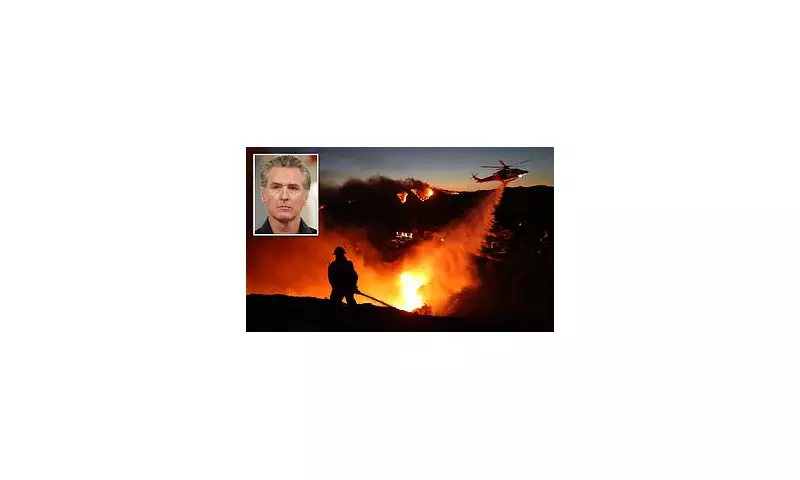
A catastrophic wildfire that tore through the affluent Pacific Palisades area of Los Angeles, killing a dozen people and causing billions in damage, is now the subject of a major lawsuit alleging the state's response was fatally compromised by environmental regulations.
Text Messages Reveal 'Avoidance Maps' for Endangered Plants
The legal action, involving over 3,000 claimants, centres on the Lachman Fire, which was first reported on January 1, 2024, in Topanga State Park. Court documents reveal that during the initial response, state park officials were preoccupied with protecting federally endangered milkvetch plants, known scientifically as astragalus.
Internal text messages presented as evidence show officials discussing 'avoidance maps' to guide firefighting operations away from sensitive plant habitats. "There is federally endangered astragalus along the Temescal fire road. Would be nice to avoid cutting it if possible," one official wrote. Another message stated, "I'll wait to deploy [resources] until you get on scene and assess the situation," and added, "Definitely will want to send them down if heavy equipment arrives."

Attorneys for the claimants allege this directive directly interfered with the Los Angeles Fire Department's (LAFD) mop-up operations. The Lachman fire was believed extinguished, but it reignited six days later on January 7, exploding into the deadly Palisades Fire. According to the Bureau of Alcohol, Tobacco, Firearms and Explosives, the blaze reignited within one of the designated plant avoidance areas.
A Cascade of Failures and a Mounting Death Toll
The Palisades Fire burned uncontrollably for 24 days, ravaging the wealthy coastal neighbourhood. The final toll was staggering: 12 lives lost, 7,000 homes destroyed, and an estimated $150 billion in damage. It occurred simultaneously with the nearby Eaton Fire in Altadena, which killed 19 people and destroyed over 9,400 homes, stretching emergency services to breaking point.
Further evidence suggests firefighters warned it was "a bad idea" to leave the smoldering Lachman fire site but were ordered to withdraw. A subsequent 92-page Los Angeles Police Department review criticised breakdowns in communication and a lack of pre-deployed resources despite severe weather warnings.
While 29-year-old Jonathan Rinderknecht was charged with arson for starting the initial blaze, the lawsuit places significant blame on the state's response. "The state's narrative that they had nothing to do with it... flies in the face of the evidence," said attorney Roger Behle, who represents the claimants, citing photographic evidence contradicting official accounts.
State Denials and a Political Firestorm
California Governor Gavin Newsom's office and California State Parks have strongly denied the allegations. A spokesperson for State Parks told the LA Times, "The notion that State Parks favors plants over people is ludicrous," insisting the agency never hinders active firefighting and that the LAFD had deemed the Lachman fire contained.
However, the plaintiffs argue the state failed to adequately monitor the initial fire. The case has ignited a fierce debate about balancing environmental conservation with public safety, and the potential consequences of regulatory overreach during emergency operations. The Palisades Fire now stands as one of the most destructive in Los Angeles history, its legacy defined by loss and a search for accountability.