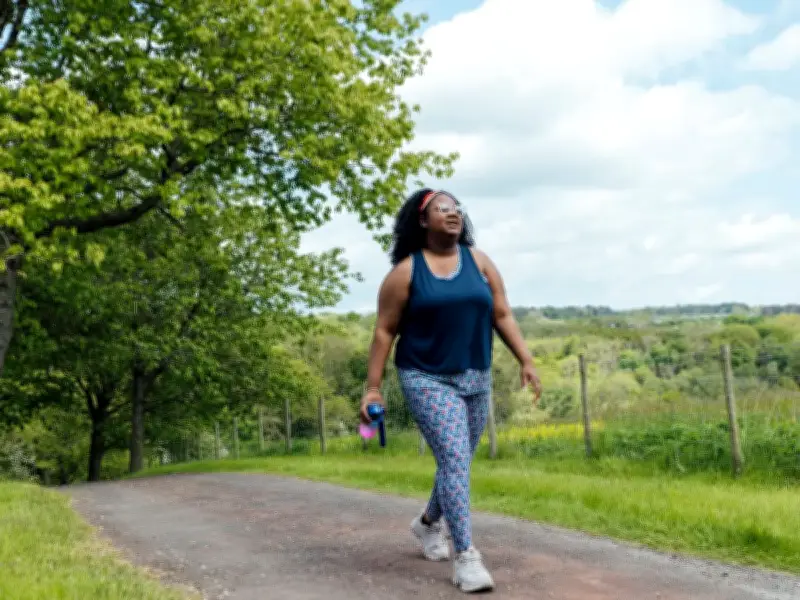
A study of more than 104,000 older adults suggests a brisk 30-minute daily walk could be as beneficial for long-term health as walking more slowly for longer periods. The research, published in the British Journal of Sports Medicine, is the first to examine how walking speed, in addition to distance, affects the risk of early death.
Pace versus step count
With step-counting devices increasingly popular, many people are advised to aim for 10,000 steps a day to improve health. However, the new study found that taking 80 steps per minute and completing fewer than 5,000 steps per day was just as beneficial as walking 5,000 to 7,500 steps at 60 steps per minute. The findings suggest that a brisker walk for half an hour a day may be ideal for those with sedentary lifestyles and limited time.
Emily McGrath, senior cardiac nurse at the British Heart Foundation, said: "When it comes to walking, putting a little more pace into your step could matter as much as clocking up more steps. This study suggests that people who struggle to find time for a long walk may still benefit from shorter periods of brisker walking."

Study details and findings
The trial tracked participants for up to eight years, with an average age of 61, all wearing activity trackers. Daily step counts were divided into categories: 0-5,000 steps, 5,000-7,500, 7,500-10,000, and more than 10,000. Researchers also recorded each participant's fastest sustained stepping rate during their most active half hour of the day. During the study, 1,697 people died from any cause, including 502 from cardiovascular disease.
Researchers from Monash University in Australia analysed the data and found the risk of death was lowest for those taking 7,500 to 10,000 steps per day. Maintaining a brisker pace for at least 30 minutes daily was also linked to a lower risk of death from any cause, regardless of step count.
Expert advice and broader evidence
Ms McGrath added: "It's important to remember that this research can only show an association, not cause and effect but the encouraging message is that every step counts, and some quicker ones may count for more. Try picking up the pace until you feel warmer, breathe a little harder and your heart beats faster, while still being able to hold a conversation. Start with what feels manageable and build up gradually."
Juliet Bouverie, chief executive of the Stroke Association, said: "In the UK, someone has a stroke every five minutes, often leaving survivors with life-changing disabilities. These findings add to growing evidence that the intensity of physical activity may matter, alongside the amount of exercise completed, to help prevent conditions including stroke."
The research adds to evidence that even small amounts of exercise can make a significant difference for previously inactive people. A previous Lancet study tracking 95,000 middle-aged and older adults in the UK found that a brisk five-minute daily walk could reduce the risk of early death by 10%. That study, led by the Norwegian School of Sports Sciences, also showed that cutting sedentary time by 30 minutes a day could reduce deaths by 4.5% among all adults, except those already very active, and that an extra 10 minutes of moderate-intensity exercise was linked to a 15% reduction in deaths.