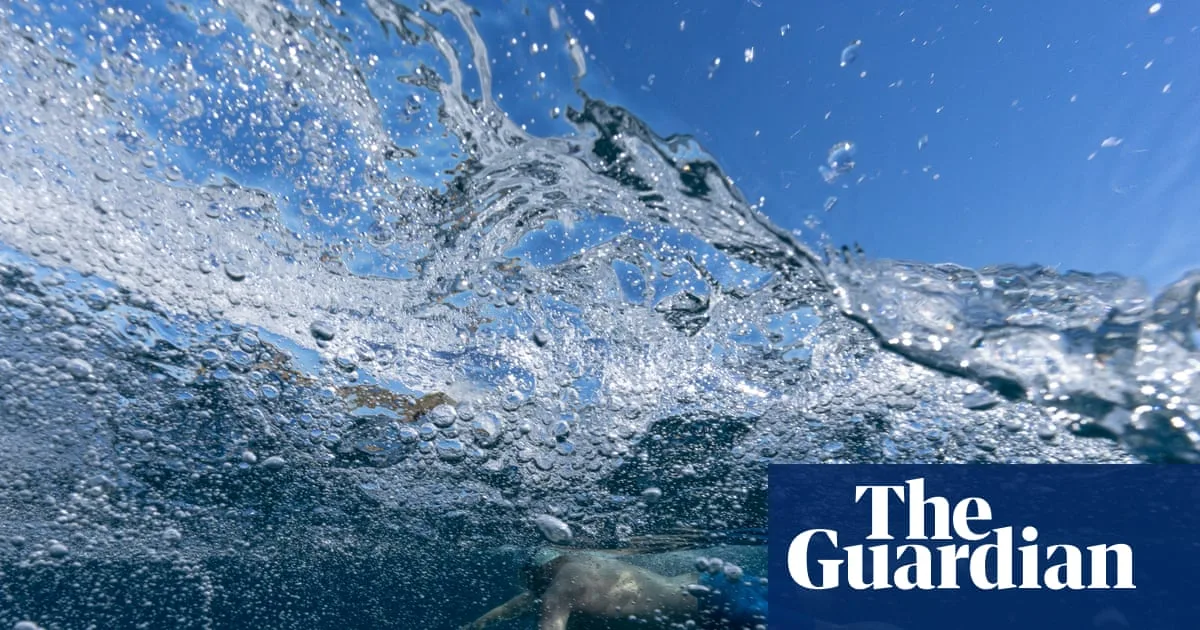
Ultra-Swimmer Battles Loneliness and Fatigue in Record Ocean Swim for Marine Life
Swimmer's Record Attempt Raises Awareness for Fragile Marine Life

Ultra-Marathon Swimmer Jono Ridler Employs Meditative Methods Amidst Loneliness in Ocean Record Bid

Ultra-marathon swimmer Jono Ridler has developed unique meditative coping strategies to manage feelings of loneliness and fatigue as he strives to break the world record for the longest unassisted staged swim. His ambitious campaign aims to raise critical awareness about the fragile state of marine life, drawing attention to environmental threats through his gruelling aquatic journey.

Connecting with Dolphins in the Depths

During his swim hundreds of metres off the coast of New Zealand, Ridler experiences profound encounters with marine creatures. He first hears faint chatter from the ocean depths, followed by clicks and squeaks as dolphins approach. These swift and agile animals dart within 10 centimetres of his bare outstretched arms, accompanying him for stretches of his swim. Ridler, who is 1,254 kilometres into his record attempt, has honed his ability to detect dolphins more than 15 minutes before they reach him, long before his support boats can spot them.

"You can really sense their intelligence when you're in the water with them," says the 36-year-old swimmer during a break on the Wairarapa coast, three hours north of Wellington. "There is a lot of value and connection that we can draw from the ocean." This deep connection fuels his mission to highlight the dangers facing marine ecosystems.

Wide Pickt banner — collaborative shopping lists app for Telegram, phone mockup with grocery list

The Gruelling Details of the Swim4TheOcean Campaign

Ridler's Swim4TheOcean campaign, which began on 5 January at the northern tip of New Zealand's North Island, targets a total distance of roughly 1,350 kilometres along the east coast. As an "unassisted" swim, he wears only swimming shorts, a cap, and goggles, while "staged" means he takes breaks on land but resumes from the exact point he left off. Two assist boats follow him, providing essential food and water while tracking his progress meticulously.

Depending on conditions, Ridler swims two six-hour stints daily, five days consecutively before a rest day. To date, he has logged 428 hours in the water, equivalent to 49 Cook Strait crossings or 39 English Channel crossings. He faces numerous physical challenges, including swarms of stinging jellyfish, severe sunburn, salt tongue, fatigue, and hypothermia. The isolation and monotony add to the mental strain, prompting him to develop meditative techniques like counting and rhythmic breathing patterns to maintain focus.

Personal Sacrifices and Conservation Partnerships

The journey involves significant personal sacrifices, particularly being away from his wife, Sarah, and two-year-old daughter Georgie in Auckland. "[Sarah] has made a big personal sacrifice to make it all happen – it wouldn't be possible without what she is doing," Ridler acknowledges. He collaborates with Live Ocean, a marine conservation charity founded by sailors Peter Burling and Blair Tuke, which live-tracks his progress. Ridler swims between 18 and 30 kilometres daily, an effort Tuke describes as "hard to fully grasp" due to its relentless nature.

"He's just there, stroke after stroke, minute after minute, hour after hour. It's relentless," Tuke said. "But there's something pretty special about it too. The power of what he's doing, and the message he's carrying with him. When you see that in person, it's pretty hard to put into words."

From Childhood Passion to Environmental Advocacy

Ridler's connection to the ocean began in childhood in Auckland, where he spent time swimming, snorkelling, and surfing. In his early twenties, he "caught the bug" for ocean swimming, progressing from 5-kilometre to 10-kilometre marathon swims. By 2019, he had swum the Cook Strait, and in 2023, he became the first person to swim 99 kilometres from Aotea/Great Barrier Island to Auckland to raise awareness about the declining health of the Hauraki Gulf, affected by pollution, sediment buildup, and overfishing.

"There was this passion for the ocean and desire to want to create change – and feeling a tugging in me to do that – that's really how this current adventure has come about," Ridler explains. "It's drawing people into the story of the ocean and getting people to really care about the ocean in a new way."

Pickt after-article banner — collaborative shopping lists app with family illustration

Call to Action Against Bottom Trawling

Central to Ridler's swim is a specific call to action: a petition to ban bottom trawling, a destructive fishing method where heavy nets are dragged along the seabed. "These very fragile ecosystems can take a very long time to grow and if they are wiped through a trawl, it could take centuries for them to recover. It is devastating to see the damage caused for short-term return," he emphasises. The petition has garnered over 40,000 signatures, with numbers increasing daily, and Ridler even secured fifth place in New Zealand's fish of the year competition, highlighting his growing influence.

In late April, Ridler plans to deliver the petition to parliament in Wellington, but first, he must complete the final arduous 111-kilometre swim. "This is going to be the hardest part – the water temperature is dropping every day as we go further south, the conditions get more exposed and the weather is unsettled," he notes. "But it's doable. It's very doable. And in the next week, we can have it all wrapped up." His determination underscores a relentless commitment to marine conservation through extraordinary physical endurance.




