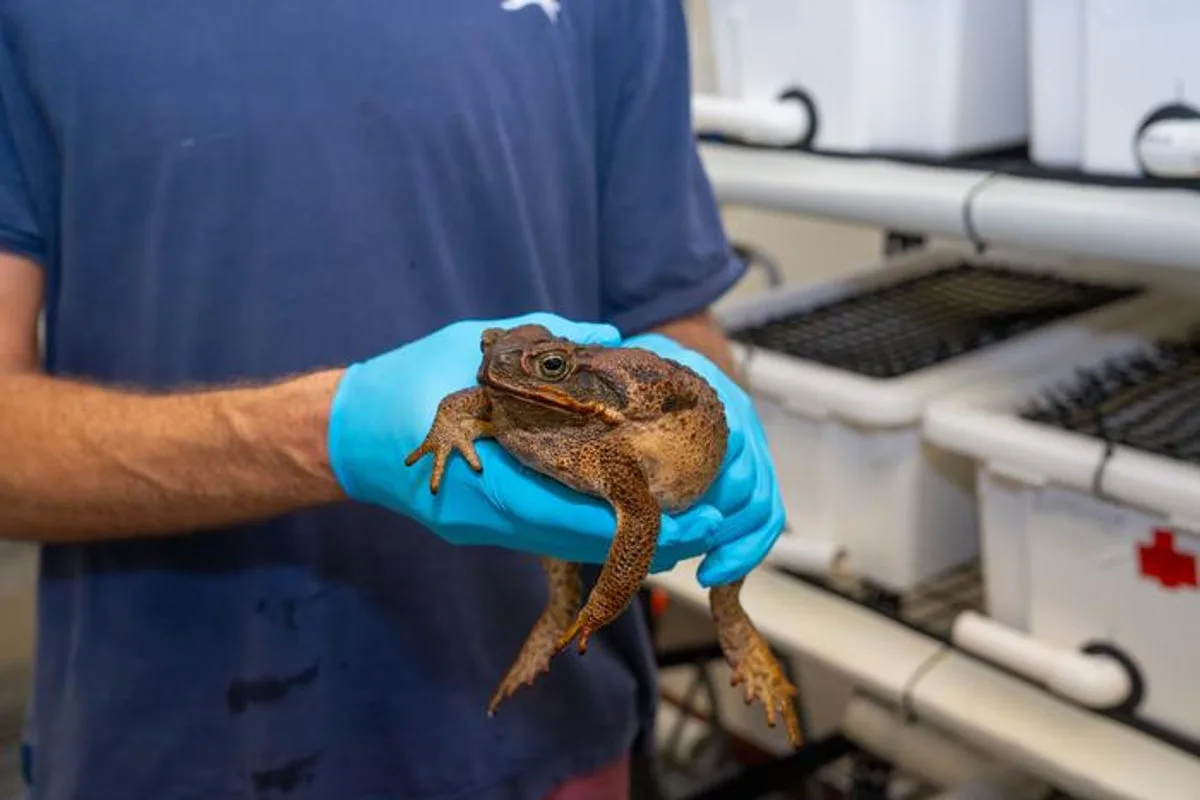
Invasive cane toads in Japan are expanding in size at a rate that contradicts long-standing theories about the gradual pace of evolutionary change, according to a new scientific study. The research, published in the journal Royal Society Open Science, reveals that these toads have grown substantially larger in less than a century, posing questions about the mechanisms driving such rapid morphological shifts.
Rapid Growth Defies Evolutionary Expectations
The study compared cane toads from multiple regions, including their native habitat in northeastern South America, invasive populations in Hawaii and Australia, and a relatively new population on Ishigaki island in southern Japan. Adult toads from Ishigaki weighed an average of 190 grams, significantly heavier than the 135 grams recorded for their Australian counterparts. This difference is particularly striking given that both populations shared a common history in Hawaii until the 1930s, indicating these changes have developed in under 100 years.
Rick Shine, an evolutionary biologist at Macquarie University in Sydney, emphasised the implications of these findings. "The idea that evolutionary change happens at a glacially slow pace is being challenged by recent evidence showing rapid changes in species confronted with novel challenges, like being translocated to a different habitat," he stated. This challenges the traditional view that evolution typically unfolds over millennia, suggesting that invasive species can adapt quickly to new environments.
Uncertain Drivers Behind the Size Increase
Despite the clear evidence of size changes, researchers remain uncertain about the exact factors driving this growth. Dr. Shine noted, "We don't have a clear idea of the evolutionary forces that might be involved, so we can't say why body mass and shape have changed among the toads in the Japanese system." However, scientists hypothesise that favourable climatic conditions on Ishigaki island, such as year-round rainfall, combined with lower predation pressure, may be contributing to the toads' increased size.
The cane toad, originally from South America, has spread to over 40 countries, becoming one of the most studied invasive species globally. Its introduction to Australia in the mid-20th century to control beetles led to a rapid spread and widespread ecological damage, as the toads carry toxins deadly to native predators like quolls, crocodiles, and snakes. This makes the species a notorious example of ecological disruption, with the new findings adding another layer to its complex impact.
Global Implications and Future Research
The study's results highlight the broader issue of invasive species, which cost the global economy an estimated $423 billion annually. By demonstrating rapid evolutionary changes, the research underscores the need for updated models in ecology and evolution to better predict and manage invasive species impacts. Further investigations are planned to explore genetic and environmental factors in more detail, potentially offering insights into how other species might respond to similar translocations.






