Radioactive Pig-Boar Hybrids Flourish in Fukushima's Exclusion Zone
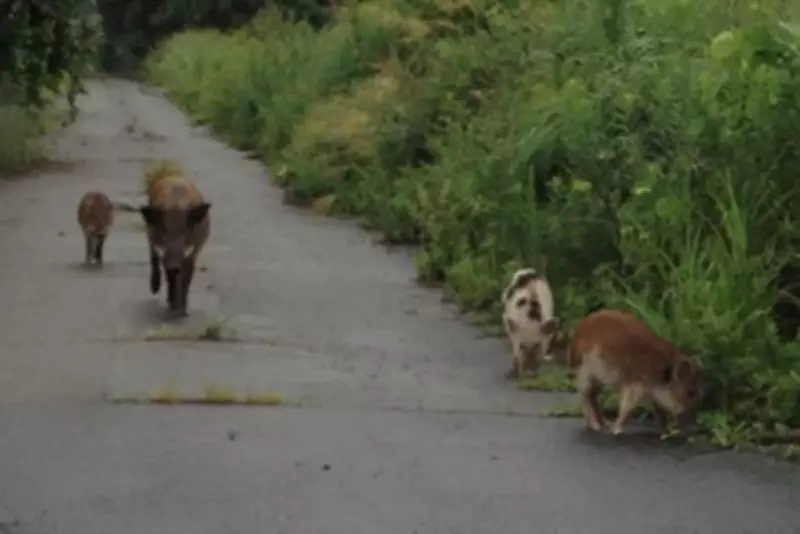
Japanese researchers have finally unravelled the genetic secrets behind the surprising proliferation of radioactive pig-boar hybrids in Fukushima's abandoned evacuation area. Following the catastrophic 2011 nuclear disaster and subsequent human evacuation, a limited number of domestic pigs escaped local farms and began interbreeding with the native wild boar population.
With minimal human interference and no further introduction of domestic pigs, this region has transformed into a unique natural laboratory for studying hybridisation between domestic animals and their wild counterparts. Such crossbreeding events are an escalating global concern, particularly in zones where feral pigs and wild boar territories increasingly overlap, often resulting in significant ecological disruption.
Decoding the Hybrid Genetic Blueprint
In this groundbreaking study, geneticists from Fukushima meticulously analysed this rare occurrence. They discovered that while domestic pig genes became diluted over successive generations, the hybrids retained the rapid reproductive capacity characteristic of their domestic ancestors. Wild boar typically breed outdoors once annually, whereas human-reared pigs reproduce year-round with substantially larger litters.

The precise mechanisms of genetic intermingling during such hybridisation events have long eluded scientific understanding. To investigate, researchers collected tissue samples from 191 wild boars and 10 domestic pigs that inhabited the Fukushima exclusion zone between 2015 and 2018.
They examined two distinct types of DNA: mitochondrial DNA (mtDNA), which is exclusively maternally inherited, and nuclear DNA, inherited from both parents. This dual approach enabled scientists to trace maternal ancestry independently from overall genetic mixing patterns.
Genetic Dilution and Reproductive Persistence
DNA analysis allowed researchers to quantify the remaining domestic pig genetic material within the hybrid population and determine the rate at which these genes were being diluted. The findings revealed that when domestic pigs bred with wild boar, their offspring carried the domestic mother's mtDNA for approximately five generations.
This indicates that over time, the genetic composition of these hybrids increasingly resembled wild boar rather than domestic pigs, as hybrids continued to breed back with wild boar populations. The study demonstrates that domestic pig genes diminished more rapidly across generations than many scientists had previously anticipated.
However, the pigs' accelerated, year-round reproductive cycle persisted, with subsequent generations exhibiting more wild boar-like characteristics. "We wish to emphasise that this mechanism likely occurs in other regions worldwide where feral pigs and wild boars interbreed," stated study author Donovan Anderson from Hirosaki University.
Implications for Global Wildlife Management
"The findings can be applied to wildlife management and damage control strategies for invasive species," explained co-author Shingo Kaneko. "By understanding that maternal swine lineages accelerate generation turnover, authorities can better predict population explosion risks."
This research provides crucial insights for developing more effective strategies to manage hybrid populations and mitigate ecological damage in regions experiencing similar interbreeding phenomena. The persistence of rapid reproductive traits despite genetic dilution presents both challenges and opportunities for conservation efforts worldwide.